





From 1967 up Till Now: Shadows of Defeat Choking Jerusalem

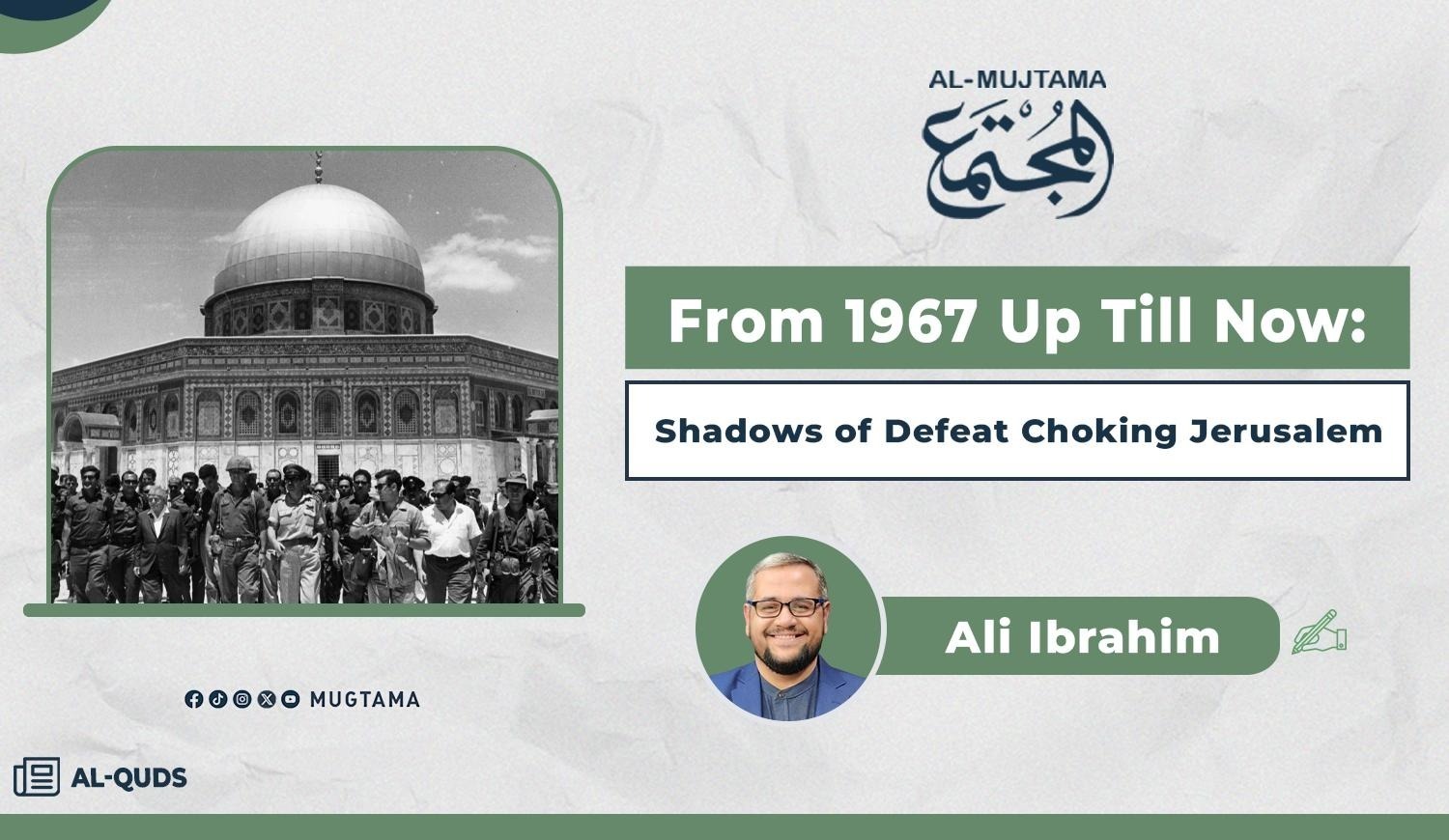
The
morning of June 7th remains etched in the memory of all who lived through that
moment — and even those who did not.
On that
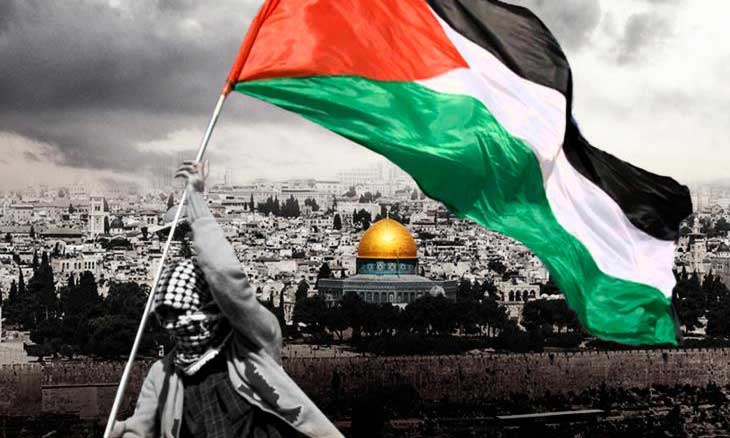
day, Palestinians in Jerusalem witnessed the occupation of their city by the
Israeli military, watching enemy armored vehicles position themselves in the
courtyards of Al-Aqsa Mosque in a deliberately staged spectacle of victory — a
declaration of control over the city from within the mosque itself, chosen for
its profound centrality and significance to Palestinians in particular, and to
Arabs and Muslims at large.
Nearly 59
years later, the city's mornings have not changed much — yet Jerusalem is no
longer what it once was. It is strangled by checkpoints and heavily armed
soldiers; the massive military vehicles have disappeared, replaced by settlers
occupying every corner and alley of the city. The restrictions remain
ever-present, and the settlement outposts spread like cancerous cells consuming
the body of the city. Against this backdrop, we shed light on the long shadows
of the "Naksa" that continue to suffocate Jerusalem and its people.
Targeting the City’s Heart: The Battle for Sovereignty Over
Al-Aqsa
From the
very first moments of occupying East Jerusalem in 1967, Israeli occupation
authorities moved to impose full control over Al-Aqsa Mosque. The first Friday
prayers following the occupation — on June 9, 1967 — could not be held until
the occupation forces withdrew their soldiers from the entire compound.
Less than
a month after the fall of East Jerusalem, the occupation authorities attempted
to place Al-Aqsa Mosque and the city's Islamic endowments under the
jurisdiction of the Israeli Ministry of Religious Affairs. The move was swiftly
rejected by the city's Islamic figures — scholars, muftis, and sheikhs alike —
who forced the occupation to abandon its bid to place the Ministry of Religious
Affairs as guardian over Al-Aqsa Mosque.
Despite
this temporary retreat, the occupation succeeded in seizing control of the
Moroccan Gate, which has since become the primary launching point for
aggression against the mosque — the gateway through which settlers storm
Al-Aqsa. In parallel with these incursions, occupation soldiers returned once
again to the compound, this time to escort settler and political incursions,
displace Muslim worshippers, and shield those performing Jewish rituals
publicly within the mosque's grounds.
This has
unfolded alongside a broader campaign to impose full sovereignty over Al-Aqsa:
erecting metal barriers at its gates, enforcing age-based entry restrictions,
conducting violent and repeated storming operations, interfering in the
mosque's internal affairs and administration, obstructing the Islamic Waqf
Authority from carrying out its duties, and ultimately working to push it
entirely out of the picture.
The Silent Displacement: The Bulldozer and the Law in Service of
Settlement
The
occupation of 1967 marked a decisive turning point, opening the door for the
occupation to press forward with its central objective: transforming Jerusalem
into the capital of its self-proclaimed state — one it intends to be Jewish in
character and population. While insisting on Jerusalem's status as the
"eternal capital" of its entity, the occupation moved to replace
military tools of erasure with instruments of demographic replacement —
swapping the tank for the bulldozer.
In their
place came a vast arsenal of laws, restrictions, and bureaucratic policies, all
engineered to shift the demographic balance of the occupied city, reducing
Palestinians to a marginalized human mass. Simultaneously, settlers were
welcomed into the city with every facilitation extended to expand settlements,
swallow Palestinian land, and drive Palestinians out of their own city by every
available means — from home demolitions and denial of housing permits to direct
repression and systematic targeting.
Amidst
these pervasive and complex Judaization policies, Jerusalemites live in
constant anxiety over the potential revocation of their residency rights under
flimsy legal pretexts. In recent months, the occupation’s settlement decrees
have escalated in neighborhoods like Sheikh Jarrah and Silwan, among other
areas of occupied Jerusalem. Consequently, residents sleeplessly dread unjust
rulings that could strip them of their homes, turning them into homeless
families with the mere stroke of a pen. This unfolds within a massive
Judaization campaign spearheaded by settler organizations and backed by the
occupation government, aiming to seize additional neighborhoods in East
Jerusalem and intensify the settlement footprint.
The
occupation gambles on incremental settlement expansion to tighten its grip on
Palestinian lands and reinforce the presence of its settlers in occupied
Jerusalem. Between 2014 and 2025, the occupation authorities approved plans to
construct approximately 131,545 new settlement units—a staggering figure for an
11-year span. Undeniably, the ratification of these settlement projects aims to
densify the Jewish presence across both sectors of occupied Jerusalem, shifting
the demographic balance in favor of settlers at the expense of the
Palestinians.
Jerusalem's Hidden Fronts: The Silent Strangling of the
Jerusalemite
On the
socioeconomic front, occupation policies work to strangle the Jerusalemite
across every dimension of daily life — from basic sustenance, to taxation,
education, healthcare, and the institutions that sustain Palestinian
steadfastness in the city. Jerusalemites face systematic impoverishment
policies, including the "Arnona" property tax, the targeting of
commercial businesses, and sweeping restrictions on the movement of residents
and visitors, compounded by security measures that suffocate virtually every
aspect of normal life. Approximately 77% of Jerusalem's families live below the
poverty line, while a dignified life in the city demands high income levels
that remain out of reach for most Jerusalemites — a direct consequence of
deliberate occupation policies.
Education
has been no less a target of this fierce Judaization campaign, which has been
underway since the occupation of Jerusalem in 1967. Yet Jerusalemites met this
assault with determination, as a number of prominent figures moved to establish
Palestinian schools in defiance of occupation decrees — foremost among them the
educator Husni al-Ashhab. However, left to face their fate alone and deprived
of adequate support, these Palestinian schools proved vulnerable to isolation,
and the occupation has since moved against them unopposed. Today they face
mounting pressure to adopt distorted versions of Palestinian curricula or
outright Israeli ones imposed from without — a calculated effort to reshape the
consciousness of new generations, severing their connection to their history
and their cause. It is, in every sense, the occupation of the mind that follows
the occupation of the land.
Steadfastness in Jerusalem: A Form of Resistance
Despite
the bleakness of the picture, any reading of Jerusalem's reality 59 years into
the occupation remains incomplete without turning to the other side of this
landscape: the steadfastness of Palestinians in Jerusalem, and their fierce
will to resist in the face of the repression and schemes arrayed against them.
Over the past decades, Jerusalemites have managed to stand their ground against
the occupation and its instruments, holding firm before the Zionist machinery
of suppression — from the determination to pray at Al-Aqsa and maintain a
constant presence at its side, to clinging to the Palestinian curriculum, to
families pitching tents atop the rubble of their demolished homes, refusing to
abandon their land. All of these images, and countless others, are fragments of
the Palestinian's unyielding insistence on steadfastness and confrontation —
even if that confrontation is, as the well-known Palestinian expression goes,
one of "bare flesh against steel."
The act
of holding fast to Jerusalem — striving to keep the pulse of life beating in
the occupied city, in all that this phrase carries of images, meanings, and
detail — amounts to a daily defeat of the project born of the
"Naksa," which continues to strangle Jerusalem 59 years on. Yet it
has collided with the unbending will of Jerusalem's people: their bond with
Al-Aqsa Mosque, and their insistence on defying the enemy at every juncture of
life. It is an ongoing battle — one whose promise of victory comes from God
Almighty: (and when the second warning was
fulfilled [We sent them] to shame your faces and enter the place of worship as
they did the first time, and utterly destroy whatever fell into their power.)
(Al-Isra:7)
You may
also like:
10 Zionist Organizations Racing to Demolish Al-Aqsa