




Israelization: Reshaping Life in Occupied Jerusalem

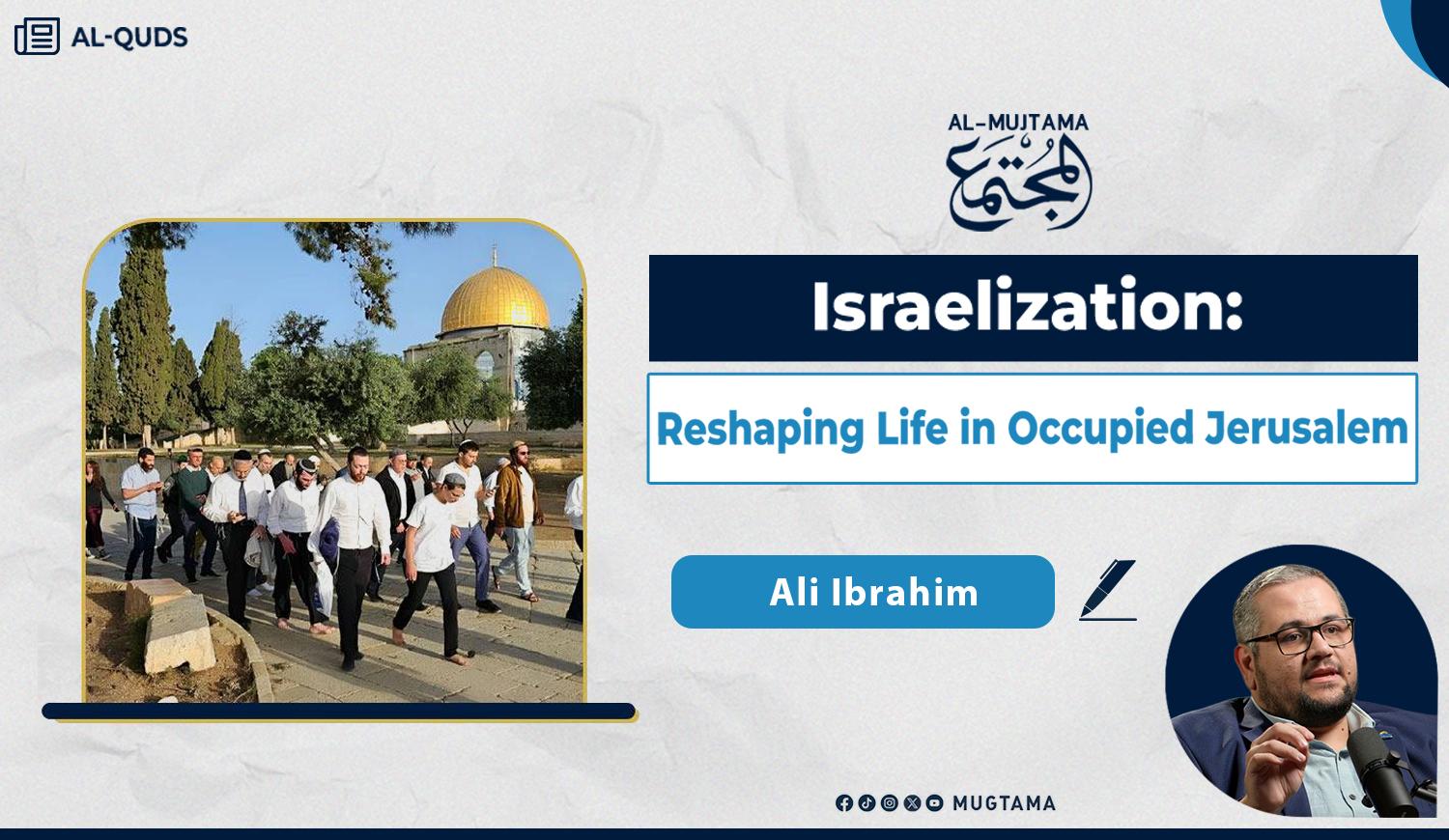
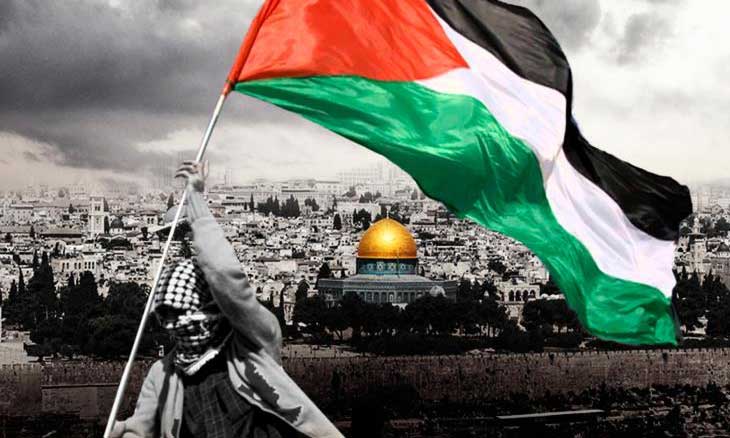
“Israelization” in occupied Jerusalem takes multiple forms as part of the occupation’s plans to impose full control
over the city. Alongside escalating schemes to alter Jerusalem’s
identity—through settlement expansion, land confiscation, home demolitions, and
reshaping the city’s urban landscape—occupation policies aim to restructure
Palestinian society in occupied Jerusalem. This is carried out through a range
of tools and policies designed to reshape the social and institutional
environment of Palestinians in the occupied city, targeting vital sectors of
Jerusalemites’ daily lives, foremost among them education, municipal services,
and economic activity.
This trajectory carries
serious risks, chief among them isolating Palestinians from any meaningful
support network—whether educational, charitable, or healthcare-related. This
prevents them from building any communal structure independent of the
occupation’s system and institutions, deepening their sense of alienation in
their own city while imposing further restrictions on Palestinian sectors in an
attempt to dismantle them entirely. Ultimately, this forms part of the
occupying power’s broader effort to gradually alter lifestyles as well as
social and cultural structures, paving the way for deeper “Israelization” of
Palestinians’ daily lives.
“Israelization”: Reshaping Identity and Daily Life in Occupied
Jerusalem
At the outset, it is
essential to define what “Israelization” entails. In the context of the ongoing
offensive against occupied Jerusalem, it refers to a dual-track process: on one
hand, assimilating Palestinians into Israeli culture, language, and lifestyle
in order to reshape their identity and redefine their sense of self and
belonging; on the other, integrating them into the occupation’s institutions
and broader society. Ultimately, through a series of measures and restrictions,
Israeli authorities seek to shift Palestinian society in Jerusalem from a
Palestinian-anchored social, economic, and educational sphere into an
institutional framework subordinate to the occupation.
Education in Jerusalem: The Frontline Against “Israelization”
Israeli authorities
systematically target Jerusalem’s education sector given its vital role in
shaping Palestinian generations’ awareness of their history, identity, and
struggle, as well as the central role of knowledge in the liberation movement.
Consequently, the occupation has launched an all-out assault on Palestinian
curricula, schools, and educational authorities alike—seeking to impose total
control over the sector in the occupied city by exploiting the fragmented
governance of schools in East Jerusalem.
Estimates indicate a rise in
the proportion of Palestinian students enrolled in Israeli curricula over
recent years, driven by occupation measures and mounting restrictions on
Palestinian schools—reaching roughly 27 percent of the total student body in
East Jerusalem.
Despite the occupation’s
efforts to impose its curricula on Palestinian schools, Israeli human rights
groups have revealed a persistent school dropout crisis, with the dropout rate reaching
roughly 3.4 percent—meaning around 3,000 students are out of school. These
groups attribute the high dropout rates to an alienating school environment,
severe classroom overcrowding, and an acute shortage of educational facilities.
According to a report by the
human rights organization Ir Amim, East Jerusalem suffers from an acute
shortage of classrooms, estimated at around 2,283 classrooms. The organization
points to the negligence of the occupation municipality in fulfilling its
obligations, noting that even if its current construction plan were fully
implemented, a deficit of nearly 1,100 classrooms would still remain by 2032.
The targeting of the
education sector does not stop there. From plans to impose Israeli curricula
and ban the Palestinian curriculum, to ending the operations of UNRWA and
completely shuttering its schools, and ultimately revoking school licenses in
occupied Jerusalem—all of these measures serve a central objective:
establishing total occupation control over the education sector. Coupled with
the weakening of Palestinian educational alternatives and the erosion of the
authorities overseeing these schools, these factors warrant close examination
given the cumulative impact they threaten to leave on future generations.
The Healthcare Sector: Another Tool to Subjugate Jerusalemites to
Occupation Policies
The tools used to target
Palestinian communal infrastructure in Jerusalem extend from education to the
healthcare sector—one of the most vital pillars of Jerusalemites’ steadfastness
and attachment to the city, particularly given the critical role played by
Palestinian hospitals and health centers in providing specialized medical care.
In this context, Palestinian
healthcare institutions face an array of challenges—including funding
shortfalls, movement restrictions, and the harassment of both facilities and
medical staff—undermining their capacity to sustain operations and deliver
care.
This issue takes on added
significance given that Jerusalem’s hospitals serve as a vital referral hub for
Palestinian patients from the West Bank and the Gaza Strip—meaning that
weakening them strikes at a broader Palestinian healthcare system that extends
well beyond the city’s boundaries.
Furthermore, requiring
Israeli permits to access several healthcare facilities in Jerusalem—along with
the frequent delays or denials of such applications—turns access to medical
treatment into a privilege contingent on the occupation’s procedures and
restrictions.
“Center of Life”: How the Occupation Weaponizes Residency to
Restrict Palestinian Presence in Jerusalem
Among the tools that go
beyond targeting institutions to directly impacting the daily lives of
Jerusalemites is the “Center of Life” policy. Tied to Jerusalemites’ precarious
legal status as “permanent residents,” this policy requires them to
continuously prove that Jerusalem remains their primary place of residence in
order to retain the rights associated with that status.
Israeli authorities subject
Jerusalemites to administrative and legal scrutiny based on a strict set of
criteria. These include place of residence and employment, where their
immediate family lives, their children’s schools, utility bills for water and
electricity, municipal taxes, and other documentation required to prove that
their center of life lies within the boundaries of occupied Jerusalem.
Alongside the constant fear
of losing permanent residency in the city, the risks posed by these measures
extend to social benefits and healthcare coverage. A Jerusalemite’s access to
entitlements under Israel’s National Insurance Law and Health Insurance Law
remains contingent on the continued recognition of their residency and center
of life within the city.
In this sense, Jerusalemites
find themselves caught in a stark paradox: they are forced to continuously
prove their ties to the city at the very same time that occupation policies are
tightening the conditions for their survival there—driving up housing and
living costs while eroding their Palestinian institutions and support structures.
Ultimately, these policies
form part of a broader apparatus targeting Palestinians, revealing that the
occupation is moving simultaneously against both Jerusalem and its residents.
This dual campaign spans from seizing land and altering the city’s urban and
demographic landscape to attempting to reshape Palestinian society and control
the institutions that govern daily life—foremost among them education,
healthcare, and municipal services.
In this context, efforts to
impose Israeli curricula, weaken healthcare institutions, and subject residency
to the “Center of Life” criterion converge within an escalating trajectory.
This trajectory aims to curtail the autonomy of Jerusalemite society, erode its
national and social anchors, and push its residents toward growing dependence
on the occupation’s institutions.
Building on this, the
foremost tools for countering these occupation policies lie in safeguarding
Palestinian institutions in Jerusalem, bolstering their capacity to sustain
operations and deliver essential services, and expanding educational,
healthcare, and social support networks. Such efforts are vital to preserving
the autonomy and institutional anchors of Jerusalemite society, while
empowering its residents to hold fast to their identity and their rightful
place in the city.
