









7 Historic Ribats: Living Testimonies to Solidarity and Strongholds of Defense in Jerusalem
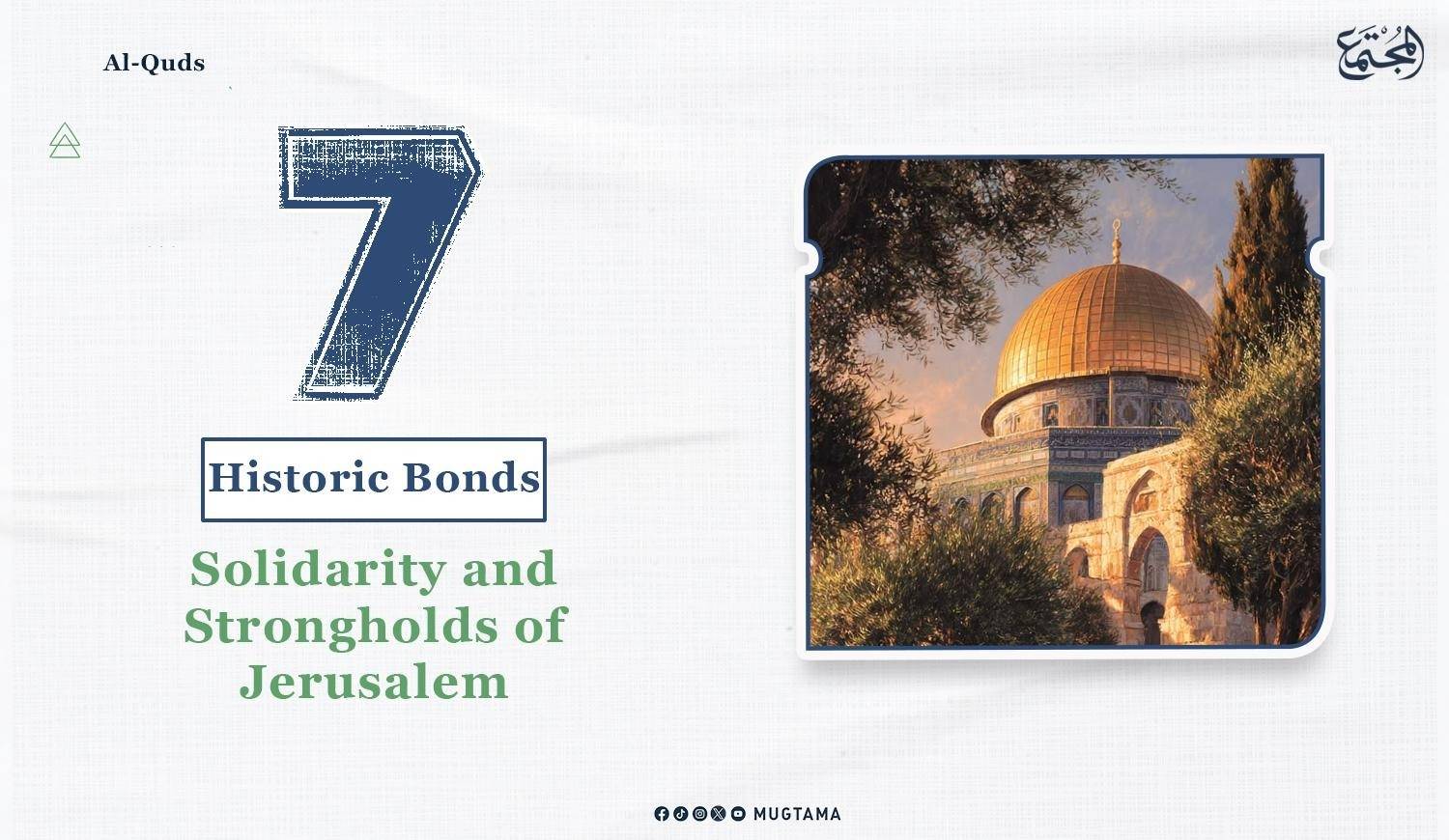
"Ribats"
(singular: Ribat) are among the most prominent architectural and historical
landmarks reflecting the Islamic identity of Jerusalem. Characterized by its
linguistic and religious roots, a Ribat originally refers to stationing
at frontiers and vulnerable outposts to defend them against external threats.
Palestine
witnessed the establishment of its first military outposts in the second
century of the Hijri calendar. As security stabilized, their wartime
significance receded, only to experience a powerful resurgence following the
defeat of the Crusaders in the seventh century AH and thereafter, when many
were rebuilt as watchtowers.
However,
the role of these fortified compounds and bastions in Jerusalem and Hebron was
not confined to the military domain. Instead, they transformed into
multi-purpose social and cultural hubs. They provided shelter for pilgrims and
visitors, offered religious education, housed the poor and widows, and
distributed aid and meals during the Ottoman era, in addition to housing
pioneering scholarly libraries.
Based on
reports by the Palestinian National Information Center and the Jerusalem
Affairs Department, we highlight the most prominent of these historic
strongholds in Jerusalem:
1- Ribat and Mosque of Ala Ad-Din Al-Basir:
Situated
near the Inspector’s Gate (Bab al-Nazir), this is the oldest of Jerusalem's
military outposts and fortified compounds. It was erected by the Mamluk Emir
Alaeddin Aydughdi (al-Basir) in 1268 AD (666 AH).
The
structure features an open courtyard flanked by chambers and secluded cells
(khalaoui), with a mosque located in the southwestern section. The mosque is
sheltered by cross-vaulted ceilings and centered by a hollowed prayer niche
(mihrab), and is accessed through an arched portal that leads into a vaulted
vestibule.
Initially
dedicated to Sufis, the poor, and religious community residents (mujawirin),
the Ottoman authorities later repurposed the stronghold into a prison
notoriously known as 'Habs al-Dam' (The Blood Prison). In the late Ottoman era,
it became a residential quarter for African-Jerusalemite families. The mosque
was restored for worship in 1969, with subsequent renovations continuing until
1986.
2- Ribat al-Mansouri:
Facing
the Al-Basir compound from the south near the Inspector’s Gate, this fortified
complex was constructed in 1282 AD (681 AH) by order of the Mamluk Sultan
Al-Mansur Qalawun al-Salahi, who endowed it to serve the poor and pilgrims.
The
structure features an open courtyard flanked by two parallel rows of rooms,
secluded cells, and a mosque. It is distinguished by its hawasil—fortified
granaries specifically designed for long-term grain storage.
This
defensive stronghold once hosted both male and female Sufis, with the number of
permanent religious residents reaching 86 in the 16th century. The Ottoman
authorities later converted it into a prison known as 'Habs al-Ribat' (The
Prison of the Ribat). Sharia court records document the vast revenues generated
by its extensive endowments and highlight women’s participation in some of its
administrative roles, long before it ultimately transitioned into a residential
quarter for African-Jerusalemite families.
3- Ribat al-Kurd:
Situated
at the Iron Gate (Bab al-Hadid) and directly adjacent to the western wall of
the Al-Aqsa Mosque compound, this defensive bastion was founded in 1294 AD (693
AH) by Emir Sayf al-Din Kurd, a prominent Mamluk of Sultan Qalawun.
The
structure features a tactical narrow entrance flanked by two stone benches (maksalah),
leading into a tight passage that gradually widens to reveal an open courtyard
and its surrounding secluded cells.
For
centuries, this fortified complex thrived as a vital social and educational
hub, eventually being recognized among Jerusalem’s prestigious historic
schools, before later transitioning into a residence for the Al-Shihabi family.
Today,
this historic landmark faces imminent danger due to Israeli excavations, which
have caused severe cracking in its fortified walls and the collapse of several
sections.
4- Ribat al-Mardini:
Situated
on the western side of the Bab al-Hitta road, this fortified outpost was
founded in the eighth century AH by two women who were emancipated by the
Artuqid ruler of Mardin (Salih bin Ghazi). It was specifically dedicated to
housing Jerusalem's visitors arriving from the Upper Mesopotamia (Al-Jazira)
and Mardin regions.
The
defensive compound features a prominent pointed-arch entrance that leads into a
central distribution corridor, which opens into two large halls sheltered by
vaulted ceilings. Its architecture is characterized by a resilient simplicity,
deeply relying on the local stone-building style.
Historical
documents confirm that this stronghold was once bustling with women from
Mardin. In modern times, it has transitioned into a residential quarter, with
two of its chambers converted into commercial shops.
5- Ribat al-Zamani:
Situated
at the Purifying Gate (Bab al-Mutaharah) opposite the Al-Othmaniyah School,
this massive stronghold is named after its founder, Khawaja Shams al-Din
Muhammad bin al-Zaman al-Dimashqi, who endowed it in 1476 AD (881 AH); it was
also historicaly known as the 'Zamaniyah School.'
The
fortified structure is a grand two-story edifice featuring a monumental Mamluk
portal designed in the distinctive Ablaq style (alternating courses of
red and white stone). Decorated with exquisite Muqarnas (stalactite
vaulting) and Naskh script inscriptions, the entrance leads into a vestibule
that opens onto a central courtyard, which accommodates 13 defensive chambers
and service facilities.
This
imposing complex fulfilled a dual purpose: a social role by sheltering and
feeding travelers and the poor, and an academic role through teaching Shafi'i
jurisprudence. Facing severe structural decay in 1912, the Islamic Waqf
successfully restored it. In subsequent decades, its original function shifted
as it was repurposed into a residential block for local families.
6- Ribat and
Maktab Bayram Jawish:
Situated
at the junction where 'Aqabat al-Takiya' intersects with Al-Wad and Bab
al-Nazir roads, this imposing bastion was established in 1540 AD (947 AH) by
Emir Bayram Jawish during the reign of Sultan Suleiman the Magnificent. It
became famously known as the 'Lead School' (Al-Madrasa al-Rassasiyah) due to
the strategic use of molten lead to fuse its massive stones together.
The
fortified structure stands as a complex Ottoman architectural masterpiece
interconnected with neighboring buildings. Spanning two stories, it features a
monumental gateway adorned with colored interlocking voussoirs (sanj),
intricate muqarnas, and a stone-carved shell motif resembling the rising
sun. The interior accommodates a mosque, defensive chambers, a central
courtyard, the founder’s mausoleum, and a square vaulted schoolhouse.
Initially
dedicated to sheltering orphans and providing free education for children, its
academic role flourished over time. Following the 1967 occupation of Jerusalem,
its educational mission was fiercely revitalized as a cultural stronghold to
counter the 'Israelization' of school curricula. Today, it operates as a boys'
high school adhering to the Arab-Jordanian curriculum, with a public library
occupying its first floor.
7- Ribat al-Hamawi:
Situated
at the Cotton Merchants' Gate (Bab al-Qattanin), this historic outpost stands
out among Jerusalem's strongholds as one whose founder’s identity and precise
construction date remain absent from surviving historical records.
Historically,
this landmark was distinguished by its unique dual-functional structure,
operating as two separate yet integrated complexes: one was dedicated to
housing male travelers and pilgrims, while the other was exclusively reserved
to shelter and care for widowed women.
Collectively,
these seven historic bastions stand as a living testament to the profound
social solidarity and scholarly prosperity that Jerusalem experienced
throughout successive Islamic eras.
Today,
their significance transcends mere archaeological value, positioning them as
the first line of defense for the city’s Arab identity. Due to their immediate
proximity to the Al-Aqsa Mosque, these defensive strongholds safeguard the very
perimeter of the Holy Sanctuary. This critical role demands an intensification
of legal and human rights efforts to restore them and protect their structural
foundation from the imminent threats of Judaization and hazardous excavations.
You may
also like:
Did Abbasids Abandon Jerusalem?
