





The freed Palestinian prisoners... and the forbidden embrace

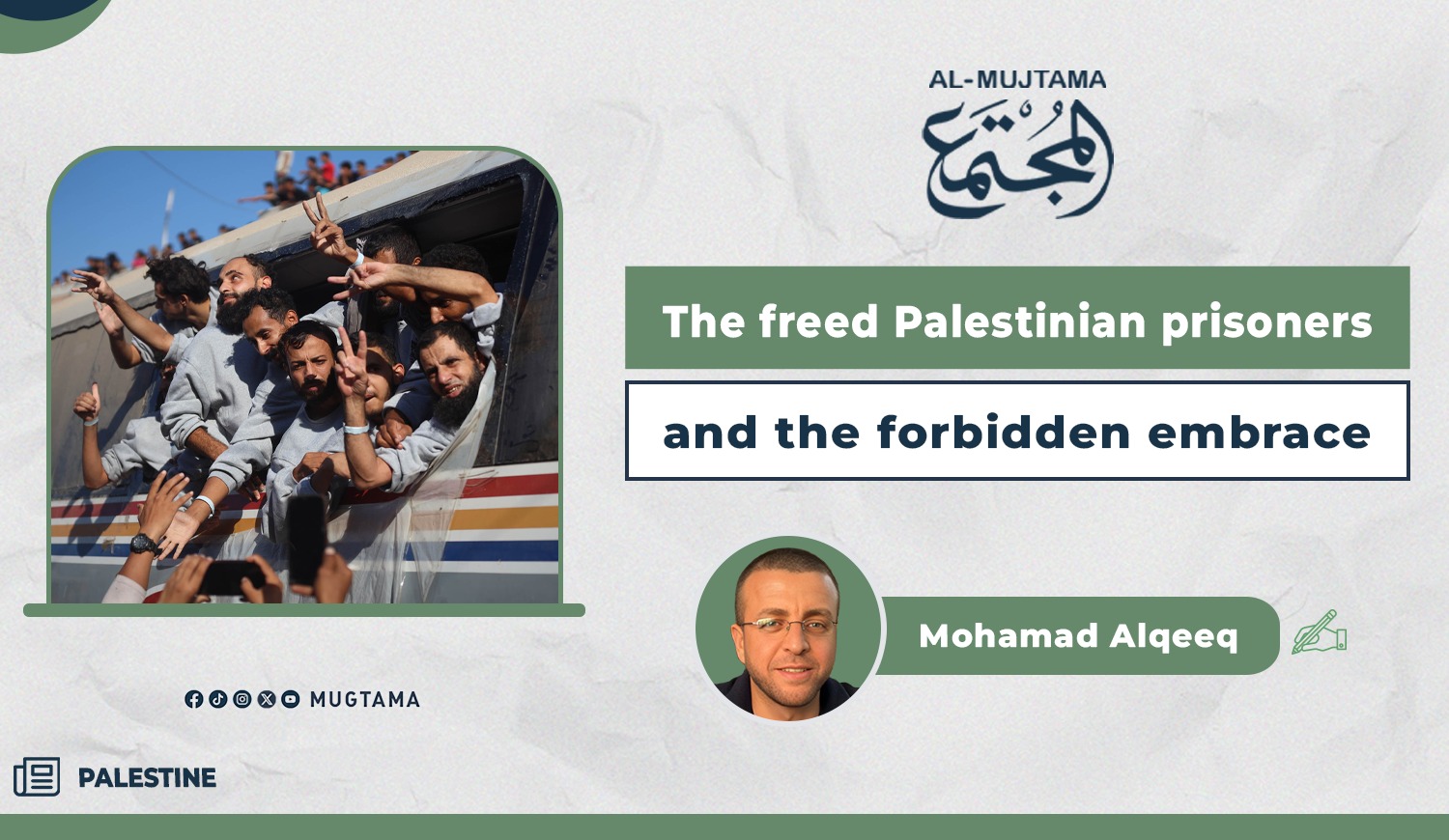
The Palestinian cause lives through accumulated chapters of genocide,
starvation, ethnic cleansing, demolition, fragmentation of geography, and
deterrence at all levels, reaching the prisoners in isolation cells and
torture. There lies the story of a homeland whose defense is paid for by
thousands of leaders, activists, and individuals at every level of struggle to
uphold rights and resilience.
Behind them are hundreds of thousands
of devastated families, searching for any word from the prisons about their
sons even just a few letters to form the sentence ‘still alive.’ This has
become the imposed reality under a policy of excessive deterrence, meant to
terrorize the people from continuing their struggle. It is a chapter in which
the occupation excels, reinforcing it and even engineering it psychologically,
security-wise, and politically, until sadism is manifested.
But the absent or obscured chapters
are there: where thousands of captives were freed through exchange deals
carried out by the resistance under the guarantee of Arab mediators and
international sponsorship. There, where the new prison is called ‘freedom at a
distance,’ with no stability, no free movement, no family visits, and no exit
from the circle. There, outside the boundaries of the occupation’s cells and
torture, the captives remain captives but in a new form with an old essence.
Freed
Palestinian captives... shackles that still endure!
The freed Palestinian captives from
the occupation’s prisons are subjected to the harshest daily humiliation in the
West Bank—through raids and destruction of homes, daily assaults, surveillance,
arrests, field interrogations, and bans on movement, communication, or speaking
in the media. Thus, it remains a story unfinished, of shackles and the voice of
an officer speaking in Hebrew.
And yet, in the Arab world, their own
language and lands where it should be natural and obligatory to welcome, honor,
and embrace them, most countries refuse to receive them. They even impose
restrictions on those who try to communicate with them. Some justify this as a
measure to protect them from assassination attempts by Israel or from being
abducted again. Other justifications claim that these states are bound by
international agreements to combat terrorism, preventing them from hosting the
freed Palestinian captives, though even the charge of terrorism, by Israel’s own
standards, fell away the moment they were released from the occupation’s
prisons. Yet, the accusation remains stored in the files of Arab security
computers.
Among the justifications of those
states is that they do not want to encourage displacement. Yet these very
states facilitate flights for the people of the West Bank and lure the people
of Gaza to leave their land. Some of these regimes fear that the freed captives
could become a bridge for the Palestinian narrative and resistance to their own
peoples whose mindset has been subjected to the theory of demonizing
resistance. Thus, they eliminate any enlightenment about the Palestinian cause
that could lead to anger or genuine solidarity.
There are many justifications, most of
them wrapped in propaganda about preserving the Palestinians and their
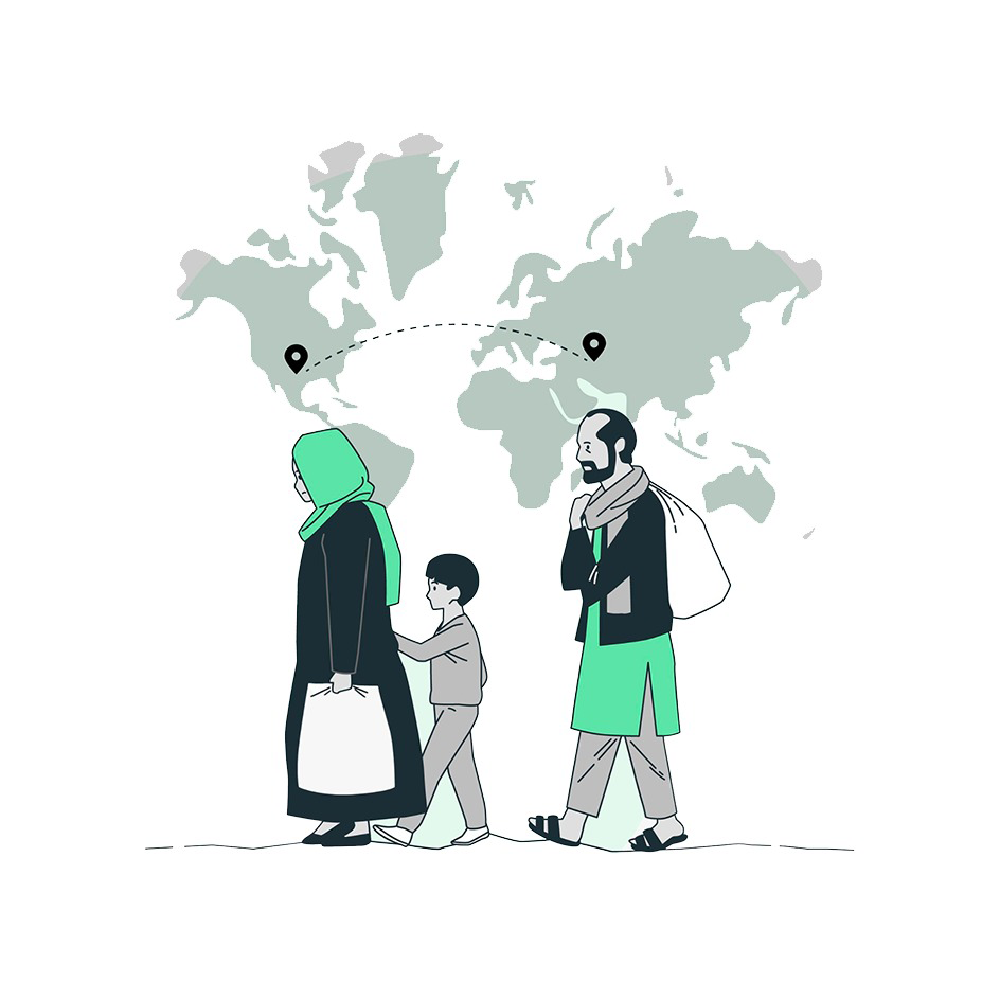
resilience. Yet, in the areas to which the captives have been released, there
are numerous restrictions. Many of them have not seen their families for long
months, nor have they been allowed to leave their locations, coinciding with the
official refusal of the majority of Arab and Muslim states to receive them.
The Arab betrayal of the freed
Palestinian captives
The approach practiced by most Arab states
toward the freed Palestinian captives serves as a direct encouragement to the
Israeli occupation to escalate its policies against them, their properties, and
their families in the West Bank, Jerusalem, and Gaza. Moreover, it becomes
media material used by Israel before the world to portray them as terrorists
who cannot be granted safety since even Arab states have denied them security
and refuse their presence on their soil under the pretext of protecting
national security.
The refusal to receive them in most
Arab states while at the same time some of these states welcome Israeli
captives, including soldiers released by the resistance from Gaza in the very
same deal and agreement that bars the freed Palestinian captives from entering
these countries serves as a signal of support to Israel and a demonization of
the resistance and the Palestinians.
There is yet another angle that
contradicts the positions of those states which maintain relations with Israel
and constantly boast of their support for the Palestinians, while at the same
time tightening restrictions on them.
The way Arab and Islamic states deal
with the freed Palestinian captives from the occupation’s prisons weakens
international solidarity and makes many supporters afraid to show solidarity because
these states attempt to demonize the freed captives through their policies
toward them, without openly displaying hostility.
To prevent the waste of their rights
as Palestinians who hold the nationality of their homeland now recognized by
most states the freed captives should be granted full freedom of movement,
official documents, and passports. They should also be given diplomatic status,
based on their former role as defenders of the Palestinian right guaranteed by
all international laws, so that they may become ambassadors of truth,
delivering lectures, participating in conferences and marches around the world
to showcase the Palestinian cause.
But instead, they are classified by
some Arab states as security files, linked to regional developments and the
desires of the Americans and Israelis. Thus, the lost embrace and the forbidden
moral relief become the shackles that the resistance had already broken from
their bodies.
From the darkness of a cell where
bodies decayed for decades and iron doors changed, yet the captives’ will
remained steadfast to the sun of freedom whose rays slipped through to sketch
the outlines of a future carved from their flesh, blood, and years. Some lost
the chance of parenthood, others now dream of a home and family, and still
others search amid the dust of battle for a relative, the embrace of a
homeland, Arab identity, and a brother.
The pages of politics have scattered so
that the close one becomes distant, and the enemy a friend, welcomed with a red
carpet whose color resembles, or is less crimson than, the pool of blood
created in Palestine, Lebanon, Yemen, and Syria. To him they say: ‘With you we
sign the Abraham Accords.’ To the victim they say: ‘Stop crying and wailing,
get used to the scene.’ For in the mindset of our regimes, the captive will
remain a captive even if his chains were shattered by the resistance and he is
celebrated by his people and his nation.
______________________________________________
You may also like:
7 Flimsy Justifications for Zionist Occupation Crimes
Is There Peace?.. 720 Days Without the Day After
It’s a Genocide in Many Forms, not a Ceasefire Deal with Violations