



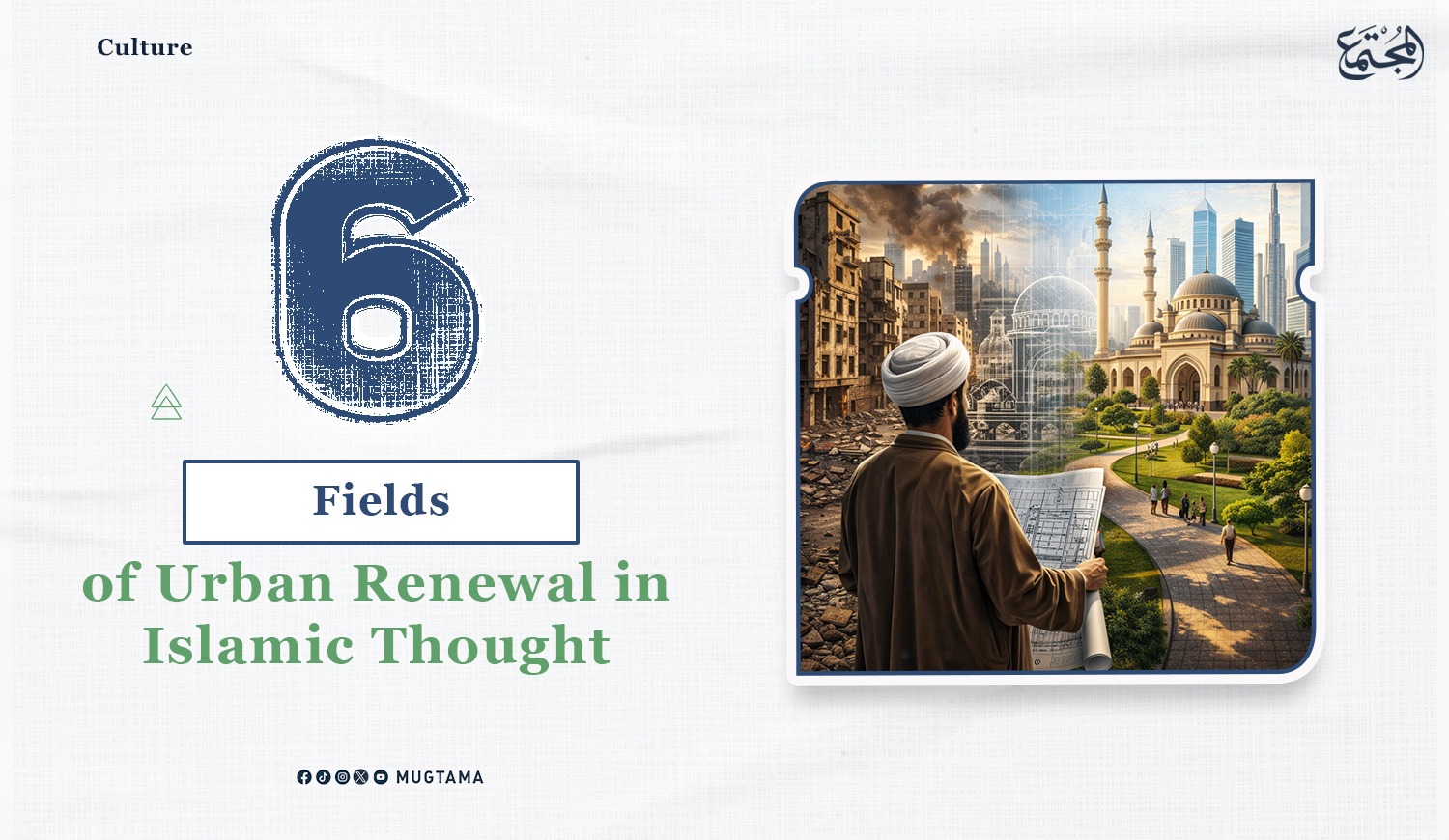
6 Fields of Urban Renewal in Islamic Thought
Scholars have offered varied
definitions of renewal in Islam, yet they converge on a common core: reviving
the guiding principles that Islam has illuminated across the diverse dimensions
of human life. Among the most significant fields encompassed by renewal are the
following:
1- Preserving the Original Religious
Texts in Their Pure and Authentic Form:
If the purpose of renewal is to revive
the landmarks of the faith, then religion is fundamentally built upon the
original texts revealed by Allah in His Book, or clarified by the Prophet (PBUH) in his Sunnah. No religion can endure without the
preservation of its texts. Indeed, the corruption of pre-Islamic creeds and the
deviation of their followers from the straight path was caused by nothing other
than the loss of original sources and the failure of their adherents to preserve
and accurately transmit them.
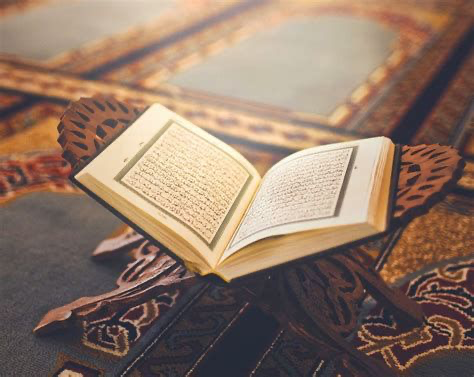
And whoever reflects upon
Islam will find that Allah the Almighty has guaranteed its preservation, as He
said: (We have sent down
the Quran Ourself, and We Ourself will guard it. Even before you [Prophet],) (Al-Hijr:9) The preservation of
the Quran necessarily entails the preservation of the Sunnah, for the Sunnah
serves as an explanation and clarification of the Noble Quran, as Allah the
Almighty said: ( We
have sent down the message to you too [Prophet], so that you can explain to
people what was sent for them, so that they may reflect.) (An-Nahl:44)
Although
Islam, with its original texts — the Quran and the Sunnah — is preserved under
the protection of Allah, this preservation is realized and fulfilled through
the dedication, efforts, and sacrifices of devout scholars. And this is
precisely what has taken place: the Noble Quran received immense care from
Muslims, both in written form and through memorization by heart, while the
Prophetic Sunnah was transmitted with precision and integrity by successive
generations of scholars, who also stood firm against those who sought to
distort it in every time and place.
2- Conveying the Correct Meanings of the
Texts and Reviving Their Proper Understanding:
The
Prophet (PBUH) explained to his nation the meanings of the Noble Quran in a
complete and comprehensive manner. The noble Companions received the meanings
of the Quran from the Prophet (PBUH) just as they received its words, and
likewise with the Prophetic narrations — for the purpose of any words lies in
their meanings, and it is inconceivable that the address of Allah and His
Messenger would be directed at them in a language they could not comprehend.
Accordingly, understanding the Quran and the Sunnah through the understanding of
the Companions and receiving the meanings of the texts from them becomes an
indispensable necessity — especially given that the texts of divine revelation
were expressed in the very language of their daily speech, and they lived
through the circumstances of its revelation, witnessed the surrounding context,
were the first to act upon it, and their souls interacted deeply with it, for
it touched the most intricate matters of their lives and kept pace with their
varied conditions and circumstances. All of this makes their understanding of
the texts an inseparable part of the religion itself, and to turn away from
their understanding is to follow a path other than that of the believers.
If
the texts were left to the personal interpretations and reasoning of people, it
would not be far-fetched for the religion to take on multiple forms, given the
diversity of minds and understandings, and their susceptibility to the
influences of time, place, environment, culture, desires, and inclinations. It
is therefore observed that all efforts made to distort the texts of the Quran
and the Sunnah have failed entirely. However, where ill-intentioned individuals
have partially succeeded is in the realm of distorting the meanings of the
texts and stripping them of their true implications through various forms of
misinterpretation and alteration. For this reason, reviving the methodology of
the Companions and those who followed them in righteousness — in their
reception, understanding, and application of Islam — along with careful
verification and documentation of what has been transmitted from them in this
regard, stands among the most important fields of renewal.
3- Exercising Independent Reasoning in
Emerging Matters and Providing Solutions for Them:
If
Islam is the eternal religion of Allah until the Day of Resurrection,
encompassing every time, place, and person, while its texts are finite yet
emerging events and circumstances are endless, then opening the door of
independent reasoning (ijtihad) becomes an absolute necessity — in order
to apply the finite texts to ever-evolving circumstances, and to provide
appropriate Islamic solutions for the problems that arise among people. Without
this, people would fall into hardship and distress as a result of being distanced
from the rulings of their Lord, and it would give enemies of the religion,
those with ill intentions, and those with corrupt souls, grounds to accuse
Islam of rigidity, backwardness, and unsuitability for every time and place.
4- Correcting Deviations:
Deviation
from the religion manifests in two forms: the first is deviation in concepts
and values, and the second is deviation in conduct and practice. The first type
refers to the emergence of beliefs and perceptions about the religion that
contradict the truth which Allah revealed and intended. As for the second type,
it refers to a situation where the belief itself remains sound, yet the conduct
and actions contradict that belief and perception.
Scholars
have described doctrinal deviation as the disease of doubt (shubhah),
and behavioral deviation as the disease of desire (shahwah). Ibn
al-Qayyim states that the heart is susceptible to two diseases that overtake
it, and when they take firm hold, its ruin and death become inevitable: the
disease of desires and the disease of doubts — and these two are the root
affliction of all people, except those whom Allah has spared.
5- Protecting the Religion, Defending
It, and Striving in Its Cause:
Restoring
the religion to its original foundations, safeguarding it from the tampering of
the corrupt and the distortions of the manipulators, and protecting those who
uphold and carry its banner — all of this requires strength and resolve. For
the foundation of the religion rests upon a Book that guides and a sword that grants
victory, as Allah the Almighty said: (We sent Our messengers with clear signs, the Scripture and the Balance,
so that people could uphold justice: We also sent iron, with its mighty
strength and many uses for mankind, so that God could mark out those who would
help Him and His messengers though they cannot see Him. Truly God is powerful,
almighty.) (Al-Hadid:25)
6- Seeking Solutions to Revive the Forms of Civilizational Engagement
among Muslims:
Attaining
a civilizational standing among contemporary nations requires establishing the
foundations of peaceful coexistence, activating civilizational dialogue with
other nations, renewing the religious and political discourse directed toward
others, addressing environmental issues that are deeply rooted in Islam, and
bringing to light the civilizational values of Islam while striving to revive
and restore them. Every individual who exerts effort in any one of these fields
has a share in renewal, and to the extent that a renewer engages across multiple
fields, so too does his rank in renewal grow greater. And the truly successful
is the one whose renewal encompasses all of these fields.
You may also like:
5 Reasons Behind the Decline of Islamic Civilizational Contribution
4 Reasons Why Civilizational Change Is an Inevitable Necessity
5 Internal Factors Leading to the Collapse of Civilizations
==============================================