



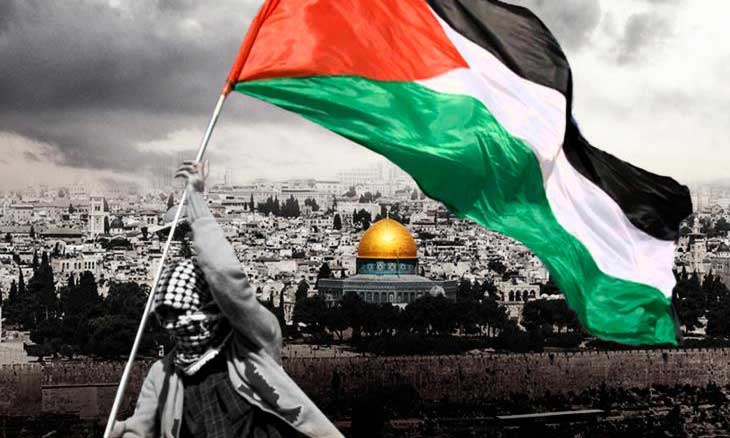

4 Reasons Why Civilizational Change Is an Inevitable Necessity

Change is
one of the divine laws that God has embedded in His creation, ensuring the
balance of power on earth and preventing the unchecked spread of injustice.
When corruption prevails, morals vanish, and tyranny dominates, God Almighty
decrees change so that oppression may cease, and life may be renewed upon the
earth. Thus, God replaces one nation with another. As He, the Exalted, says:
(If God did not drive some back by means of others
the earth would be completely corrupt, but God is bountiful to all.)
(Al-Baqarah:251)
And He,
Glorified be He, says: (If God did not repel
some people by means of others, many monasteries, churches, synagogues, and
mosques, where God’s name is much invoked, would have been destroyed. God is
sure to help those who help His cause- God is strong and mighty-) (Al-Hajj:40)
There are also reasons that hasten the
process of civilizational change among nations and civilizations. Among these
reasons are:
First: God’s Law of Change and Civilizational Succession:
Let us
imagine if permanence were the defining trait of societies and civilizations,
and that once a civilization seized control, there would be no way to change it
regardless of the circumstances. Undoubtedly, such a situation would be
extremely difficult—especially knowing that when man feels assured that
responsibility will remain in his hands, his soul tends to transgress and his
morals deteriorate. Thus, the strong devour the weak, the rich prey upon the
poor, and the powerful crush the small—except for those upon whom God bestows
His mercy.
Ibn
Khaldun says: If decline is natural in a state, its occurrence is akin to
the occurrence of natural phenomena, just as senility occurs in the animal
constitution. Senility is one of the chronic conditions that cannot be cured or
removed, since it is natural, and natural phenomena do not change.’ (1) He
also devoted in his Muqaddimah a separate chapter entitled: ‘On the
fact that states have natural lifespans just as individuals do.’ (2)
The Noble
Qur’an laid the foundation for the principle of change, and these divine laws
did not exempt any nation or civilization. History is filled with traces of
nations that were once powerful yet fell when justice disappeared from them. As
the Almighty says: (God does not change the
condition of a people [for the worse] unless they change what is in themselves)
(Ar-Ra'd:11)
This verse is not a legal ruling, nor merely
an admonitory verse; rather, it represents a civilizational principle. It
establishes that change is intrinsically tied to human action and
behavior—shifting from obedience to disobedience, and vice versa.
The Prophet (peace and blessings be upon him)
If you sell anything on credit to anyone, on the
condition that you will buy it back for a lower price (al-'Einah), take hold of
the tails of cattle, become pleased with agriculture and give up Jihad - Allah
will make disgrace prevail over you and will not remove it from you till you
return to your religion.’ (Narrated by Abu Dawud). Thus,
civilizational decline occurs as a result of internal disorder rather than
external conspiracy. And for the ummah to emerge from weakness, humiliation,
and frailty, it must first return wholly to its religion—not partially, but in
its entirety—for this is the condition of civilizational change.
Second: The Conflict Between Values and Morality and Reality:
Among the
most significant reasons driving major processes of change throughout history
is the absence of the set of moral values necessary to move societies toward
the principles of goodness, justice, mercy, and human dignity. When these
values disappear, lose their balance, or remain mere empty slogans without
practical substance, God Almighty decrees change.
The
message of Islam was, at its core, established for this very purpose. The
Prophet (peace and blessings be upon him) said: ‘I was only sent to perfect
noble character.’ (Reported by Ahmad). Thus, when politics becomes detached
from justice, trust from economics, and knowledge from education, society is
afflicted with weakness, losing both its resilience and its capacity to move
toward its divine objectives—objectives through which it attained its status by
bearing their responsibility.
Change
requires prior effort that the ummah must undertake in order to renounce the
morals that have afflicted it and that contradict the teachings of its
authentic identity. Shaykh Muhammad al-Ghazali states: ‘No message succeeds,
no civilization flourishes, and no nation advances unless a radical
transformation occurs within the structure of the preceding dominant nation, or
unless material and moral characteristics converge in the foundations of that
successful message and flourishing civilization. Indeed, the rise or fall of
communities does not occur through blind fortune or accidental coincidence!
Rather, ebb and flow have hidden causes—though they may escape the naked eye,
they will not escape the sharp insight and penetrating intellect.’ (3)
And the
Noble Qur’an affirms this constructive meaning in His saying: (It is most hateful to God that you say things and then
do not do them) (As-Saf:3)
Speech
without action does not merely represent a moral flaw; it is a major cause of a
nation’s civilizational downfall. And such a nation will not rise again until
it restores the value of character, the value of speech, and the value of
action.
Third: The Decline of the Civilizational Human from a Position
of Agency to a Position of Dependency:
Some
people confuse the essence of civilization by equating it with what human hands
have produced. In reality, civilization is man himself before it is
architecture or material development. And when man shifts from being a producer
of civilization to merely a consumer of the civilization of others, then change
becomes necessary. As God says in describing the believers: (Do not lose heart or despair- if you are true believers
you have the upper hand) (Ali 'Imran:139)
O believers, the outcome is yours (4). A
Muslim is not befitting to remain merely a spectator of what unfolds around the
world, distant from responsibility and leadership, reduced to a follower of
others without guidance or awareness. Whoever finds himself in such a state has
no right to speak of change unless he begins with himself—rebuilding it
morally, spiritually, and intellectually.
Fourth: The Pressure of Global Transformations and the Necessity
of Preserving Identity:
It is not
only the Islamic identity that is subjected to the accelerating pressures of
globalization; Western identities too have been affected—those that once
adhered, at least outwardly, to the teachings of the Church in Europe. With the
rise of globalization and secularism, all divine references have been
challenged, and at their core, Islam in particular—since it is the only
revealed religion that still carries a comprehensive program for the
construction of life, preserved by God Almighty, who says: (We have sent down the Quran Ourself, and We Ourself will
guard it. Even before you [Prophet]) (Al-Hijr:9)
It has been, and continues to be, subjected
to a fierce campaign of doubt regarding its rulings, with attempts to undermine
them through waging war against the Sunnah and seeking to deny it.
Therefore, it has become necessary to
accelerate the process of civilizational change—first, in defense of the
sanctities of the ummah, and second, in salvation of the world itself. A world
now threatened by wars that pit humanity against itself, and by manufactured
diseases that dominate it. Humanity has no hope left except that the ummah of
Islam rises, realizes its position, and fulfills its civilizational mission
entrusted to it. As God Almighty says: (We have made you
[believers] into a just community, so that you may bear witness [to the truth]
before others and so that the Messenger may bear witness [to it] before you.)
(Al-Baqarah:143)
Some confuse the meaning of moderation,
thinking it applies to the religion itself. Yet Islam has described it
precisely: moderation is a characteristic of the ummah, not of the religion—for
the religion is one, and it is Islam.
Whoever works to change the condition of the
ummah should be assured that this religion will remain, and that its ummah,
even if weakened, will inevitably return. For Islam came to endure, not to be
replaced; it came to prevail. Our task is only to awaken that dormant giant, to
revive within it its creed and identity, so that it may reclaim the position
for which it was created.
You may also like:
5 Internal Factors Leading to the Collapse of Civilizations
How Islam Shapes Civilized Humans ?
References
1.
Muqaddimah Ibn Khaldun, p. 320.
2.
Ibid., p. 189.
3.
Dimensions of Human Change Before God’s
Decisive Word, an article by
Shaykh Muhammad al-Ghazali, published in May 2023 on the website of the Center
for Civilizational Witness for Shari‘ah and Future Studies.
4.
Tafsir al-Qur’an al-‘Azim by Ibn Kathir, p. 403.