





Orphaned Adha and Postponed Dreams of Pilgrimage

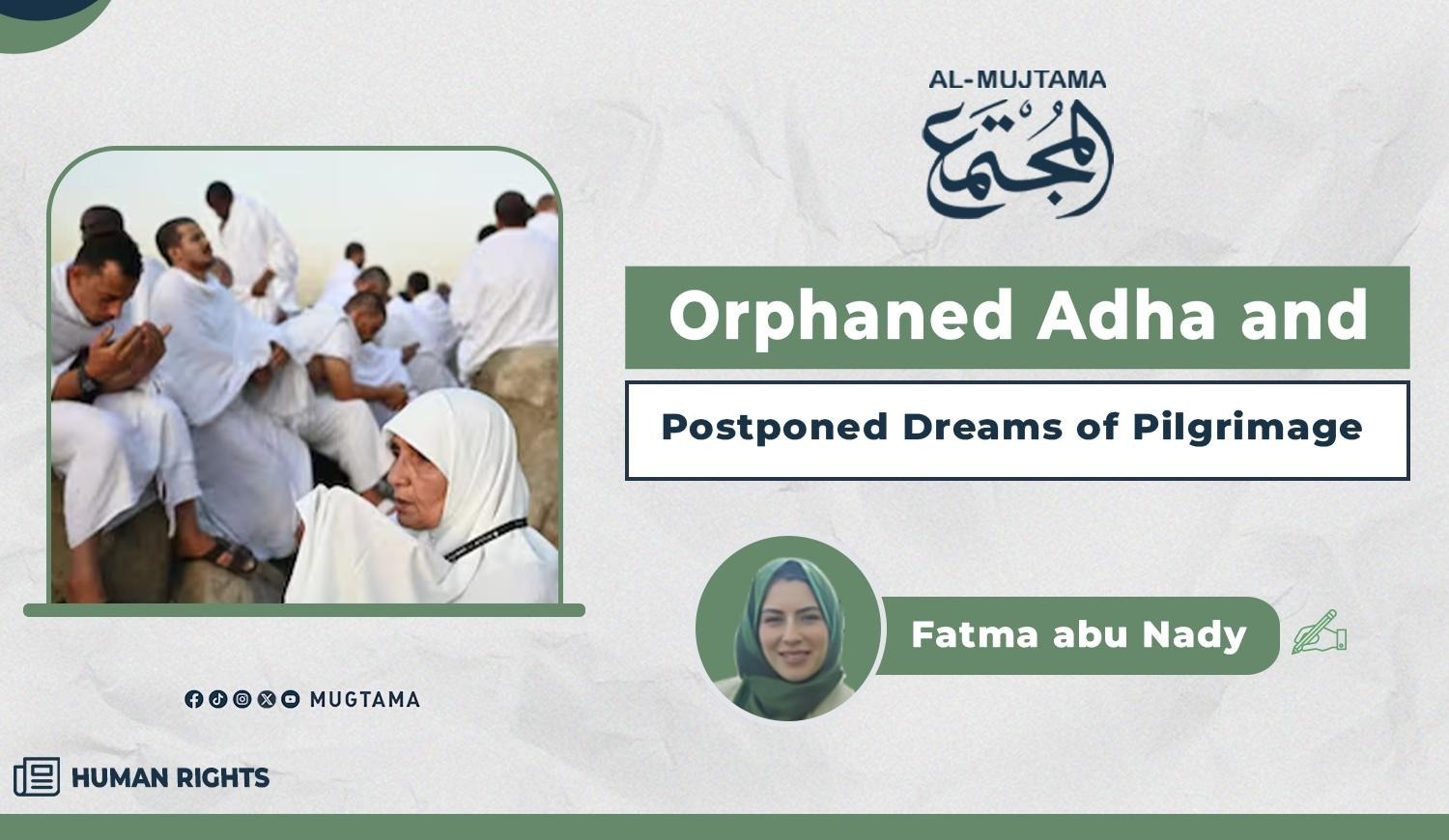
In the Gaza Strip, Eid al-Adha is like an
orphan without celebrations or traditions of slaughter. This year's Eid arrives
without any relief, leaving behind an unbearable amount of suffering. An entire
city covered in blood and full of fears. Instead of celebrating Eid al-Adha, Gazahas sacrificed the blood of its children till their blood has drenched and
soaked the land.
In Gaza, the tradition of offering sacrificial animals
as a form of worship each season has been transformed into a fantasy. To
prevent animals from entering, the occupation tightens the gate and blocks the
crossings, ruining their opportunity to celebrate and enjoy the festival. Here,
"Ahmed Abu Al-Hana," a livestock and cattle trader in the Gaza Strip
who owns the biggest livestock farm east of Al-Shuja'iyya, speaks with a heart
full of anguish over the terrible losses that have totally ruined his property.
Within the yellow line, the sheep and cows he formerly
raised on his property are now a reality. With despair and a deep pain in his
heart, he keeps talking. The selling season starts at these times, and people
of every generation flood to his property in the east. The majority of people
are able to purchase Eid sacrifices, indicating that sheep cost no more than
$400. However, a sacrifice now costs more than $5,000.
"I am empty-handed; I don't have a single head to
sell," he angrily told the Kuwaiti newspaper Al-Mujtama. People's
capacity to hold onto what little feeling of life they still have has been
taken away by the oppressive siege. In a city worn down by starvation,
conflict, and loss, the sacrifice—once a religious rite and a symbol of
unity—has become a far-off hope.
Abu Al-Hana’s Farm A Silent Witness to the Loss of Joy in Gaza
Abu Al-Hana's children laugh and his heart breaks for
days past as he stands in the quiet of his once-vibrant farm. His property was
bustling with families in the past. While parents chose animals for Eid
al-Adha, children would rush around the animals, feeding and touching them,
creating scenes of joy and hope throughout the farm.
Livestock Price Surge
Before the war, traders used to import about 20,000
heads of calves and 50,000 heads of sheep during Eid al-Adha alone, according
to Abu Al-Hana. Due to Gaza's lack of livestock self-sufficiency, sheep and
cattle were brought from the Sinai people in Egypt, as well as animals from
Australia. Imports were therefore required. If there were any animals in the
area, they belonged to specific families who raised and cared for them. Abu
Al-Hana emphasizes that the price of small livestock weighing 50 kilograms did
not exceed $400, whereas now it has reached $6,000. Back then, a kilogram of
meat was sold for $7, but now the price of a kilogram of lamb can reach up to
$120.
Cultural Loss, Scarcity
Abu Al-Hana explained, with deep regret, that even
those who are able to buy—such as Bedouins who own a few sheep—may refuse to
sell, because these animals are considered an essential part of their culture.
If they do agree to sell them in honor of Eid al-Adha, the prices are
astronomical and unacceptable, simply because these are the only animals
available. As for livestock in terms of cows and calves, it is virtually
nonexistent. This is due to the risks that traders faced at the beginning of
the war, which drove them to slaughter their animals quickly—they did not know
the war would last so long, which was enough to make all the livestock
disappear in addition, the Israeli side prevented the entry of animal feed, not
to mention the bulldozing of all the farms. Nothing is left but ashes and
heartbreak. His farm, which used to welcome people as Eid approached and became
a destination for families searching for their sacrificial animals, has now
become silent rubble in the midst of destruction. The cows and sheep that were
his source of livelihood for years perished under the bombardment, as if the
war had not even left Eid its right to exist.
Gaza without sacrificial meat, only frozen products
Hajj Dream Deferred
The desire of pilgrims in the Gaza Strip to complete
the Hajj has been delayed for the third year in a row because of travel and
mobility limitations. It is really regrettable that the border crossing is only
available to sick and humanitarian cases, with just 50 travelers each day. Even
after registering their names and waiting patiently for their turn for years,
many pilgrims are still unable to visit the holy places before they pass away.
The Ministry explained that the ongoing closure of the crossings and the
prohibition on travel for pilgrims from Gaza had prevented over 10,000 citizens
from attending the Hajj during the last three years. The ministry added that
although 2,508 pilgrims are allowed to visit the Strip each year, 2,402
pilgrims who were accepted in 2023 are still unable to complete the pilgrimage
because 71 of them passed away while awaiting the opportunity to see the sacred
sites.
Yearning for Hajj
The Palestinian Ministry of Religious Foundations and
Religious Affairs stressed that preventing residents from carrying out their
religious rites is a humanitarian and religious disaster that impacts human
dignity and the inherent right to worship, rather than just a procedural issue.
The ministry reaffirmed that the freedom to enter houses of worship and carry
out religious rites without hindrance is guaranteed by international laws and
conventions.
The Palestinian Ministry of Religious Foundations and
Religious Affairs stressed that preventing residents from carrying out their
religious rites is a humanitarian and religious disaster that impacts human
dignity and the inherent right to worship, rather than just a procedural issue.
The ministry reaffirmed that the freedom to enter houses of worship and carry
out religious rites without hindrance is guaranteed by international laws and
conventions.
Their goals are still on hold. They are content to recite the Talbiyah and Takbeerat from their tents, but they are devastated that they are unable to see Allah's Holy House. In Gaza, yearning comes back with every Hajj season. Many, unable to do anything but watch the pilgrims on their phones, recite the Talbiyah from the tents and camps for displaced people, tears
welling up in their eyes. While thousands of Gazans continue
their journey, dreams have been put on hold for years and hearts are burdened with
longing for the Holy Kaaba.
Why Has Israel Failed to Crush the Gaza Resistance?
9 Outcomes of the Third Conference of Palestinians in Turkey
While the World Looks Away… Gaza Is Being Slaughtered and Al-Aqsa Faces
Imminent Danger!