






Why Has Israel Failed to Crush the Gaza Resistance?
The war
on Gaza was not merely a conventional military confrontation between an army
possessing overwhelming firepower and a besieged resistance confined within a
narrow geographical area. Rather, it gradually transformed into a complex
conflict where politics and the battlefield intertwined. The battle is managed
on two parallel tracks: the first is military, tied to steadfastness and the
capacity for attrition; the second is political, linked to managing
negotiations and preventing the occupation from turning the war into a project
of total Palestinian surrender—ensuring that what it failed to achieve through
weaponry and combat will not be obtained at the negotiating table.
From the
very first days of the war, the Israeli occupation announced maximalist goals
that seemed akin to completely re-engineering the Palestinian landscape.
Dismantling the resistance, ending its governance in Gaza, recovering the
hostages by force, and imposing a new security reality to ensure that the
events of October 7th would never be repeated—all of these were presented as
achievable objectives within a short timeframe through the deployment of
overwhelming military might.
When Israeli Military Superiority Fails to Decide the Outcome
However,
over time, these goals began to gradually erode in the face of a more complex
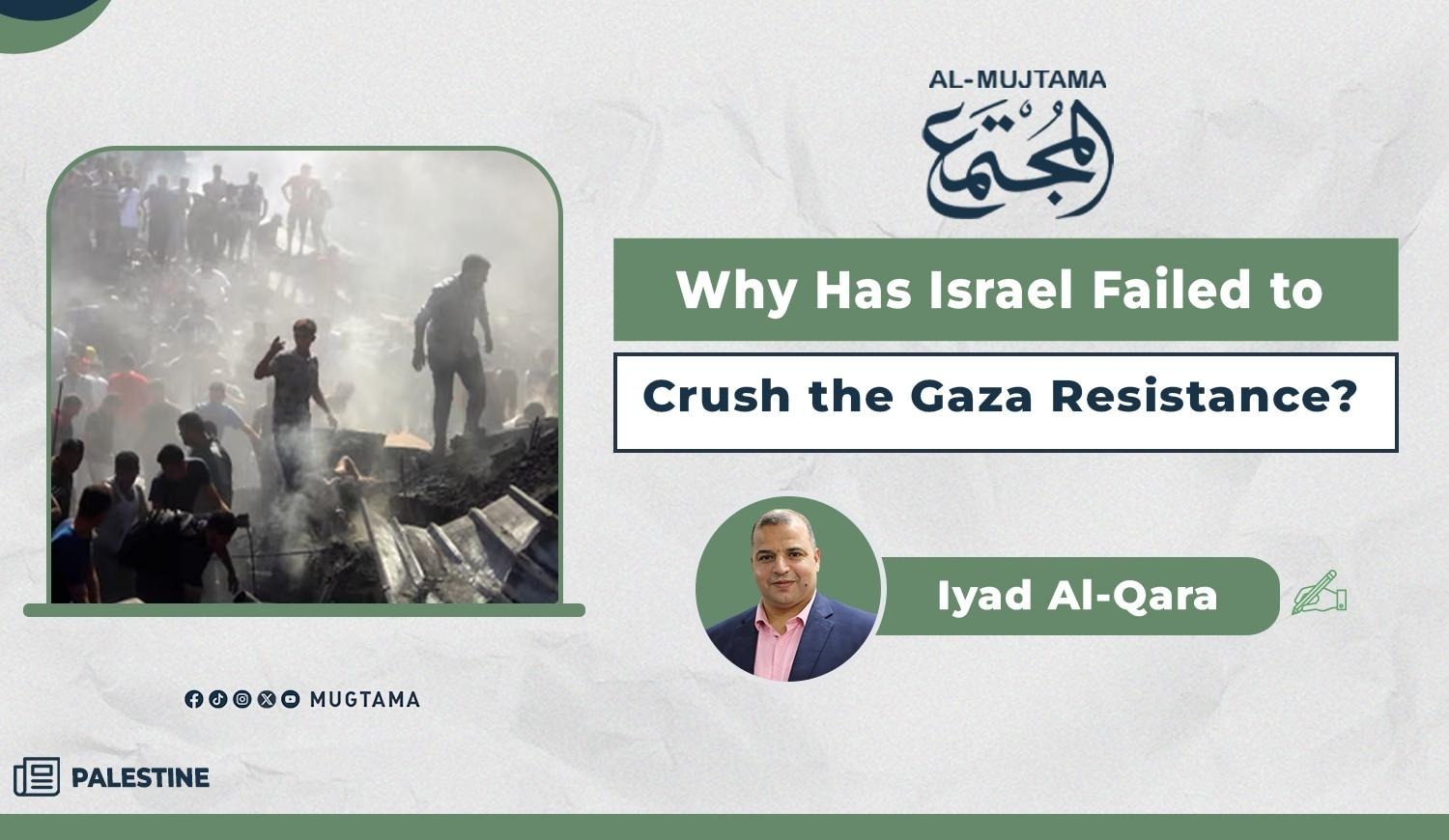
political and battlefield reality. Despite the scale of destruction, killing,
and siege, the occupation failed to achieve the image of decisive victory it
attempted to market domestically and abroad. Instead, the war clearly revealed
that Gaza is not governed merely by the logic of military superiority, but by
the logic of steadfastness and the ability to manage a long-term war of
attrition. Conversely, the resistance approached the war as a multi-layered
battle, recognizing that battlefield steadfastness is not an end in itself, but
a tool to generate political leverage within the negotiation process.
Therefore,
military performance was never detached from political calculations; rather, it
was deployed within a broader strategy aimed at preventing the occupation from
imposing its final terms by force. It is precisely this equation that compelled
the occupation, after many long months of war, to repeatedly return to
mediators and the negotiation tables in Cairo and Doha—despite all its
proclamations regarding a complete and decisive outcome.
The
occupation discovered that military might alone is insufficient to achieve its
political objectives, and that completely dismantling the resistance is not an
easily attainable goal, even in light of significant military and technological
superiority. This is perhaps best underscored by the scale of debates and
divisions that surfaced within the Israeli political and military
establishments themselves. Former Israeli Prime Minister Ehud Olmert spoke
clearly, stating that the slogan 'destroying Hamas' lacks political and
military realism, while retired Israeli General Yitzhak Brick asserted that
Israel has entered an open-ended war of attrition without possessing a clear
vision for the day after.
Furthermore,
Israeli media outlets, including 'Haaretz' and 'Yedioth Ahronoth,' began to
repeatedly report on the gap between the declared objectives and the actual
results on the ground—especially as the resistance continued to manage the
battle, demonstrating its ability to survive despite the unprecedented scale of
targeting.
This
Israeli failure was not solely military, but political as well. The occupation,
which sought to impose an equation based on subjugating Gaza by force, found
itself facing a different reality: a resistance that remains enduring,
negotiations that cannot be bypassed, and mediators who recognize that no
agreement can be built upon total surrender.
Alternative Leverage and Israel’s Domestic Crisis
Consequently,
the occupation gradually shifted to utilizing alternative leverage, employing
the siege, humanitarian pressure, and assassinations as means to improve its
political terms. Continuously blocking the entry of aid, expanding the 'Yellow
Zone,' and tightening restrictions on crossings have all been transformed into
indirect negotiation tools aimed at generating domestic pressure on the
resistance and the broader Palestinian environment. Within this context, the
policy of targeting the families and children of leaders emerged as part of an
attempt to psychologically and emotionally blackmail the Palestinian
negotiator.
What
occurred with Dr. Khalil al-Hayya following the targeting of his son was not an
isolated incident, but rather a political and security message directly tied to
the negotiation process—an attempt to influence the resistance's positions
through immediate human suffering. Yet, this policy simultaneously exposed the
limits of Israeli power. The occupation, which once spoke of politically and
security-wise reshaping Gaza, now finds itself incapable of presenting a
realistic vision for the day after the war.
Even the
talk of disarming the resistance appeared akin to rhetoric intended for
domestic Israeli consumption; the security establishment itself recognizes that
this objective is unattainable without an immense cost and a protracted,
open-ended war. Inside Israel, the political crisis is escalating rapidly. The
current government faces growing accusations of failure, both in preventing the
October 7th attack and in subsequently managing the war. This has transformed
the continuation of military operations into a means of evading domestic
accountability and an attempt to rehabilitate the leadership's image before
Israeli society.
Consequently,
Palestinian blood has become intertwined with Israel’s domestic political
calculations, where military escalation is utilized as leverage to improve the
standings of competing political factions, rather than as part of a clear
strategy to end the war. Conversely, the resistance succeeded in maintaining
the most critical equation: preventing the occupation from achieving a
definitive and decisive victory. Israel, despite its military superiority, has
been unable to eliminate the resistance or impose absolute political surrender.
Meanwhile, the resistance managed to translate its battlefield steadfastness
into a source of negotiating leverage that precludes the absolute imposition of
Israeli terms.
And
herein lies the true nature of the conflict in Gaza today: it is not a struggle
between weaponry and politics, but rather a conflict where politics is utilized
as an extension of the battlefield, and the battlefield is deployed to protect
the political stance. Therefore, the resistance appears fully aware that any
concession regarding its battlefield leverage would practically mean losing its
capacity for political maneuver. Meanwhile, the occupation recognizes that its
failure to achieve a decisive military outcome leaves it incapable of imposing
a final settlement on its own terms.
The Battle for the Last Word and the Political Future
In light
of this, the war on Gaza appears to be far more than a temporary military
confrontation. Rather, it is a battle over the shape of the political future
for the Palestinian cause, and over the Palestinians' ability to prevent the
war from being turned into a project of permanent subjugation—regardless of the
scale of pressure, destruction, and siege. Conversely, the continuation of the
resistance despite all this devastation has carried profound implications
within Israeli society itself. Israelis, who once believed that their army was
capable of eliminating any threat within weeks, found themselves facing a
protracted, open-ended war—devoid of a true image of victory and without the
ability to impose a new political reality in Gaza.
Consequently,
Israeli voices have begun to acknowledge that the problem lies not only in the
strength of the resistance, but in Israel’s inability to produce a political
solution that addresses the root causes of the conflict. Military might may
destroy cities, but it cannot eradicate the idea of liberation, nor can it
compel a people living under occupation to abandon their resistance. What has
unfolded during this latest war proves once again that resistance in Palestine
is not a transient phenomenon that can be dismantled by a military operation;
rather, it is a natural expression of a people confronting occupation.
Therefore, while Israel may achieve temporary military superiority and destroy
infrastructure, it will remain incapable of achieving the absolute victory it
proclaims—so long as the fundamental causes of the conflict persist, and so
long as the occupation itself continues.
You may
also like:
While the World Looks Away… Gaza Is Being Slaughtered and Al-Aqsa Faces Imminent Danger!