


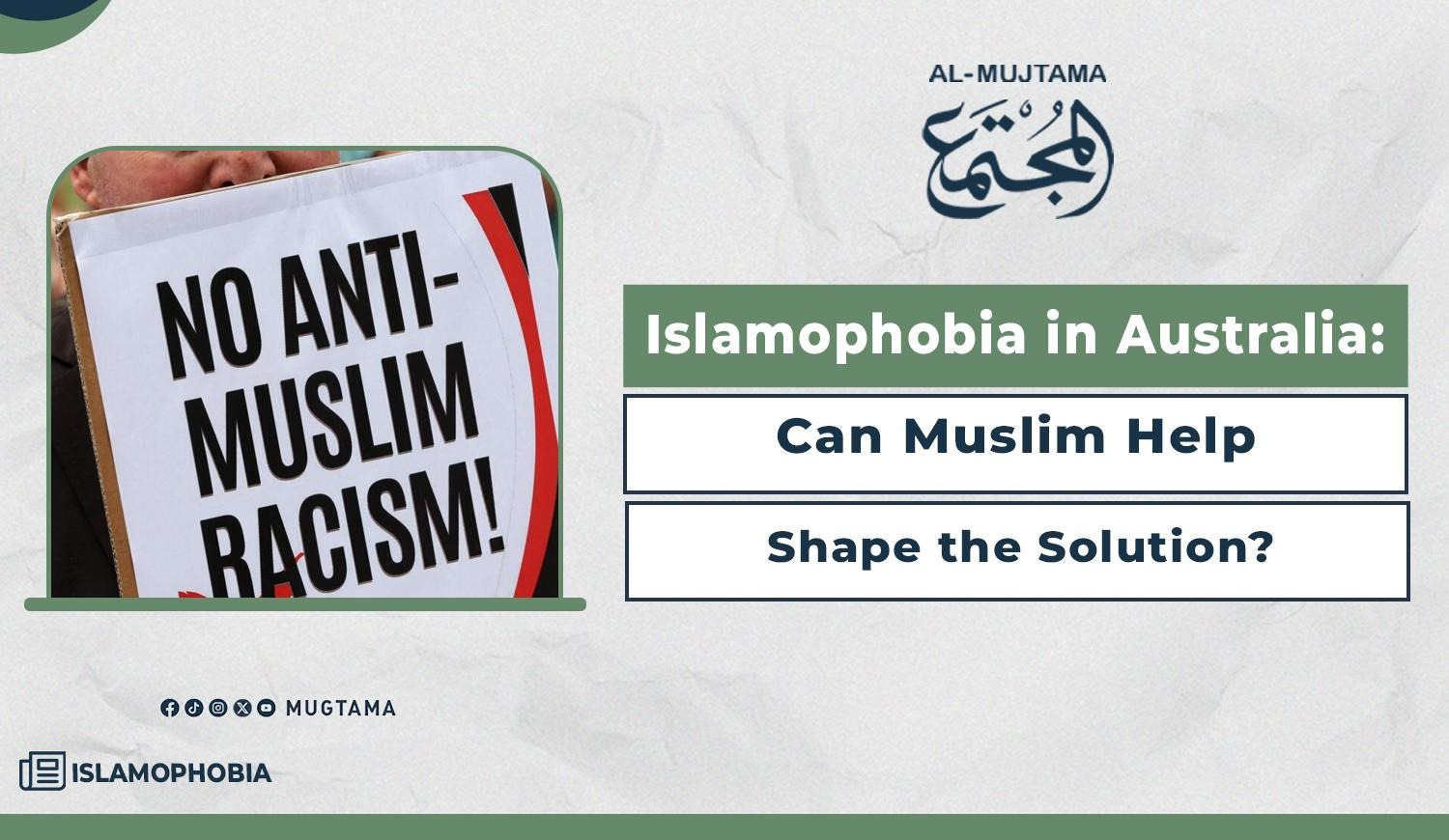
Islamophobia in Australia: Can Muslim Help Shape the Solution?
The response to Islamophobia in
Australia is no longer limited to condemning a racist incident after it happens
or addressing an individual attack on the street or public transport.
In recent years, the conversation has shifted toward a broader
question: How can society understand the scale of Islamophobia in Australia,
and how can Muslims themselves become part of shaping the solutions?
That question has gained renewed significance as Australia’s
Special Envoy to Combat Islamophobia, Aftab Malik, takes his national listening
tour to northern Tasmania. In Launceston, he met with community
representatives, academics, healthcare professionals and local leaders to hear
about the experiences of Muslims and the challenges they face outside Australia’s
major cities.
The visit comes as Australia moves toward a broader approach
to tackling Islamophobia—one that goes beyond statements and condemnations to
include education, protection, reporting, social cohesion and community
participation.
Muslims in Australia: A Presence Spanning More Than a Century
For some, the history of Islam in Australia may appear
relatively recent. In reality, Muslim presence on the continent predates many
modern waves of migration.
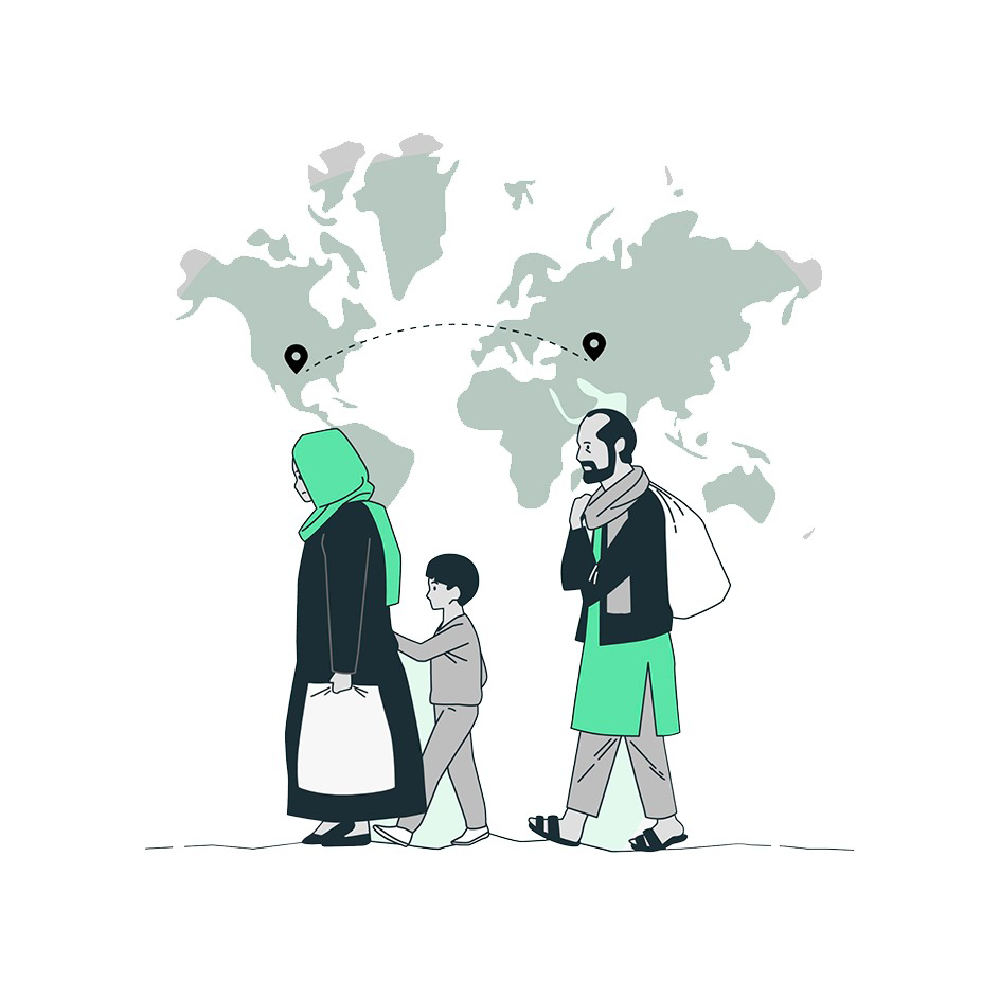
Historical sources point to early contact between Muslim Makassan
traders and Aboriginal communities in northern Australia. A more established
Muslim presence emerged in the 19th century with the arrival of Muslim cameleers from Afghanistan, Balochistan and areas of what are now
northwestern India.
From the 1860s onward, these cameleers played an important
role in exploring Australia’s interior and transporting supplies and goods. The
camels they brought helped connect remote areas with coastal settlements. The
National Museum of Australia estimates that at least 2,000 cameleers arrived in
Australia between the 1860s and the 1920s.
Not all of these men were from what is now Afghanistan. Many
were Pashtun, Baloch, Punjabi and Sindhi, originating from areas that today lie
across Afghanistan, Pakistan and India. Colonial sources commonly referred to
them collectively as “Afghans.”
Today, Muslims are an established part of Australian society.
According to the 2021 Census, 813,392 people identified Islam as their religion,
representing 3.2% of Australia’s population.
A significant proportion of Australia’s Muslim population
lives in major cities. New South Wales recorded 349,240 Muslims, while Victoria
recorded 273,028. Greater Sydney alone was home to 329,566 Muslims, around 6.3%
of its population.
But this national presence does not mean that the Muslim
experience is the same everywhere. Life in a major city such as Sydney can
differ considerably from life in a smaller regional city such as Launceston,
where Islamic institutions may be fewer and relationships between Muslim
communities and the wider population more direct.
That makes engagement with smaller cities and regional
communities an important part of understanding the Australian Muslim
experience.
Islamophobia in Australia: Beyond Individual Incidents
Islamophobia in Australia does not take a single form. It can
appear as verbal abuse in public, harassment of a hijabi woman, threats online,
attacks against mosques, discrimination at work or school, or stereotypes that
collectively associate Muslims with violence or danger.
In his national report, Aftab Malik called for greater
attention to the factors contributing to hostility, prejudice, dehumanisation
and discrimination against Muslims. The report also points to the potential role of media, social media and political discourse in contributing to
hostility toward Muslims.
This does not mean that every political or media discussion
about Islamophobia can be identified as the direct cause of a particular
incident. Rather, it highlights the need to understand the broader environment
in which stereotypes and hostility can develop.
The issue has become more urgent as reports of Islamophobic
incidents in Australia have risen.
According to figures from the Islamophobia Register Australia,
cited by ABC News, the
average number of reported incidents per week increased from 2.5 to 18 over the
past three years—a 612% increase. Commenting on an incident involving a
13-year-old Muslim girl on a Sydney bus, Malik also warned that victims of
Islamophobia are getting younger.
These figures are not simply statistics. A child insulted
because of her religion, a woman who feels unsafe because she wears the hijab,
or a family that becomes hesitant to openly express its religious identity
experiences Islamophobia as something that can affect everyday feelings of
safety and belonging.
Why Are Muslims Being Encouraged to Report Islamophobia?
What is the value of reporting a racist incident after it has
already happened?
According to Australia’s Office of the Special Envoy to Combat
Islamophobia, reporting is not only about documenting individual incidents. It
can help establish the scale and nature of the problem, identify places and
sectors where incidents are recurring, and improve the response of institutions
and government agencies.
In June 2026, the Special Envoy’s office launched the Report Islamophobia campaign, encouraging victims and witnesses to report
incidents occurring in public spaces, schools, workplaces and online. The
office has stressed that many incidents go unreported, making it difficult to
determine the true scale of Islamophobia.
Reporting, in this sense, is more than an individual
complaint. It can become a tool for building a clearer picture of the problem.
What is not recorded is difficult to measure, and what is
difficult to measure is harder to address through clear public policy.
That is why the Special Envoy’s office has encouraged victims
and witnesses to use formal reporting channels, alongside Australia’s
Islamophobia reporting mechanisms.
From Confronting Islamophobia to Building Safer Communities
In September 2025, Aftab Malik presented his national report
to the Australian government, containing 54 recommendations following hundreds
of hours of consultations with Muslim communities, community leaders, and local
and international experts.
The recommendations were not limited to responding after an
attack had occurred. They covered four broad areas: accountability and
responsibility, protection and support, education and awareness, and social
cohesion.
In July 2026, the Australian government announced its response
to the report, including the establishment of an education taskforce on
Islamophobia, new support for Muslim communities, stronger protection for
Islamic institutions, and improved mechanisms for reporting and responding to
incidents.
This shift matters because combating hatred cannot depend
solely on waiting for an attack and then responding to it.
Community safety also begins in schools, the media,
neighborhoods, workplaces, religious institutions and everyday relationships
between people.
The Mosque’s Role in Challenging Hate
In this context, a mosque is not simply a place where Muslims
seek support after an incident has occurred. It can also be an institution that
builds trust before a crisis emerges.
A mosque in a smaller city can serve a role that extends
beyond daily prayers. It can provide a space where Muslims meet, neighbors get
to know one another, and educational, youth and charitable activities take
place alongside conversations with local institutions.
This makes local Islamic institutions potential partners in
building social cohesion—not simply organizations seeking protection from the
government.
The Special Envoy’s office has itself emphasized the
importance of continued engagement with Muslim communities and building trust
with them. Following the government’s response to his report, Malik stressed
that lasting change requires continued cooperation between government and
Muslim communities, as well as trust and common ground.
This helps explain the importance of visits such as his trip
to Launceston and other regional areas. National policy does not always begin
in a capital city. Sometimes it begins around a table where members of a small
community are able to describe their everyday experiences.
Is Islamophobia Different in Smaller Cities?
Islamophobia is not necessarily less serious in smaller
cities, but it can take different forms.
In major cities, Muslims often live within established
communities supported by mosques, Islamic centers, schools, businesses and
social institutions.
In regional areas, Muslim communities may be smaller and more
dispersed, with fewer established institutions. At the same time, personal
relationships can have a greater impact. People may know one another directly,
and the local mosque can become an important point of contact between Muslims,
local authorities, schools, healthcare institutions and civil society.
Listening to Muslims in these communities is therefore not a
peripheral part of national policy. It provides insight into different
experiences of Muslim life in Australia.
From Community Member to Policy Partner
One of the most significant aspects of Australia’s approach is
that Muslims are not viewed only as victims of Islamophobia.
They can also be partners in diagnosing the problem and
developing solutions.
The national report was built on extensive consultations with Muslim
communities and their leaders, alongside experts and academics. In June 2026,
the Special Envoy’s office also launched the first annual Australian Muslim Poll, in partnership with Deakin University, to
develop a regular national evidence base on the experiences, views and
wellbeing of Australian Muslims and help inform policy and programs.
This changes the role of the community from simply responding
to decisions made about it to helping produce the knowledge on which those
decisions are based.
The principle extends beyond Islamophobia itself: a community
that wants to preserve its identity while fully participating in its country
needs to have a presence in public life, not remain absent from it.
Raising Citizens Who Can Protect Identity and Build Community
The fight against hatred does not begin with the first attack.
It begins much earlier, when children learn how to view people
who are different from them, how to treat their neighbors, and how to
understand that religious difference does not take away another person’s right
to dignity and safety.
At the same time, Muslim children need an education that gives
them confidence in their identity without
turning that confidence into isolation from society.
Positive citizenship does not require abandoning one’s
identity, just as pride in Islam does not require withdrawing from the wider
community.
A Muslim can remain committed to faith, confident in identity,
active in serving society, and committed to defending the right of both Muslims
and others to safety and dignity.
This approach reflects one of the central areas of Aftab Malik’s
plan: education, awareness and social cohesion, alongside protection and
accountability.
When Reporting Becomes Participation
Australia’s experience may reveal something broader than how
to respond to Islamophobia.
When Muslims are encouraged to report incidents of hatred,
speak about their experiences, participate in surveys and consultations, open
their mosques to the wider community, and engage directly with local officials,
the message is not: “Protect yourselves by staying apart from society.”
It is the opposite. Muslims are part of society. Combating
hatred is a shared responsibility. And building safer communities cannot be
left to victims alone; it requires institutions, communities and government to
work together.
That is why Aftab Malik’s visit to Launceston can be viewed as
more than another stop on a national tour.
It raises a larger question: What happens when a Muslim
community moves from being the subject of policy to becoming a participant in
shaping it?
In confronting Islamophobia, perhaps the answer is not to
close doors out of fear of hatred, but to build communities that know one
another, listen to one another, and make safety and dignity a shared right.