




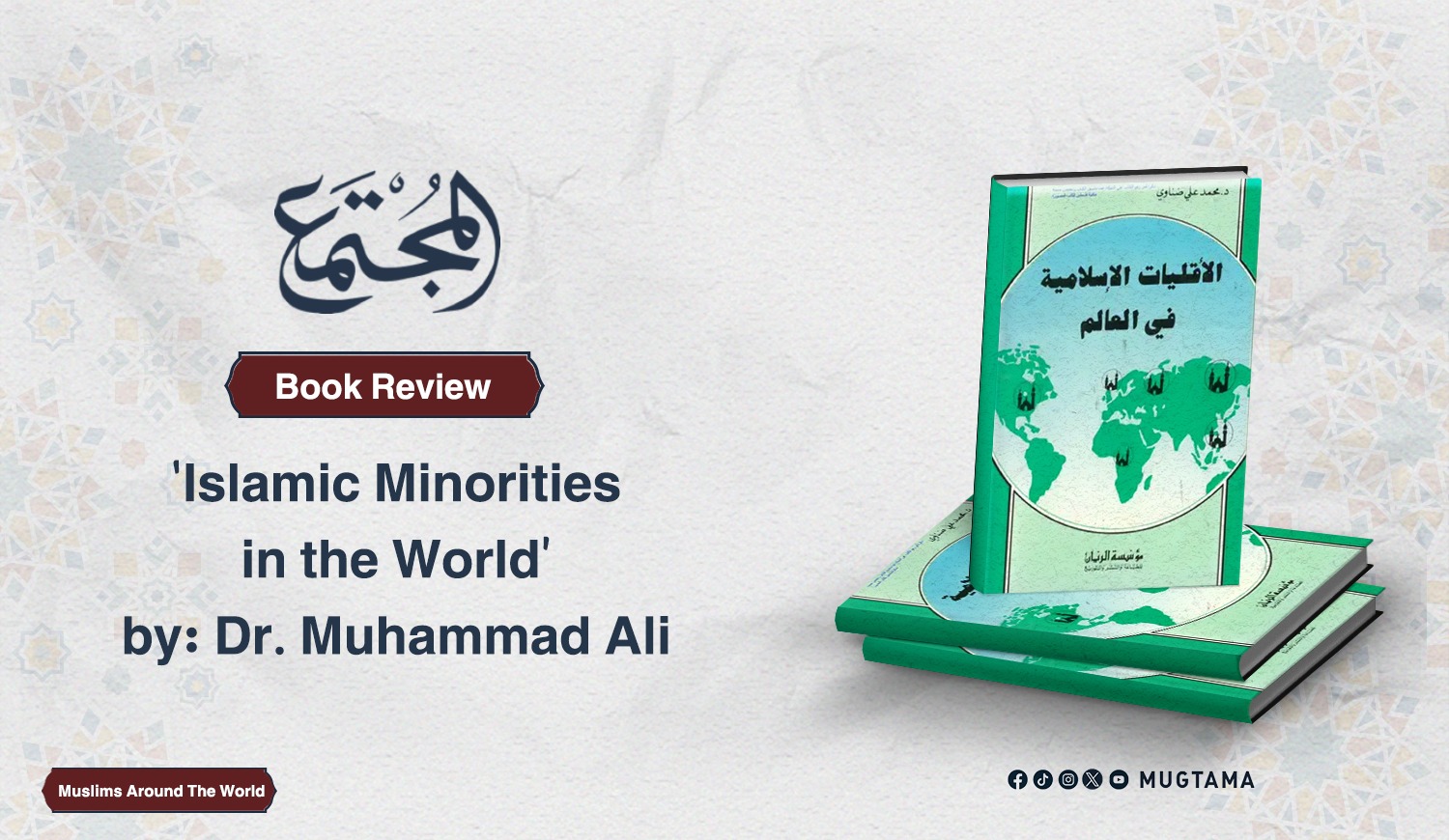
Book Review:
‘Islamic Minorities in the World’ by: Dr. Muhammad Ali Dhanawi
The issue of Muslim minorities around the world is one of the most complex and interconnected issues of the modern era. This is due to its multiple facets and the tangled web of historical, political, and social factors. While Muslims make up more than a quarter of the world's population, a significant number of them live as religious minorities in non-Islamic countries, spread across the continents of Africa, Asia, Europe, and the Americas.
These minorities don't share a single identity or a common
history, but they face similar challenges, such as: integrating without losing
their identity, practicing their religion freely without persecution, and
participating in society without being marginalized.
It is in this context that Dr. Muhammad Ali Dhanawi's book, "Islamic
Minorities in the World," emerges as a serious attempt to document
the conditions of these minorities and provide a panoramic view of their
reality, challenges, and geographic spread, free from sensationalism or media
exaggeration.
The book is not limited to a narrative or statistical
presentation; rather, it adopts a deep analytical approach. It examines the
roots of these minorities' existence, the reasons for their migration or
marginalization, their relationship with host countries, and the legal
frameworks that govern their presence. The book also sheds light on the
cultural, political, and religious discrimination and marginalization that some
of these groups face, especially in countries with nationalistic or
authoritarian systems.
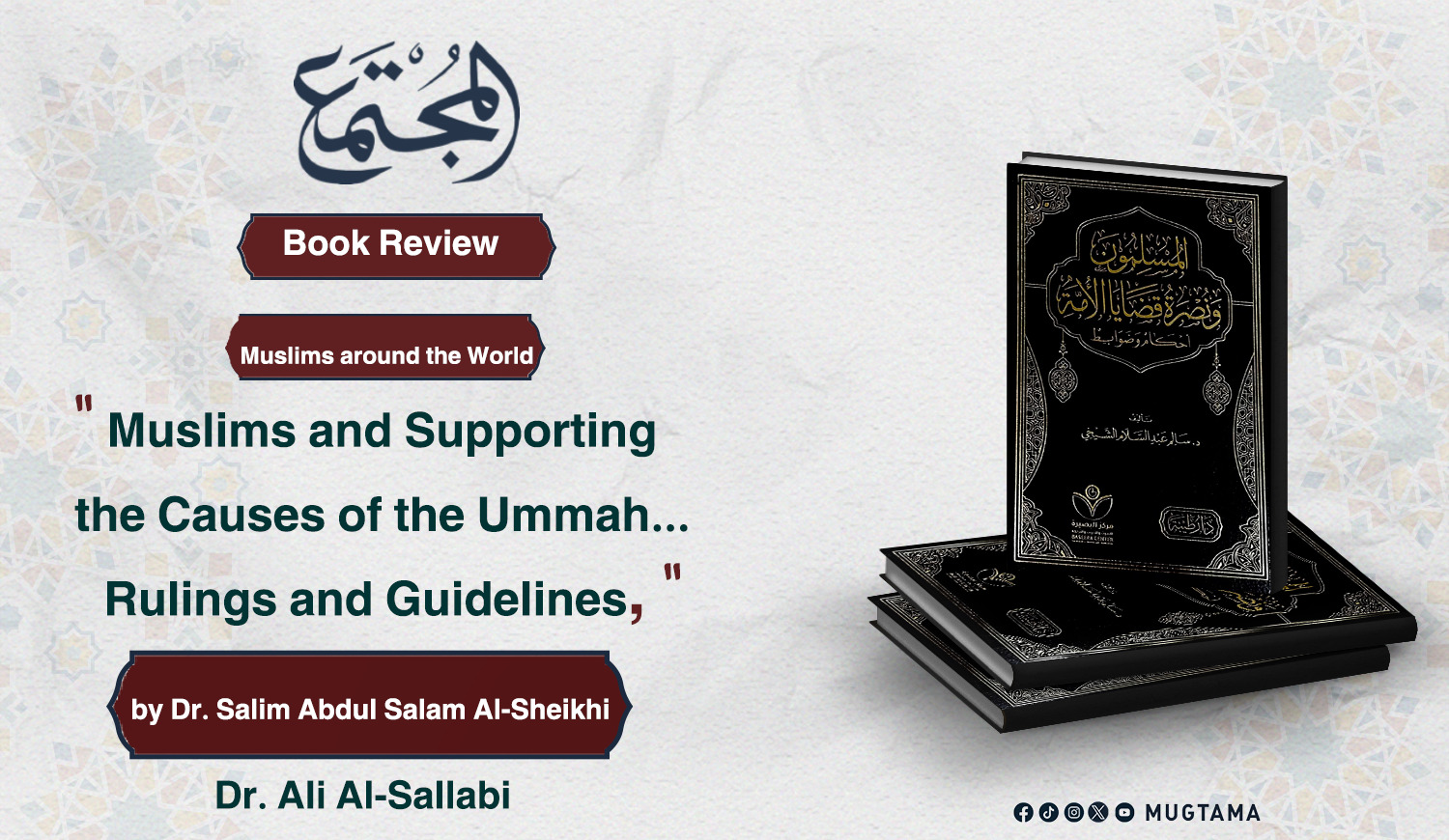
Read also: Muslims and Supporting the Causes of the Ummah
The book is considered one of the leading references on the
conditions of Muslim minorities in non-Islamic countries. It was published in
1413 AH / 1992 CE by Al-Rayyan Foundation and contains 222 pages of academic
analysis supported by statistics and field experiences. The book is divided
into four main sections, allowing the reader to move between the introduction,
theoretical analyses, and detailed studies, as follows:
1. Section One: Introduction to the Concept of
Minorities and Their Common Challenges This
section provides a conceptual and legal definition of an "Islamic
minority," presents the temporal and geographical scope of the research,
and reviews the main challenges minorities face, such as identity, education,
media, and restrictive policies.
2. Section Two: Analysis of Legal and Social
Challenges This part discusses the
educational, social, and economic spheres in which Muslims live as minority
groups. It also presents the rights available to them according to European and
international laws and reviews the extent to which they are applied. It focuses
on the role of Islamic institutions, emphasizing the need for a clear framework
of recommendations for practical intervention.
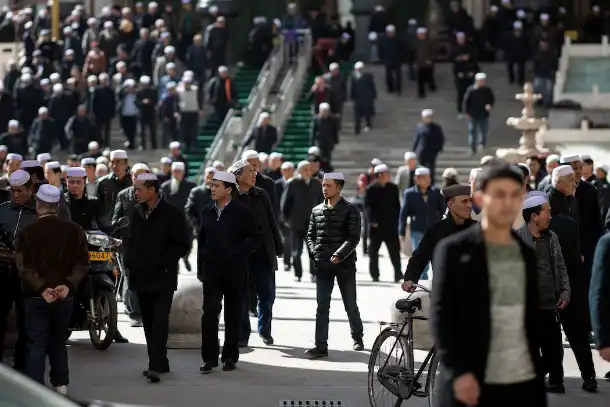
3. Section Three: Detailed Case Studies This section reviews the conditions of Muslim
minorities in specific countries, such as:
o The
Uyghurs in China
o Muslims
in India and Myanmar
o Muslim
communities in Europe and America It analyzes various experiences of minorities
that have succeeded in positive integration as well as others that are
struggling against marginalization.
4. Section Four: Practical Solutions and Recommendations
o This
section outlines tangible recommendations for solving minority problems through
educational, social, and supervisory support.
o It
suggests roles for institutions like the "Organization of the Islamic
Conference" in empowering and protecting minorities.
o It
discusses the importance of political participation and the rejection of
cultural assimilation through discourse and advocacy.
"Islamic Minorities in the World" serves as an
honest mirror, reflecting a reality rich in diversity and difference, yet
burdened with common challenges and concerns. Through its broad and comparative
analysis, the book prompts us to ponder deep questions about identity,
belonging, and citizenship, as well as the ability of Muslim communities to
preserve their religion and values in environments that may be hostile or
unaccepting.
By reviewing dozens of cases from different parts of the
world, the author shows that the reality of Islamic minorities is not a single
picture, but a multicolored mosaic. While some communities succeed in positive
integration and active political participation, others struggle for survival
and resist ethnic or religious persecution.
The great value of this book lies in the fact that it is not
just a descriptive or statistical work, but an analytical reference that helps
the reader gain a deeper understanding of the future of the Muslim presence in
the world. It also motivates readers to propose realistic solutions to the
problems of these minorities, whether through legal frameworks, cultural
support, or relief and human rights work.
Therefore, this book not only addresses researchers on
minority affairs or those interested in Muslims in the diaspora; it speaks to
everyone concerned with the future of Islam and Muslims in an era of
globalization and cross-border challenges.