





Manufacturing Hate: How Zionist Lobby Feeds Digital Islamophobia in South Africa
South Africa enjoys a distinguished
social reality considered a global model for religious and ethnic coexistence,
where a unified identity forms a solid fabric forged by decades of joint
struggle against the apartheid regime. However, the algorithms of digital
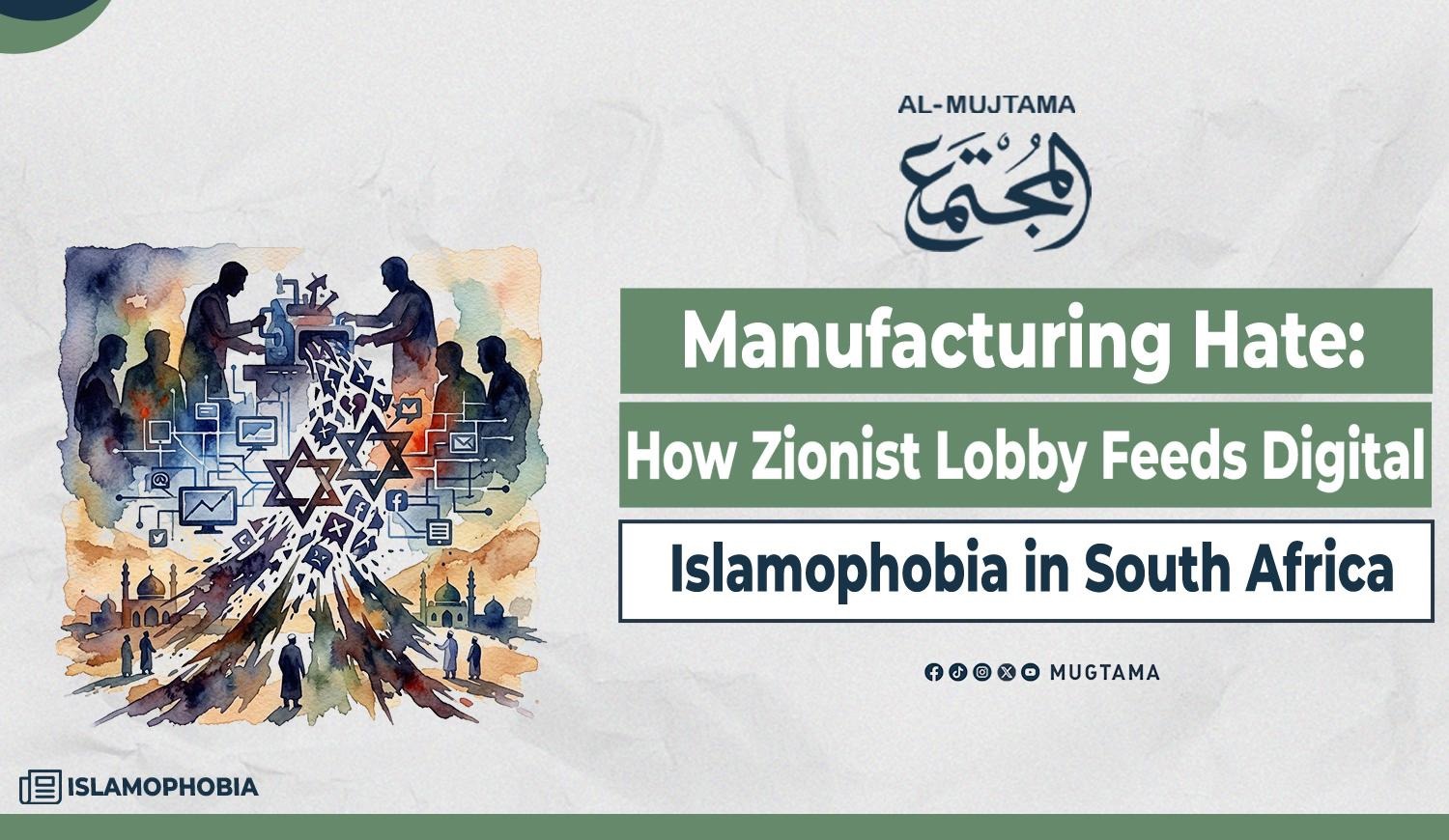
platforms and social media have come to reveal an anomalous scene: a continuous
influx of inflammatory posts against Islam and Muslims, fabricated videos, and
false narratives working to spread fear of an "internal Islamic
danger."
An observer of South African affairs
notices an unjustified escalation of clear hate speech against Islam and
Muslims. Who is responsible for the rise of this digital Islamophobia that
contradicts the truth and the reality of peaceful coexistence in the country?
Research evidence and reports from international disinformation monitoring
centers confirm that this phenomenon is not the result of local societal
friction. Rather, it is a systematic, imported product managed by transboundary
networks, led by the Zionist lobby in alliance with the global far-right, to
reshape the African digital space and export battles that have no place on the
ground.
Imported Engineering of Fear
Researchers in digital media and
strategic disinformation studies indicate that digital Islamophobia in South
Africa does not develop without planning; rather, it is produced through the
infrastructure of cyber warfare and ideological influence extending from the
United States, Europe, and the Zionist entity. International investigations
show a critical intersection between this discourse and the most prominent
actors in the manufacturing of deception:
- Global Far-Right Networks
Radical Western and American think tanks and
groups, along with companies extending across the Zionist digital space, work
to broadcast narratives of the "clash of civilizations" and
"demographic threat." Analytical studies of digital discourse show
that anti-Muslim content circulating in South Africa is copied verbatim
from campaigns originally prepared to target European and American
environments.
- Fake Accounts and Digital Armies
Reports from digital analysis centers and
institutions such as Code for Africa and the Institute for Strategic Dialogue
(ISD) revealed that thousands of accounts spreading anti-Muslim hashtags do not
represent South African citizens. Rather, a large portion is managed through
networks of programmed "bots" and electronic fly farms based outside
the country—specifically inside the Zionist entity—to create a false impression
of sharp "popular polarization" around Islamic identity.
- Algorithmic Bias and Institutional Bias
Platforms such as (X), Facebook, and
YouTube play the role of an effective booster for these campaigns. While strict
censorship is imposed and anti-Zionist accounts and content are deleted under
the pretext of "anti-Semitism," posts promoting Islamophobia enjoy algorithmic immunity that grants them wide spread, as profit algorithms
rely on amplifying content that incites anger.
- The Zionist Lobby
Following South Africa's historic and
principled stance in bringing a case to hold the Zionist entity accountable
before the International Court of Justice on charges of genocide, Zionist
pressure groups in Washington and Tel Aviv intensified their efforts for
political retaliation through digital demonization. These lobbies seek to link
South Africa's official position supporting Palestine to "submitting to
radical Islamic influence," in an attempt to undermine the diplomatic
prestige of Global South countries.
- Exploitation of Marginal Local Actors
This directed narrative finds a
limited echo among marginal local political groups or figures seeking digital
populism. These parties recycle digital lies prepared abroad to exploit local
economic and social fears, such as unemployment rates or crime, and direct them
toward the Muslim component.
Countering a Entrenched History of Coexistence and Joint Struggle
These cyber campaigns acquire their
false character as soon as they are projected onto the historical and social
reality of South Africa; Islam is not emergency or alien to South African
society, but represents an integral part of its foundational fabric. The
country has witnessed a pivotal role for Muslims extending for more than three
centuries, represented in:
1. Struggle Against the Apartheid Regime
Muslims provided prominent leaders and martyrs
in the national liberation battle alongside Nelson Mandela and the African
National Congress (ANC); prominent figures emerged such as Sheikh Ahmed Deedat,
the activist Abdullah Haron who was martyred in apartheid prisons in 1969, and
former minister Ahmed Kathrada.
2. Building a Multiracial Society
Muslims actively contribute to
promoting universal human values of "Ubuntu," and supporting the
democratic transition and constitutional institutions protecting religious
freedoms.
3. Political, Economic, and Societal Participation
Muslims are integrated across all
state sectors; from the judiciary and parliament to healthcare and charitable
institutions that provide relief to the poor and needy from all religious and
ethnic backgrounds without discrimination.
4. Consolidating a Culture of Tolerance
Interreligious relations in South Africa enjoy
a high level of harmony and joint work in facing poverty and social injustice,
making anti-Muslim discourse completely alien to the local societal fabric.
Falsifying Digital Awareness and the Fate of the Battle for Truth
Digital facts and statistics show that
Islamophobia in South Africa is not a local societal conflict, but rather a
"manufactured Islamophobia" designed in external disinformation
laboratories. The pressure exerted by the Zionist lobby and its allies across
social networks primarily aims to create an alternative reality, intimidate
civil society, and distort the successful model of religious coexistence
standing in solidarity with just causes, foremost of which is the Palestinian
cause.
Undoubtedly, confronting these cyber campaigns requires digital awareness from local institutions and the public to notice external penetration, as well as activating legal oversight tools on global platforms that allow the importation and amplification of hate. However, the solidity of historical coexistence in South Africa remains the first line of defense against which the Zionist lobby's attempts to sow discord and demonize societal diversity shatter.
Footnotes
- 1 The Palestine Chronicle (2026): Islamophobia in South Africa – When Manufactured Fear Becomes Political Currency (Analytical study on Zionist networks and media disinformation factories directed against Muslims in South Africa).
- 2 ResearchGate / Content Analysis Studies (2025): Between Cyber-Islamophobia and Digital Zionism: Transnational Ideological Conflicts in Digital Spaces (Analytical research on coordinated account campaigns intersecting between digital Zionism and Islamophobia).
- 3 ALT Advisory Africa (2023): The Commodification of Online Influence: Cyber-Troops and Disinformation in South Africa (Report monitoring the activity of digital armies and fake accounts to direct public opinion).
- 4 Institute for Security Studies (ISS Africa, 2025): Foreign Interest in Africa Comes with Damaging Disinformation Tactics (Analysis of propaganda tools and external digital disinformation in the African continent).
- 5 Human Sciences Research Council (HSRC): Online Disinformation and Social Cohesion in South Africa (Statistics and reports deconstructing digital disinformation narratives and their field impact).