









How Islam Strengthens Psychological Resilience Amid Disasters
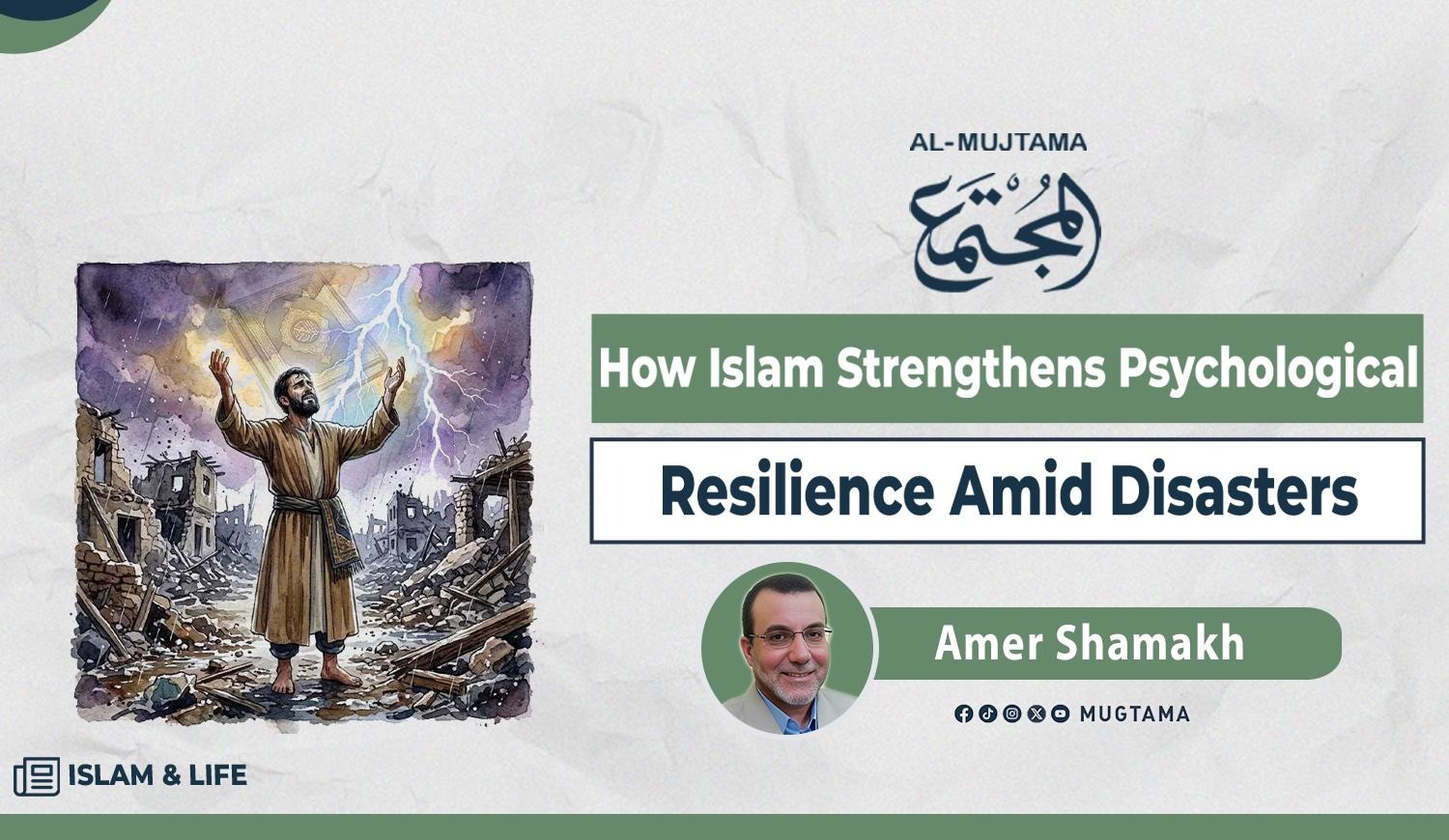
Natural
disasters, wars, and conflicts are no longer exceptional events in our
contemporary world. Rather, they have become a reality affecting millions of
people, leaving behind human and material losses as well as profound
psychological effects: fear and anxiety, the loss of loved ones, displacement,
and the loss of a sense of security. All of these challenges threaten people’s
psychological well-being, resilience, and ability to continue living their
lives normally.
Wars and
disasters also threaten the stability of society. They can lead to rising
poverty and unemployment, weakened essential services, increased social
pressures, growing internal conflicts, and widespread feelings of fear and
distrust among members of society.
Islam offers a
comprehensive approach to dealing with such hardships and trials. It is not
based on ignoring pain or denying one’s emotions, but rather on providing
Muslims with a framework of values and meanings that helps them overcome crises
with awareness and faith. From the Islamic perspective, trials are a natural
part of life: {We shall certainly test you with
fear and hunger, and loss of property, lives, and crops. But [Prophet], give
good news to those who are steadfast.} [Al-Baqarah
2:155]. The verse makes clear that the occurrence of hardship is not a sign
of humiliation or weakness; rather, it is an arena in which faith, patience,
and steadfastness are tested. Thus, Islam does not merely explain the nature of
hardship; it also provides practical means of confronting it and preventing
despair from taking hold of the soul.
Psychological
Resilience in the Islamic Perspective
Psychological
resilience has become one of the most widely discussed concepts in contemporary
psychology. It refers to a person’s ability to adapt to stress and crises,
regain psychological balance, and continue living positively. Islam anticipated
and established this meaning, but within a framework of faith in which one’s
relationship with Allah is the source of strength and steadfastness. This is
reflected in several principles:
1.
Faith and reliance upon Allah:
These give a person a sense of security and tranquility. Relying upon Allah
does not mean abandoning the pursuit of practical means; rather, it means
making every reasonable effort while entrusting the outcome to Allah: {God will be enough for those who put their trust in Him.} [At-Talaq 65:3].
2.
Patience in times of hardship:
Patience is one of the most important foundations of psychological strength in
Islam. It helps believers confront pain and hardship without collapsing or
losing hope: {God is with the steadfast.} [Al-Baqarah 2:153].
3.
Acceptance of Allah’s decree and destiny:
Belief in divine destiny helps reduce feelings of helplessness and anxiety. It
enables Muslims to accept what they cannot change while working to improve what
they can change: {No misfortune can happen,
either in the earth or in yourselves, that was not set down in writing before
We brought it into being- that is easy for God- so you need not grieve for what you miss
or gloat over what you gain.} [Al-Hadid 57:22–23].
4.
Hope and having a good opinion of Allah:
Islam teaches its followers to remain hopeful and not surrender to despair: {Do not despair of God’s mercy.} [Az-Zumar
39:53]. It also teaches hope and reassurance: {Do
not worry, God is with us.} [At-Tawbah
9:40]. And it reminds believers: {So truly
where there is hardship there is also ease; truly where there is hardship there
is also ease.} [Ash-Sharh
94:5–6].
Islam also
teaches its followers to take responsibility and engage in positive action
rather than surrendering to despair, no matter how severe the hardship may be.
It encourages them to confront reality through effort and perseverance: {God does not change the condition of a people [for the
worse] unless they change what is in themselves.} [Ar-Ra'd 13:11].
From the
Islamic perspective, a person is not expected to be free from sadness or fear.
These are natural human emotions that Islam does not deny. Jacob grieved until
his eyes became white from sorrow, and the Prophet Muhammad, peace and
blessings be upon him, wept when his son Ibrahim died and said: “The eye weeps
and the heart grieves, but we say only what our Lord is pleased with, and we
are grieved for you, Ibrahim.” (Al-Bukhari). This demonstrates that
psychological resilience does not mean suppressing emotions, but rather
managing and directing them in a way that pleases Allah.
Worship
and Its Role in Strengthening Psychological Resilience
Acts of worship
in Islam are a fundamental means of refining the soul and strengthening a
person in the face of challenges. When disasters or wars strike, worship
emerges as an important source of psychological resilience. It gives Muslims a
sense of tranquility and helps restore their balance even in the most difficult
circumstances.
Prayer is a
refuge in which the soul finds rest after hardship and trial, and a means of
seeking Allah’s help in confronting difficulties and distress: {Seek help with steadfastness and prayer.} [Al-Baqarah 2:45]. Remembrance of Allah
and supplication provide a constant source of reassurance: {Truly it is in the remembrance of God that hearts find
peace.} [Ar-Ra'd 13:28]. Supplication is a sincere expression
of a servant’s dependence upon his Lord and an acknowledgment that true
strength lies in His hands. This awareness brings psychological comfort, as a
person realizes that he is not alone in facing hardship.
Fasting is
another act of worship that contributes to building psychological resilience.
It trains the soul in patience, emotional self-control, and the ability to
endure hardship. The Quran, meanwhile, nourishes the soul and heals the hearts.
Its accounts of the prophets and the righteous contain lessons that ease pain,
uplift the spirit, strengthen determination, and awaken hope in people’s
hearts.
Zakat and
charitable giving also contribute to psychological balance by fostering
generosity and a sense of responsibility toward others. This strengthens
feelings of connection and belonging while reducing psychological isolation.
These acts of worship should not, however, be understood as substitutes for
taking practical measures. Rather, they provide a spiritual foundation that
enables a person to make better use of every legitimate means available to
them.
Social
Cohesion and the Path to Recovery
Islam does not
view psychological resilience as merely an individual quality. Instead, it
connects it to the family and society. Social support, compassion, solidarity,
and comforting those in distress all contribute to reducing the effects of
trauma and strengthening a Muslim’s ability to endure hardship.
For this
reason, Islam combines the spiritual development of the individual with the
development of a cooperative society in which people support one another during
times of difficulty. Amid wars and crises, this understanding becomes even more
important. Societies that combine faith with psychological care are better
equipped to recover and rebuild.
Contemporary
human experiences of wars and disasters have demonstrated that a society’s
ability to recover does not depend solely on the material resources available
to it. It also depends on its ability to preserve internal cohesion, nurture
hope, and strengthen cooperation among its members. In times of crisis, the
value of family, neighbors, and community institutions becomes especially
apparent, as human relationships become a source of security and support.
Throughout
history, Muslim societies have provided numerous examples of this principle.
During periods of poverty, war, or disaster, Muslims supported one another by
assisting those affected, caring for the vulnerable, and helping provide the
means for a dignified life.
Therefore,
psychological resilience from the Islamic perspective is not merely the ability
to withstand pressure. It is the fruit of a deep relationship with Allah,
firmly rooted values, and a compassionate society. It is the strength that
enables a Muslim to rise after falling, transform hardship into an opportunity
to strengthen faith and foster human growth, and continue moving forward
without losing hope or abandoning action.
-------------------------------------------------------------
