









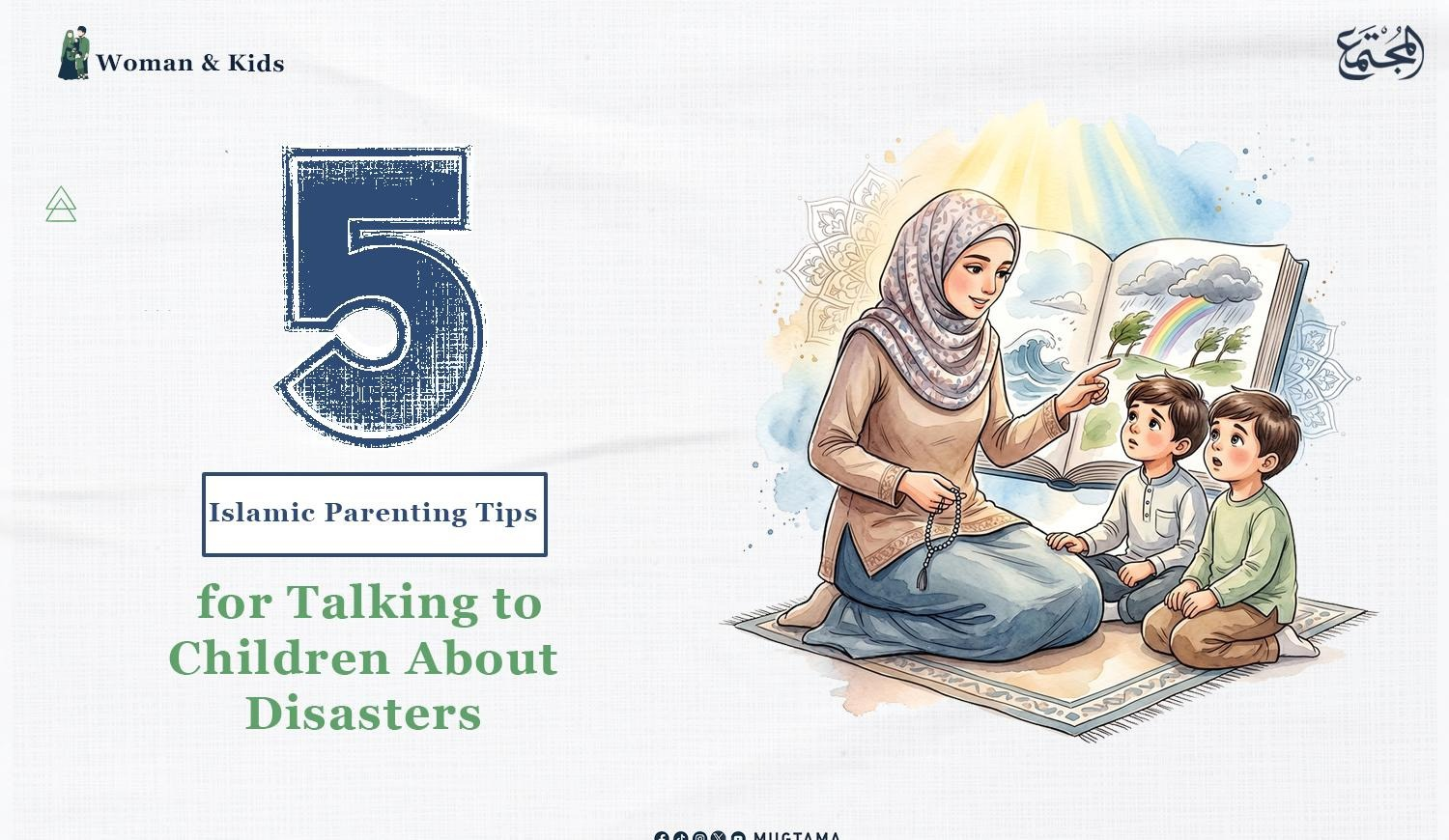
5 Islamic Parenting Tips for Talking to Children About Disasters
As wildfires continue to spread across parts of Southern
Europe, many children are watching frightening scenes of burning forests,
families fleeing their homes, and firefighters battling massive flames. Even
those living far from the affected areas are asking difficult questions: Could
this happen to us? Why do disasters happen? Why would Allah allow innocent
people to suffer?
For many parents, the instinct is to change the subject or
offer quick reassurance. Yet psychologists warn that avoiding these
conversations rarely removes fear. Instead, children often fill the gaps with
their own imagination, making the situation even more frightening.
Islam offers a balanced approach. It neither asks parents to
hide reality nor to overwhelm children with disturbing details. Instead, it
teaches them to face hardship with honesty, compassion, and trust in Allah.
Modern psychology echoes this principle, showing that resilience is built not
by promising children that nothing bad will happen, but by helping them feel
safe, heard, and emotionally supported.
For Muslim families, faith provides an even deeper foundation:
the certainty that
every event unfolds by Allah’s wisdom and that every trial carries meaning,
even when we cannot fully understand it.
How To Talk About Disasters With Your Child
1.
Listen Before You Explain
Children do not always see disasters the way adults do. One
child may worry that every forest is burning, while another may quietly fear
losing their own home. Before offering explanations, invite your child to share
what they have seen, heard, or felt. Questions like “What troubles you most?”
help uncover fears that may be rooted in misunderstanding rather than reality.
Psychologist Dr. Tracy Yates advises parents to let children guide the
conversation according to their age and emotional readiness. Likewise, the
Prophet (peace be upon him) created an environment where questions were
welcomed and people felt heard before they were corrected. Often, listening is
the first step toward helping children feel safe again.
2.
Tell the Truth Without Feeding the Fear
Protecting children does not mean hiding reality, nor does it
mean exposing them to endless images of destruction. Honest, age-appropriate
conversations build trust, while repeated exposure to distressing news can
increase anxiety. The American Academy of Pediatrics recommends limiting
children’s repeated viewing of traumatic media coverage, as young children
often struggle to distinguish between repeated broadcasts and new events.
Islam also emphasizes truthfulness. Rather than offering false
guarantees that nothing bad will ever happen, parents can remind children that
while disasters are part of life, Allah never abandons those who trust Him. Real courage comes from
facing reality with both wisdom and faith.
3.
Build Faith Before Explaining the Disaster
When children ask why disasters happen, they are often asking
a deeper question: Is the world a safe place? Islam does not promise a
life free from hardship, but it does promise that nothing happens outside Allah’s
knowledge and wisdom. Allah says, {We will
certainly test you with a touch of fear and famine and loss of property, life,
and crops. Give good news to those who patiently endure.} [Al-Baqarah 2:155]
Parents should also avoid presenting every disaster as a
punishment from Allah. The same hardship may be a test, a means of
purification, or a source of immense reward. Rather than leaving children
afraid of Allah, these conversations should strengthen their confidence in His
wisdom, mercy, and justice.
4.
Turn Fear Into Compassion
Disasters often leave children feeling helpless. One of the
best ways to reduce that anxiety is to help them become part of the response. Dr. Ahsan Nazir notes that acts of compassion can strengthen children’s
resilience while nurturing empathy.
Parents can encourage children to make du`a’, donate from
their own savings, or help families in need. These small acts remind them that
even in times of suffering, they are not powerless. They also teach an
essential Islamic lesson: believers respond to hardship not with despair, but
with mercy and action.
5.
Teach Tawakkul, Not the Illusion of Control
Children cannot be promised a life without disasters, but they
can be taught how to face uncertainty with confidence. Islam encourages
believers to take every practical precaution while placing their trust in
Allah. Preparing for emergencies, following safety guidance, and protecting
life are all part of faith—not alternatives to it.
True tawakkul is not
ignoring danger; it is recognizing that after we have done our best, ultimate
control belongs to Allah alone. That conviction gives children a sense of
security that no changing circumstance can take away.
Parents cannot protect their children from every frightening
headline, but they can shape how those headlines are understood. By combining
honest conversations, emotional support, and a strong foundation of faith, they
help children see disasters not through the lens of fear, but through the lens
of trust in Allah. The greatest gift we can offer our children is not the
promise of a world without hardship, but the confidence that no hardship is
greater than the mercy and wisdom of their Creator.
