









How War Shapes the Personalities of Youths
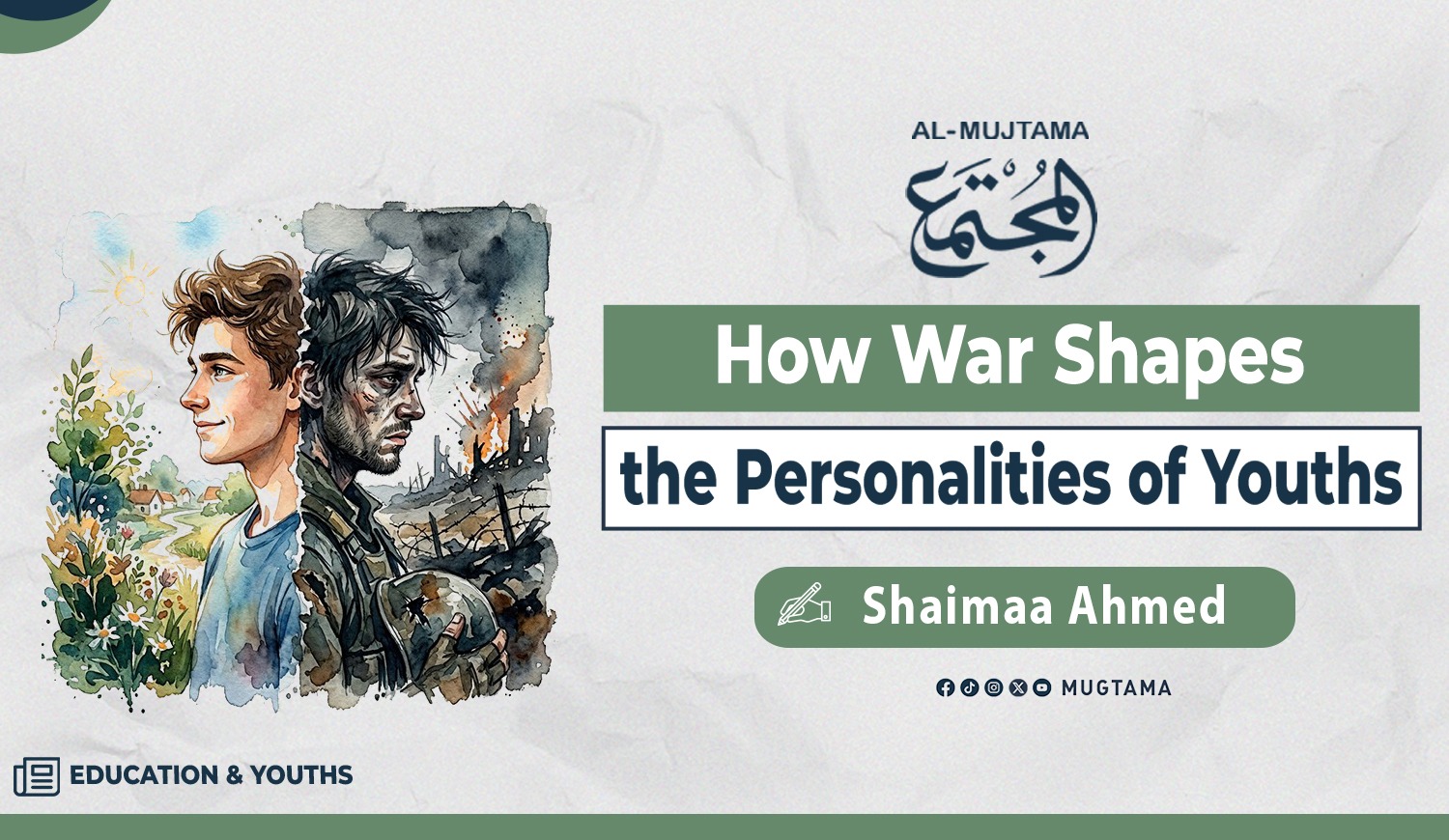
With the
stability witnessed in the Arab Gulf states and many countries in the region, a
new generation has emerged—one that has never known the sound of war. Their
lives have been peaceful: a car takes them to school each morning, their day
flows calmly between learning and activities, and in the evening they relax by
watching a favorite match or spending time on their phones. Suddenly, however,
this reality was overturned by the tragic developments of Iranian aggression
against Gulf countries and the targeting of civilian facilities—events that
revived in the memories of parents painful scenes from past decades of tension.
Yet, as much
pain as war carries today, it is also a great school for learning and maturity,
especially for the young. In the words of Allah: “We
will certainly test you” (Al-Baqarah
2:155)—we recognize the wisdom behind times of trial. In such moments,
people unite with one heart and one supplication. Young individuals begin to
feel that their responsibility has grown beyond their tender years. They draw
closer to Allah, become more aware of unfolding events, revisit their history,
and find new purpose and meaning in life—fueled by a sense of urgency and
danger.
The
Prophet and the Making of Men
In the school
of the Prophet, peace and blessings be upon him, an entire generation of the ummah’s greatest figures was raised—the noble companions
who transformed not only their ummah, but the face of the world. Allah
says: “Muhammad
is the Messenger of Allah. And those with him are firm with the disbelievers1
and compassionate with one another. You see them bowing and prostrating2 ˹in prayer˺, seeking Allah’s
bounty and pleasure” (Al-Fath 48:29).
This defining
quality of the ummah becomes clear to young people in
times of war, just as they come to understand their history—how the Children of
Israel failed their prophet Moses, peace be upon him, saying: “So go—both you and your Lord—and fight; we are staying
right here!” (Al-Ma’idah 5:24). In contrast, the companions
said to the Prophet, peace be upon him, when he consulted them before the
Battle of Badr—though it was not obligatory upon them: “O Messenger of
Allah, if you were to cross the sea, we would cross it with you. Go, you and
your Lord, and fight—we are fighting alongside you.”
The companions
were trained in the school of Prophethood to strive with both their lives and
their wealth. They competed in equipping the Army of Hardship with everything
they possessed. They abandoned comfort for the sake of the message. Mus`ab ibn `Umayr,
for example, left behind luxury and family, enduring hardship for the sake of
Allah—so much so that his appearance and clothing changed. The Prophet, peace
and blessings be upon him, chose him to carry the banner of the believers
during the Battle of Badr.
In light of the
violations committed by Israel—such as the killing of innocents and laws
permitting the execution of prisoners—young people come to understand the
fundamental difference between Muslims and disbelievers in times of war. Abu
Bakr As-Siddiq, may Allah be pleased with him, faithfully upheld the Prophet’s
instructions to the army: not to betray, not to act treacherously, not to kill
a child, an elderly person, or a woman, not to cut down trees, and not to
disturb those devoted to worship in monasteries among the People of the Book.
Thus, young people need guidance that explains the realities and contrasts of
war, connecting their present to both past and principle—so that awareness may
take root.
Adapting
as Survivors, Not Victims
In times of war
and conflict, a critical question arises: how can vulnerable groups—especially
adolescents—survive the effects of post-traumatic stress disorder (PTSD), which
is often accompanied by severe anxiety, confusion, shock, depression, and possibly
isolation? These are natural responses for those whose sense of safety has
collapsed and who have lost loved ones. However, when these symptoms persist,
they can halt life itself and diminish chances of recovery.
These symptoms
are clearly visible in Gaza and the West Bank in Palestine. They remain evident
among many Syrians who endured the harshest periods of repression since the
outbreak of their revolution and the eventual fall of Bashar’s regime.
According to child welfare organizations, similar patterns appear among
children in Yemen and Sudan amid ongoing conflicts.
As a result,
many psychologists have focused on ways to overcome the scars of war through
what are known as coping strategies. Naturally, these mechanisms cannot succeed
without strong social support—from friends and family—to help channel the
youth’s energy into sports, volunteering, worship, reading, and expressive
activities. Equally important is redefining harsh circumstances—not as an
irreversible catastrophe, but as an experience that can be endured and
overcome.
The concept of
“post-traumatic growth” has gained prominence, emphasizing that not everyone
exposed to war collapses; some emerge stronger, with greater psychological
maturity and genuine resilience. A study presented by Irfan Fayez and others on
Syrian refugees at the U.S. National Center for Biotechnology Information
supports this view.
Despite the
brutality of war, field studies reveal positive transformations in awareness
among youth from Muslim backgrounds—Syrian, Iraqi, Yemeni, and Afghan—whether
in their homelands or in diaspora. They develop hope grounded in lived
experience, deeper spirituality, a stronger sense of responsibility, and
reliance upon Allah while still taking practical steps. Although symptoms of
trauma may persist, they evolve into motivation for self-development and
community support—driven by the enduring belief that with hardship comes ease.
The
Deepened Responsibility of Parents
War
significantly amplifies the responsibilities of parents. They rush to provide
psychological support and protection for their children while also striving to
meet basic needs. The harsh living conditions imposed by war often lead to
severe crises and family fragmentation.
The burden
becomes even heavier when a family member is lost, leaving lasting trauma,
emotional imbalance, nightmares, and, in some adolescents, tendencies toward
violence if not addressed early.
Younger
children may lose motivation to continue learning under psychological strain.
This makes the role of parents—at least one of them—critically important in
containing their children’s fears, instilling hope for a better future, and
establishing shared routines and activities.
Growth
in the Shadow of War
Brian K.
Barber, Professor Emeritus at the University of Tennessee and a supporter of
Arab rights against American-Israeli aggression, attributes this resilience to
social support, strong family bonds, and religious and community networks that
restore inner peace and help youth understand life’s purpose.
He points to
Gaza—one of the most densely populated places in the world, with around two
million people, more than half of them under 18—living under siege, power
outages, and shortages of essential resources. Remarkably, he observed that
Gaza’s youth remain determined to survive and build their future and homeland.
Barber also
noted, in Syrian refugee camps and among displaced Sudanese and Palestinian
populations, that young people remain committed to learning and worship. Even
in the harshest conditions, they continue to embrace life—playing football,
engaging in conversations, and even laughing. This does not mean they are
unaffected; they face death daily. Rather, it reflects their ability to create
the basic elements of life despite overwhelming hardship, resisting despair and
the internal devastation caused by war.
Looking at Arab
youth today—especially in the Gulf—we see how wartime conditions have enriched
their discussions and initiatives, whether through book clubs or social media.
Their urgent questions aim to understand the nature of conflict while fostering
inner peace and rejecting polarization and division. These conversations have
become a defining feature of gatherings among friends in streets, clubs, and
mosques.
As Dr. Brian
concludes in his academic blog: sometimes resilience is not a luxury but a
necessity for survival—and he found deep inspiration in reflecting on the
steadfastness of Arab youth in times of hardship.
Read Also:
-
Do Wars Reshape the Hierarchy of Values?
-
War... and the Harvest of Childhood
-
A Threefold Strategy to Defeat Fear in Times of War
-------------------------------------------------------------
