









Gen Z and the Search for Meaning in the Quran
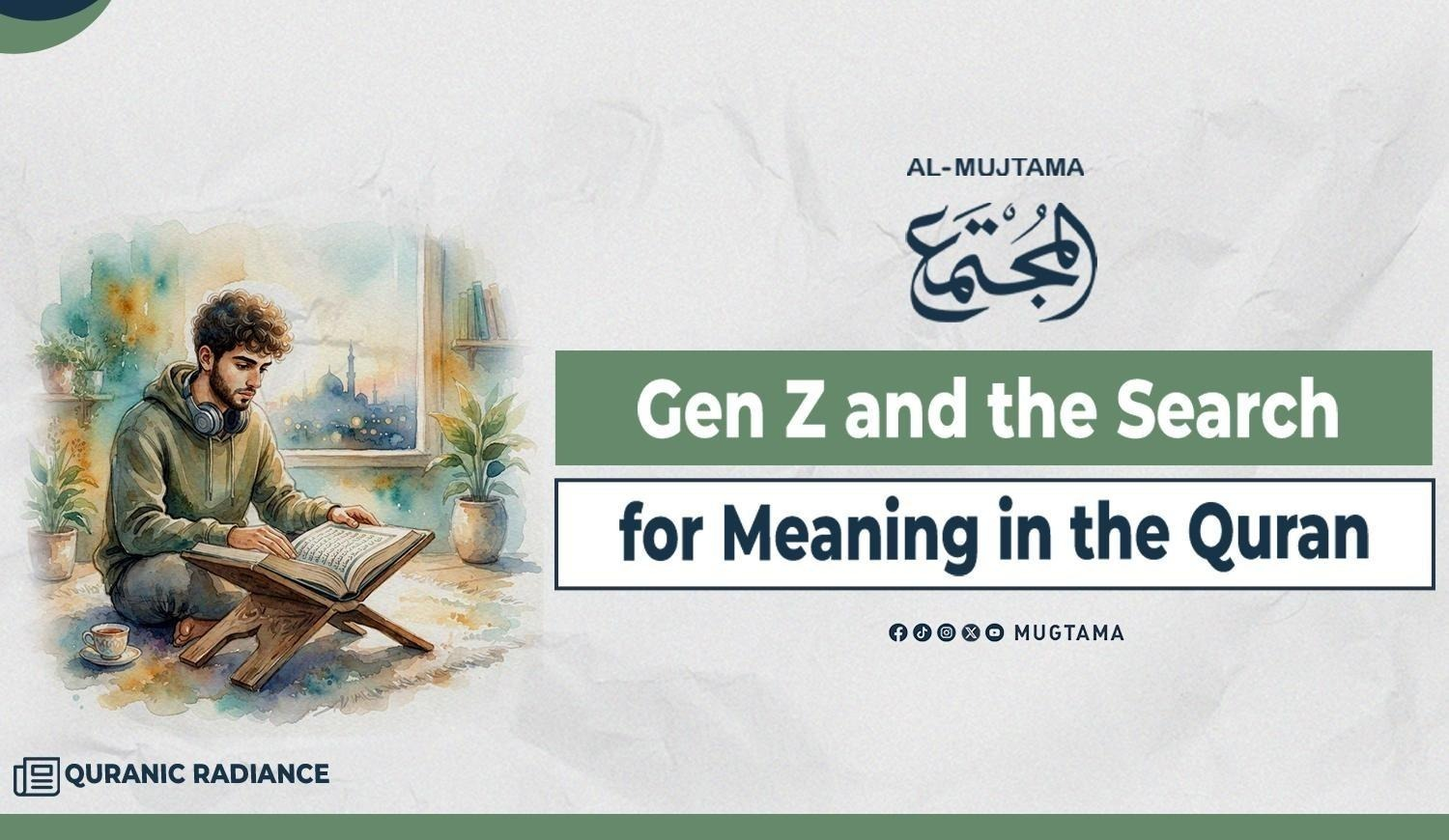
Gen Z has grown up in an age unlike any before it. With a
smartphone in hand, a young person can access the world’s libraries,
communicate across continents, learn almost any skill, and explore countless
career paths.
Never has a generation possessed so many opportunities for
self-expression and personal freedom. Yet despite these advantages, many young
adults openly admit that they feel directionless.
Anxiety, burnout, and loneliness have become defining themes
of their generation, but beneath these struggles lies an even deeper crisis—one
that no technology or social platform can solve. It is the quiet but persistent
question: Why am I here?
This question is no longer merely philosophical. It is
becoming a measurable social reality. A 2026 Gallup survey found that 45% of Gen Z say they lack meaning,
purpose, or both in their lives, while young adults reported a weaker sense of
purpose than teenagers. Gallup has also found that nearly one in four people worldwide
experiences significant loneliness, with younger generations consistently
reporting the highest levels. These findings suggest that the modern crisis is
not simply emotional but existential.
We have become remarkably successful at teaching young people
how to build a career, yet increasingly incapable of explaining why life itself
deserves to be lived.
Why Gen Z Feels Lost Despite Unlimited Opportunities
Modern culture offers countless answers to that question, but
most of them revolve around the individual.
Young people are encouraged to discover themselves, build a
personal brand, pursue financial independence, travel widely, accumulate
experiences, and define success on their own terms.
These aspirations are not inherently wrong, yet they often
leave an unsettling emptiness behind. Achievement can answer the question, “What
have I accomplished?” It cannot answer, “What was I created for?”
When purpose is reduced to personal preference, it becomes fragile, changing
whenever circumstances, emotions, or ambitions change.
More than fourteen centuries ago, however, the Quran
confronted humanity with a question that remains as relevant today as ever: {Did you then think that We had created you without
purpose, and that you would never be returned to Us?} [Al-Mu’minun 23:115]
The verse challenges the assumption that human existence is
accidental or self-defined. It reminds us that there is a Creator, thus the meaning of life cannot be invented by His creation. Purpose is
not something we manufacture through success or self-expression; it is
something we discover by understanding why the Creator brought us into
existence in the first place.
The Quran’s Answer to Humanity’s Search for Purpose
The Quran does not leave that question unanswered. Allah
declares: {I did not create jinn and humans except
to worship Me.} [Adh-Dhariyat 51:56]
To many, the word worship
may evoke images of rituals performed inside places of worship.
Islam, however, presents a far richer understanding. Worship
is the framework that gives meaning to every dimension of life. Earning an
honest living, raising a family, seeking knowledge, serving one’s community,
showing compassion, and striving for justice all become acts of worship when
they are performed sincerely for the sake of Allah. Instead of dividing life
into the sacred and the ordinary, Islam unites them under a single purpose.
When Success Replaces Purpose
This perspective also transforms the way Muslims view success
and provision. Much of modern life is driven by the relentless pursuit of
wealth, status, and security, as though these alone determine whether life has
value.
Yet the Quran reminds humanity that provision was never the
reason for our creation. Allah says, {I seek no
provision from them, nor do I need them to feed Me. Indeed, Allah ˹alone˺ is the Supreme Provider—Lord of all Power, Ever Mighty.} [Quran 51:57–58]
Islam does not discourage ambition or excellence; rather, it
places them in their proper context. Careers, wealth, and achievement become
tools through which we fulfill our purpose, not substitutes for it. This
liberates believers from allowing their worth to rise and fall with salaries,
promotions, or the endless comparisons encouraged by social media.
Interestingly, even contemporary research points in a similar
direction. Gallup found that young people who believe they make a positive difference
in the lives of others are three to four times more likely to report having a
strong sense of meaning and purpose. Islam agrees that a meaningful life is one
that benefits others, but it goes one step further.
The believer serves people not merely because service feels
fulfilling, but because serving creation is ultimately an act of devotion to
the Creator. In this way, purpose rests on something permanent rather than on
changing emotions or public recognition.
A Purpose That Gives Life Direction
Perhaps this is why the crisis facing Gen Z cannot be solved
by another productivity system, another motivational speaker, or another
promise of self-fulfillment.
The deepest human need is not simply to succeed, but to
understand why success matters at all. The Quran begins by answering that
foundational question. Human beings were not created accidentally, abandoned
without guidance, or left to invent their own reason for existing. They were
created by design, for a purpose, and destined to return to the One who created
them.
For a generation searching desperately for meaning in an age
of endless choices, this message is not a restriction on human freedom. It is
its liberation. Once life has a Creator, it also has a purpose. And once
purpose is restored, direction naturally follows.
