




What Muslim Children Truly Need to Heal the Mother Wound
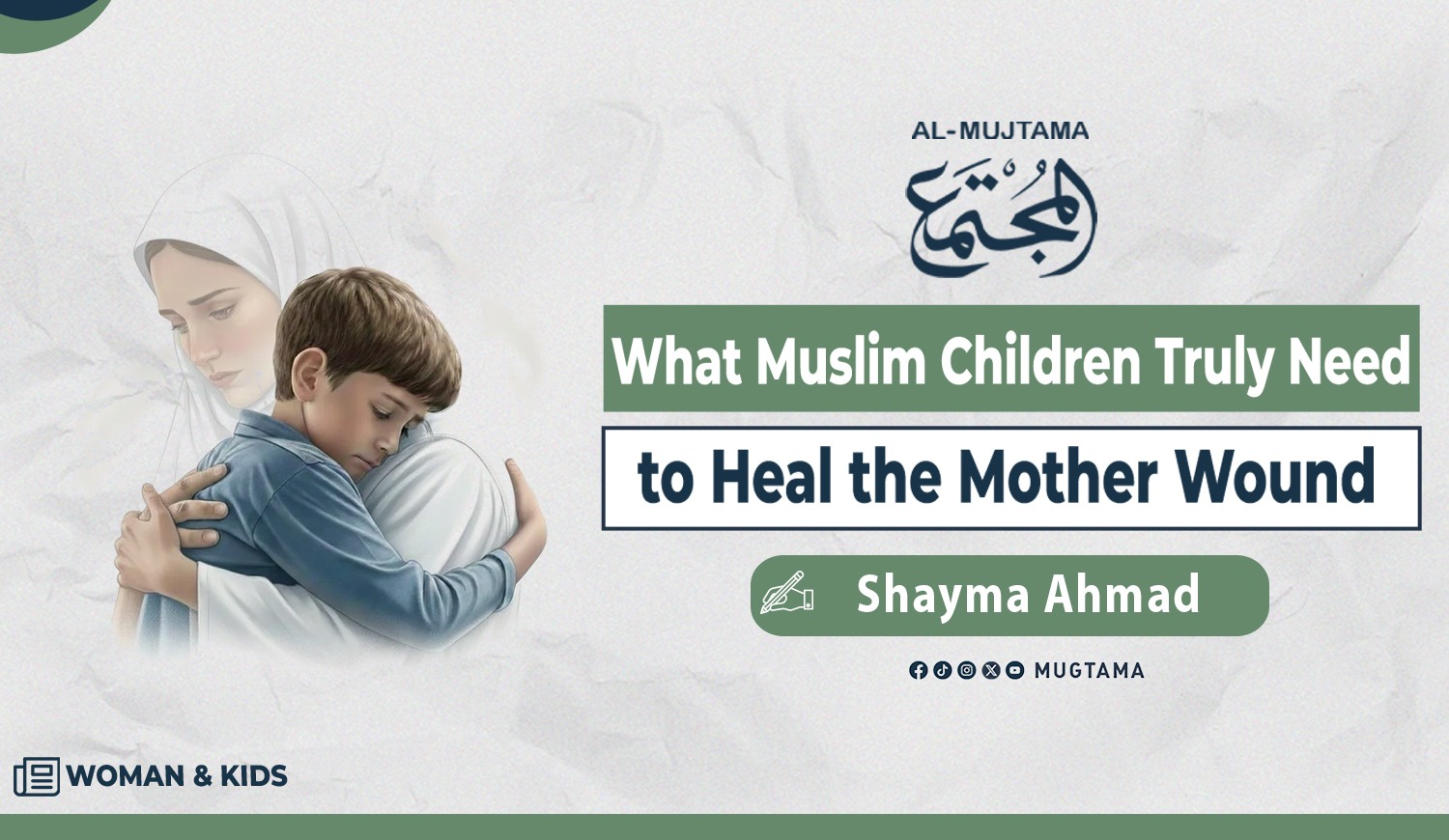
A mother is the
first love, the insight, and the embrace in her child’s life. Homes without
loving mothers are graves unfit for habitation. A mother is the crystal in
which a child sees himself; if it reflects a distorted image of him, he will
believe it. But what if that crystal is cracked or clouded—will the child spend
his entire life searching for someone to tell him that he is enough?
Dr. Sarah
An-Najjar, psychological expert, states in her book “Limadha Ya Ummi: Kayfa
Tata`afayna Min Jurh Al-Umm
Wa Tujannibina Atfalak Tawaruth Al-Alam” (Why, Mother? How to Heal from the Mother Wound and
Prevent Passing the Pain to Your Children) that not all mothers possess that
sound instinct for nurturing their children. Some struggle with psychological
disorders, and some were themselves exposed to emotional neglect in childhood.
From the
moment we are born, we are bound to our mothers through a reassuring emotional
bond. Attachment to the
mother begins at birth. When a small child feels hunger, fatigue, or pain, he
instinctively cries until his mother comes immediately to soothe him and
restore him to stability. The lullaby a mother sings to her child to prepare
him for relaxation remains a secret between them—one of the child’s deepest
sources of security.
Child’s Emotional Needs
A happy home is a
place where the child feels that his needs are the parents’ top priority.
A child
needs to feel safe with his mother—to sense her care and attention to the
details of his life, her acceptance of his physical traits, and her
understanding of his behavioral mistakes at home and in school while striving
to guide him toward better conduct. Such understanding recognizes that he is a
child—full of curiosity, impulsiveness, and immediate desires.
A child
also needs to feel a sense of belonging to his home and parents. He needs to
feel respected—his self-worth, his body, and his right to preserve it with
dignity, free from humiliation. He needs respect for his ownership of his toys
and belongings. A child cannot grow soundly if he does not play, laugh, and
feel seen and loved by his family.
One young
woman says sorrowfully: “I was shocked when I graduated with distinction. My
mother said ‘congratulations’ in a dull tone. She did not hug me, nor did I
feel the warmth of joy I saw in my classmates’ mothers’ eyes.”
Another
speaks of her mother who constantly spreads gloom because she herself suffers
as a divorced woman exhausted by responsibility. A third tells of a mother who
mocks every difficult situation her daughter faces and accuses her of naivety.
All these experiences are stored in the vault of a child’s wounds from his
mother.
The Harmful Patterns of Toxic Motherhood
Many
children have suffered from the absence of a mother—either literally through
illness or death, or figuratively through a present yet emotionally absent
mother. Some mothers possess an inflated sense of self; others work in
demanding fields or feel physically exhausted and emotionally drained,
releasing their tension at home and finding no time to draw close to their
children.
As for
the perpetually angry mother—her impact is devastating. Worse still, this type
of mother cloaks her children in the role of the villain, blaming them for her
rage and violence against them. This creates deep psychological distortions
within them.
Many
mothers fall into the sin of favoritism. A mother may turn her eldest son into
her rescuer, burdening him constantly and expecting perfection. Sometimes
circumstances push the eldest daughter to become a substitute for her mother,
carrying responsibilities beyond her age. A mother may excessively pamper one
child over the others—or, conversely, consistently blame one child or neglect
another because “he never complains.”
The
disease of control afflicts many mothers—those who feel threatened when their
child begins to grow and seek independence in adolescence. Such a mother fails
to recognize healthy boundaries and believes they must be dissolved. She
refuses to allow her daughter privacy with a friend. She rejects the idea of
secrets. Some continue this dominance even after their children marry, pulling
their strings like puppets.
The Bitter Harvest: Long-Term Effects of
Emotional Neglect
Negative
patterns of motherhood often lead children into anxiety and inner emptiness. A child may feel unworthy of love, expect the worst
in life, struggle with chronic loneliness and alienation, and lack confidence
in himself and others.
Attachment
patterns may swing between isolation and excessive dependency on a spouse or
friend. The son or daughter may fear decision-making because the controlling
mother’s authority is absent. Sometimes the individual becomes submissive—even
when mistreated—failing to negotiate a deserved salary or claim rightful
boundaries. At other times, he builds concrete emotional walls isolating
himself from the world.
When a
daughter raised by such a mother marries, she may unconsciously replicate her
mother’s behavior—erupting in anger over trivial matters—or take the opposite
path, living only to please others at her own expense.
The
painful truth is that many mothers who display such behaviors do not realize
they are harming their children. A mother often says, “I promised myself I
would not treat my children the way my parents treated me,” yet she repeats the
same mistakes. Dr. An-Najjar explains that the reason lies in the mother’s own
unhealed childhood wounds—wounds that left indelible scars, for our past is
part of us.
Sometimes
mothers who felt deprived in childhood swing to the opposite extreme—granting
unlimited freedom without guidance because their own mother was overly
controlling, or excusing children from responsibilities. Thus, harm occurs
unintentionally. In the case of a mother who suffered neglect, she may resort
to excessive anxiety, guilt, and over-monitoring—negatively affecting both
herself and her children.
How to Heal from the Mother Wound?
The most
important question remains: How does a child heal from childhood wounds?
The
author explains that true healing begins with releasing suppressed emotions
toward the mother. Allow the child within you to scream—whether privately,
through writing, or by expressing what you wished your mother had done and what
you will now do differently.
Another
crucial step is drawing close to oneself—knowing, loving, and caring for
oneself. This includes tending to one’s physical and spiritual health, building
healthy emotional boundaries, and engaging in activities that bring joy.
Establishing routines that bring order to life and retraining chaotic emotions
toward balance are essential. Sometimes professional therapy sessions with a
qualified psychologist are necessary to overcome the past and adopt a positive
outlook on life.
It is
vital to halt the cycle of inherited pain from mother to daughter. A new mother
must give love, care, and companionship to her children—and feel it genuinely.
She must raise them with balance—neither excessive indulgence nor excessive
harshness. She must allow them independence while withdrawing gradually and
safely.
Finally, forgiveness. Letting
go of the past. Forgiving the mother and her mistakes. If the opportunity
arises, offer her the embrace she never gave you. Lower to her the wing of
humility and pray for her mercy, as the Quran teaches us. In our faith, honoring parents
comes immediately after worshiping God. And it is the gateway to your own
children honoring you.
For Further Reading:
- 10 Ways to Please Your Mother
- How Islam Turns a Mother’s Daily Responsibilities into Worship
- Great Mothers Who Changed the Course of History
-------------------------------------------------------------