




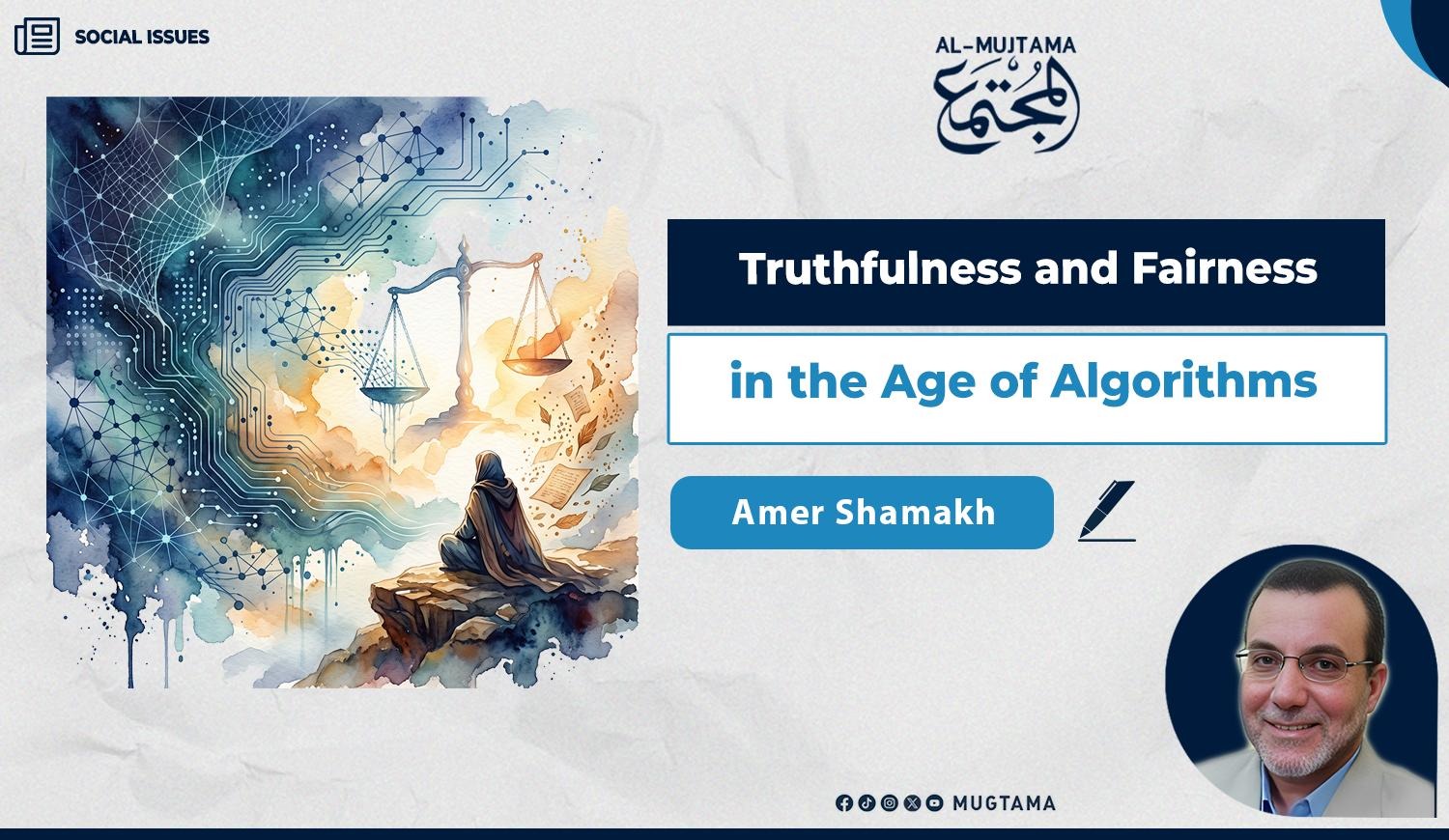
Truthfulness and Fairness in the Age of Algorithms
In a digital
world where it takes only seconds to write a comment or share a news story,
words have become easier than ever to publish, yet more than ever in need of
careful thought and verification. Caught between algorithms that reward instant
engagement and an Islamic teaching that regards every word as a trust for which
we are accountable, Muslims face a genuine test of their values and character.
The fast-paced
nature of social media exposes users to a constant stream of posts, videos, and
news stories, all competing for their attention and stirring their emotions. It
is no longer unusual for someone to comment on an event before understanding the
full story or express an opinion on an issue without considering its wider
implications. As a result, thoughtful reflection gives way to the temptation of
instant reactions. Emotions overtake reason, and personal feelings take
precedence over the pursuit of truth.
When
Words Become Weapons
On social
media, words are no longer simply a means of expressing opinions, exchanging
ideas, or communicating with others. They have increasingly become tools of
psychological and social harm. The danger is that the damage does not end when
a post is published. A single post can be shared thousands of times, leaving
lasting psychological and social consequences even after it has been deleted.
It may contain backbiting, public shaming, bullying, ridicule, invasions of
privacy, or the spread of rumors.
Unfortunately,
many judgments today are based on fleeting impressions and incomplete
information, with little regard for the context and circumstances that give
events their true meaning. A video clip taken out of context or a sentence
quoted selectively can easily become grounds for an accusation and a definitive
judgment about someone's character or beliefs. The user does not simply form a
personal impression but rushes to announce it publicly and present it as fact.
The reactions of others may then reinforce that judgment, allowing it to
escalate into a wave of accusations involving people who know nothing about
what actually happened.
The
Crisis of Dialogue and the Loss of Respect for Differences
Social media
was supposed to open up broader opportunities for dialogue and
knowledge-sharing, allowing people to connect and bridge differences in
perspective. Yet everyday interactions on these platforms reveal how some
spaces for discussion have turned into arenas for personal attacks and verbal
hostility.
The moment
someone expresses a different opinion, they may find themselves facing a flood
of comments that go beyond challenging their ideas to belittling them and
questioning their intentions. The very nature of digital interaction can fuel
this polarization. The physical distance created by a screen gives some people
the confidence to use language they would never dare to use in a face-to-face
conversation.
Respecting
differences does not mean accepting every opinion or abandoning criticism.
Rather, it means keeping the discussion of ideas separate from the degradation
of those who hold them. Disagreements should be settled through sound
reasoning, not mockery; evidence, not public shaming.
Genuine
dialogue is not measured by the number of comments or the harshness of replies,
but by its ability to broaden understanding, bring perspectives closer, and
preserve mutual respect despite disagreements. True victory does not lie in
silencing someone who disagrees with you, but in engaging with them without
compromising your principles.
Islam
and the Trust of Every Word
In the Islamic
understanding, a word is not a passing act whose consequences disappear once it
has been spoken or published. It is a trust, tied to a Muslim's responsibility
for their words and positions, with religious and moral consequences.
Islam
establishes the ethics and responsibility of speech on a fundamental principle:
remaining conscious that Allah is always watching. Allah says: {not a word does a person utter without having a ˹vigilant˺ observer ready ˹to write it down˺.} [Qaf 50:18]
The Prophet
Muhammad (peace and blessings be upon him) also warned against speaking without
careful consideration, saying: “Whoever believes in Allah and the Last Day should
speak good or remain silent.” (Al-Bukhari and Muslim)
This hadith
establishes a comprehensive ethical principle: words should never be mere
reactions to anger, instruments of revenge, or means of belittling others.
Rather, speech should be responsible and intended either to bring about good or
prevent harm.
This makes the
ethics of speech particularly important on social media. Whether expressed
through a post, comment, private message, tweet, or voice recording, every word
is an expression for which a person is accountable before Allah.
The ethics of
speech refer to the principles and values Muslims should uphold when using
their tongues, pens, or any other means of communication, ensuring that their
words are grounded in honesty, respect, justice, and compassion.
Six
Islamic Principles for Responsible Communication on Social Media
1.
Honesty and Verifying Information Before Making Judgments
Muslims should
never share a news story before confirming its accuracy or circulate an image
or video without understanding its original context.
Allah says: {O believers, if an evildoer brings you any news, verify ˹it˺ so you do not harm people unknowingly,
becoming regretful for what you have done.} [Al-Hujurat 49:6]
He also says: {When you passed it from one tongue to the other, and
said with your mouths what you had no knowledge of, taking it lightly while it
is ˹extremely˺ serious in the sight of Allah.}
[An-Nur 24:15]
And: {O believers! Avoid many suspicions, ˹for˺ indeed, some suspicions are sinful..}
[Al-Hujurat 49:12]
This principle
also requires avoiding the circulation of old images or videos as though they
depict recent events. It means acknowledging mistakes and correcting inaccurate
information as soon as it comes to light.
2.
Guarding the Tongue and Avoiding Abusive Language
Protecting
others from harm is not limited to preventing physical injury. It also includes
avoiding harm caused by words, comments, posts, and messages.
This means
refraining from insults, profanity, threats, humiliation, and degrading
language, as well as content that fuels disputes or spreads hatred and
hostility.
The Prophet
Muhammad (peace and blessings be upon him) said: “A Muslim is the one from whose
tongue and hand the Muslims are safe.” (Al-Bukhari and Muslim)
3.
Avoiding Backbiting and Tale-Bearing
On social
media, backbiting and tale-bearing can take many forms, including:
- Revealing other people's
secrets or personal problems.
- Sharing private conversations
without the consent of those involved.
- Publishing posts that expose or
ridicule someone's personal shortcomings.
- Creating groups specifically to
shame, target, or harass an individual.
The ease with
which private information can be circulated does not make sharing it
permissible or harmless.
4.
Respecting Others and Accepting Differences
Muslims are
called upon to treat everyone with kindness and good manners. Allah says: {Speak kindly to people.} [Al-Baqarah 2:83]
This includes
preserving people's dignity even when opinions and positions differ. Rather
than attacking individuals, Muslims should address the ideas being discussed,
use courteous language, and recognize others' right to express their views
within the limits of Islamic teachings and the law.
5.
Spreading Goodness and Encouraging Positivity
The ethics of
speech are not limited to refraining from harmful language. They also involve
actively using words to spread goodness and encourage others.
Allah says: {Do you not see how Allah compares a good word to a good
tree? Its root is firm and its branches reach the sky} [Ibrahim
14:24]
The Prophet
Muhammad (peace and blessings be upon him) also said:
“A good word is
charity.” (Sahih al-Bukhari and Sahih Muslim)
Practical
examples include sharing beneficial information, comforting and supporting
those in need, offering advice in the kindest possible manner, and recognizing
people who contribute through their words and good deeds.
6.
Justice and Fairness When Expressing Opinions
Islam commands
justice in all circumstances, even when dealing with people with whom we
disagree.
Allah says: {Do not let the hatred of a people lead you to injustice.
Be just! That is closer to righteousness.} [Al-Ma'idah 5:8]
He also says: { Whenever
you speak, maintain justice, even regarding a close relative.} [Al-An`am 6:152]
This principle
is particularly important on social media. Muslims must never allow personal
disputes to justify injustice or let prejudice stand in the way of fairness.
Practicing
fairness in digital spaces means avoiding rushed judgments, refusing to take
people's words out of context or distort their meaning, refraining from making
accusations without evidence, presenting different perspectives objectively,
never exploiting private information to harm others, and acknowledging and
correcting mistakes even when they are made by someone with whom we disagree.
Restoring
a Sense of Responsibility in the Digital World
Muslims are not
expected to abandon social media, withdraw from public discussions, or refrain
from expressing opinions on issues that concern them and their communities.
Rather, they are expected to maintain a conscious and responsible presence,
guided by values, principles, and the trust placed in their words, rather than
fleeting emotions or the pursuit of popularity.
Pausing before
responding is not a sign of weakness or an inability to participate. It may, in
fact, reflect maturity, sound judgment, and self-discipline.
A Muslim does
not leave their morals behind when entering the digital world, nor do they set
aside the values Allah has commanded them to uphold: honesty, justice,
trustworthiness, verification, and guarding the tongue.
A phone screen
does not shield anyone from the watchfulness of Allah, and pressing the publish
button does not absolve anyone of responsibility for their words. The number of
likes, shares, and comments cannot turn falsehood into truth or make a hasty judgment
correct.
The trust of
every word and the virtue of fairness will remain essential expressions of
righteousness, no matter how rapidly algorithms evolve or how dramatically
social media platforms change.
-------------------------------------------------------------
