





Religious Authority in the Age of Social Media Influencers

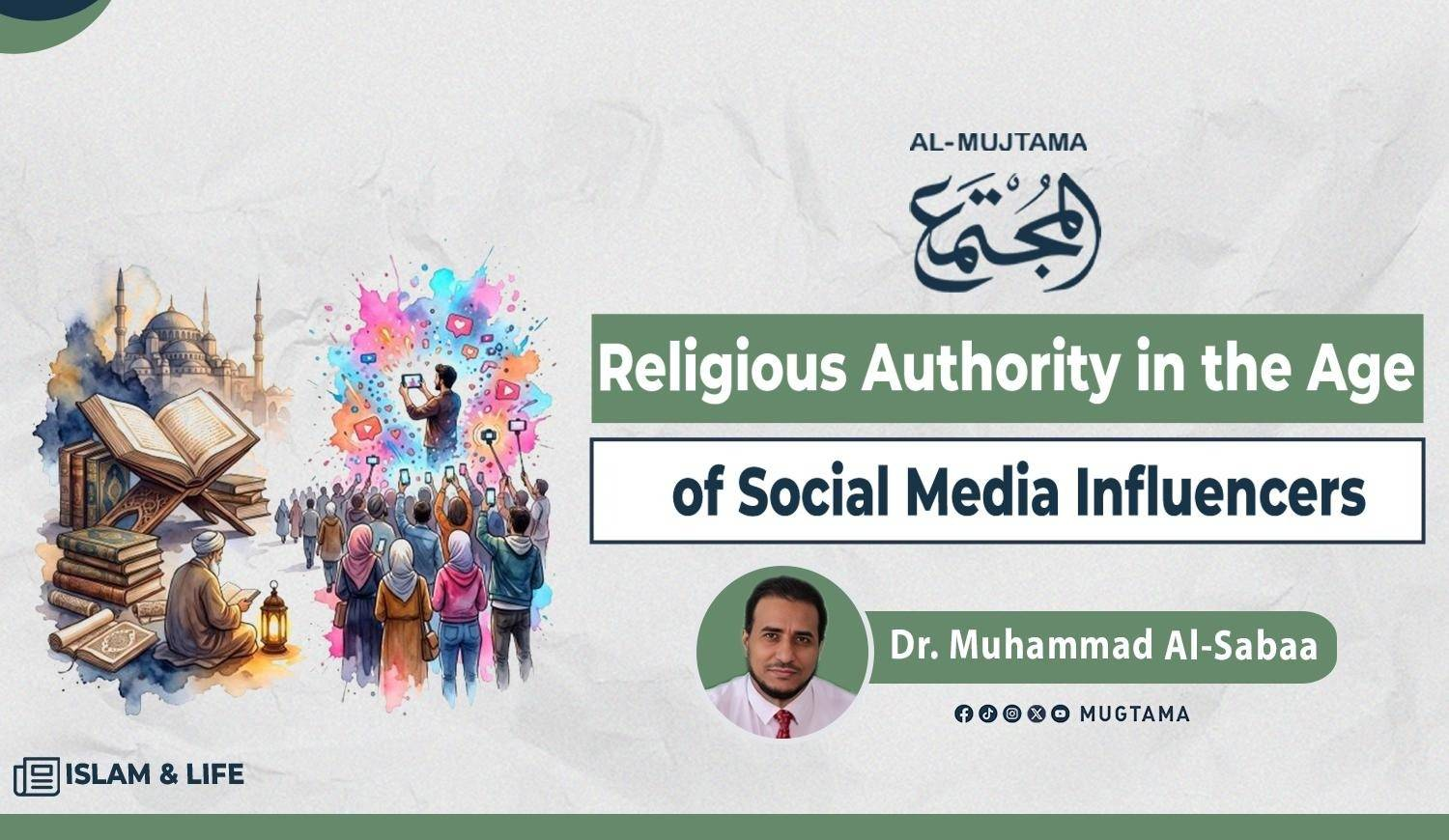
Muslim societies today are witnessing
a major transformation in how people acquire religious knowledge. Preaching
platforms, scholarly institutions, religious organizations, and specialized
scholars are no longer the only sources people turn to for understanding their
faith. Social media influencers are increasingly shaping religious perceptions, guiding
behavior, and influencing attitudes toward religious and intellectual issues.
Although this transformation has
positive aspects, including the wider dissemination of religious sciences and
Islamic concepts and making them accessible to different social groups and age
ranges, it also presents a serious challenge. Unqualified individuals are
taking it upon themselves to issue religious rulings, speaking about matters they understand as well as
those they do not, and presenting their content to the public through short
videos that often prioritize fame and audience engagement.
This makes the subject particularly
important, drawing attention to the sources from which people derive their
understanding of religion and the criteria that distinguish a qualified scholar
from a content creator.
Religious Authority in Islam: Between
Revelation, Scholarship, and Fame
One of today’s most serious challenges
is the transformation of fame into a measure of religious credibility. A person
with a large following may be given precedence over a specialized scholar, or a
personal opinion may be treated as an established religious ruling. It is
therefore essential to distinguish between the sources of religion—the Quran
and authentic Sunnah—the scholarly authority represented by a competent and
trustworthy scholar, and the media intermediary, such as an influencer,
celebrity, or content creator.
Allah Almighty has instructed us: {If you ˹polytheists˺ do not know ˹this already˺, then ask those who have knowledge ˹of the Scriptures˺.} [An-Nahl 16:43]
The general meaning of this verse
includes praise for people of knowledge, as Allah commands those who do not
know to refer to them in all matters they encounter. This also implies an
endorsement of their scholarly integrity and a commendation of their qualifications,
since Allah has instructed people to consult them. By doing so, those who lack
knowledge are relieved of the burden of acting without guidance. The verse thus
indicates that Allah has entrusted scholars with His revelation and His Book,
and that they are required to cultivate their own integrity and embody the
qualities of excellence. (1)
Allah Almighty also says: {Do not follow what you have no ˹sure˺ knowledge of. Indeed, all will be
called to account for ˹their˺ hearing, sight, and intellect.}
[Al-Isra’ 17:36]
The responsibility associated with
knowledge extends to acquiring information, transmitting it, and influencing
others through it.
The Prophet Muhammad, peace and
blessings be upon him, said: “Verily, Allah does
not take away knowledge by snatching it from the people but He takes away
knowledge by taking away the scholars, so that when He leaves no learned
person, people turn to the ignorant as their leaders; then they are asked to
deliver religious verdicts and they deliver them without knowledge, they go
astray, and lead others astray.” (2)
This warning becomes even more
significant when digital platforms give certain individuals extensive
visibility without verifying their scholarly qualifications.
The Prophet Muhammad, peace and
blessings be upon him, would select certain Companions to teach others, serve
as judges, or teach the Quran, taking into account each person’s knowledge,
competence, and ability to fulfill the assigned responsibility. A prominent
example is his sending of Mu`adh Ibn Jabal, may Allah be pleased with him, to
Yemen, where he instructed him in the fundamental principles of calling people
to Islam and emphasized the importance of a gradual approach to teaching them
their religion.
Verifying Islamic Content and Combating
Misinformation
Religious content spreads today at
extraordinary speed. This can allow an error to circulate widely before it is
discovered. Even after the mistake comes to light, what can one do except try
to clarify the truth to the best of one’s ability? Something that does not
belong to religion may be falsely attributed to it, or its texts may be
interpreted in ways that contradict their actual meaning and implications.
This makes it essential for Muslims to
develop a sound understanding of religious authority, moving beyond a culture
of passive consumption toward one that emphasizes verifying sources,
understanding context, and recognizing the strength of the supporting evidence.
Allah Almighty says, {And when they hear news of security or fear, they
publicize it. Had they referred it to the Messenger or their authorities, those
with sound judgment among them would have validated it.} [An-Nisa’ 4:83]
Those capable of drawing conclusions
are the scholars. They discern what should be kept confidential and what should
be made public. (3)
Not every piece of information is
suitable for publication. Some people may casually share a statement,
accusation, or piece of information without considering the consequences, even
though the resulting harm to individuals and communities may be immense.
Thus, Allah revealed verses concerning
The Incident of Al-Ifk (slander), addressing the dangers of receiving and
circulating reports without evidence: {When you
passed it from one tongue to the other, and said with your mouths what you had
no knowledge of, taking it lightly while it is ˹extremely˺ serious in the sight of Allah.} [An-Nur
24:15]
The Ethics of Religious Influence:
Sincerity, Fame, and Responsibility
In the digital environment, fame is
shaped by algorithms, sensationalism, polarization, and the speed at which
content spreads, often regardless of its subject matter, field, or intellectual
merit. Content creators may therefore be tempted to enter the religious sphere,
particularly when they see opportunities to increase their fame, gain more
followers, or achieve similar rewards. In such circumstances, attracting
attention may take precedence over accuracy, fairness, and impartiality.
This makes it essential to establish
religious and ethical guidelines governing both the content and those who
produce it. Such standards would enable influencers to use digital platforms to
benefit people without allowing content creation to become a means of
self-promotion through the exploitation of religion or manipulation of its
texts.
Ultimately, this responsibility rests
with the influencer, particularly if they fear the consequences of misleading
others or negatively affecting them through what they publish.
The Prophet Muhammad, peace and
blessings be upon him, said: “He who believes in
Allah and the Last Day should either utter good words or better keep silence.” (4)
Published content does not lose its
ethical responsibility simply because it appears on a digital platform. A comment,
post, or video is still a form of speech that must be judged according to the
standards of goodness and truthfulness.
It is also necessary to distinguish
between digital indicators of popularity and the actual quality of religious
outreach, its ethical and scholarly impact, and its consequences for society.
Building a Reliable System of Religious
Authority in the Digital Age
It is important to urge audiences not
to follow influencers blindly and to warn against religious rulings circulated
by influencers or digital platforms without proper verification. However, this
must be accompanied by a practical alternative that combines the authenticity
of established Islamic scholarship with effective digital communication and
easy access to reliable knowledge.
This requires making use of different
platforms to disseminate sound knowledge according to sound scholarly
principles, connecting people with scholars and recognized academic and
religious institutions, and strengthening their ability to distinguish between
a trustworthy religious ruling, a personal opinion, and media content.
Religious knowledge must not be subordinated to the demands of fame and
algorithms.
Achieving this goal requires a
partnership among scholars, religious and educational institutions, content
creators, and platform users. Scholars provide the sound scholarly foundations;
media professionals present the material effectively; technical specialists
help deliver the content to its intended audience; and viewers contribute by
verifying information and sharing it responsibly.
This collaborative approach follows
the divine instruction: {Let there be a group among
you who call ˹others˺ to
goodness, encourage what is good, and forbid what is evil—it is they who will
be successful.} [Ali `Imran 3:104]
Everyone should recognize the virtue
of this collective effort and appreciate its potential consequences and
benefits. The Prophet Muhammad, peace and blessings be upon him, said: “One who guides to something good has a reward similar to
that of its doer.” (5)
Spreading religious knowledge requires people with diverse skills, careful selection of teachers, coordination of efforts, and consideration of the audience’s circumstances. A sustainable solution combines critical awareness, high-quality content, and easy access to recognized and reliable sources of knowledge.
-------------------------------------------------------------
Footnotes
- 1 Tafsir As-Sa`di: Taysir Al-Karim Al-Rahman, edited by Abdulrahman Ibn Mu`lla Al-Luwaihiq, Ar-Risalah Foundation, first edition, 1420 AH/2000 CE, p. 441.
- 2 Reported by Al-Bukhari (100) and Muslim (2673).
- 3 Mukhtasar Al-Baghawi (Ma`alim At-Tanzil), by Abdullah Ibn Ahmad Ibn Ali Az-Zayd, Dar As-Salam for Publishing and Distribution, Riyadh, first edition, 1416 AH, vol. 1, p. 193.
- 4 Reported by Al-Bukhari (6138) and Muslim (47).
- 5 Reported by Muslim (1893).
