









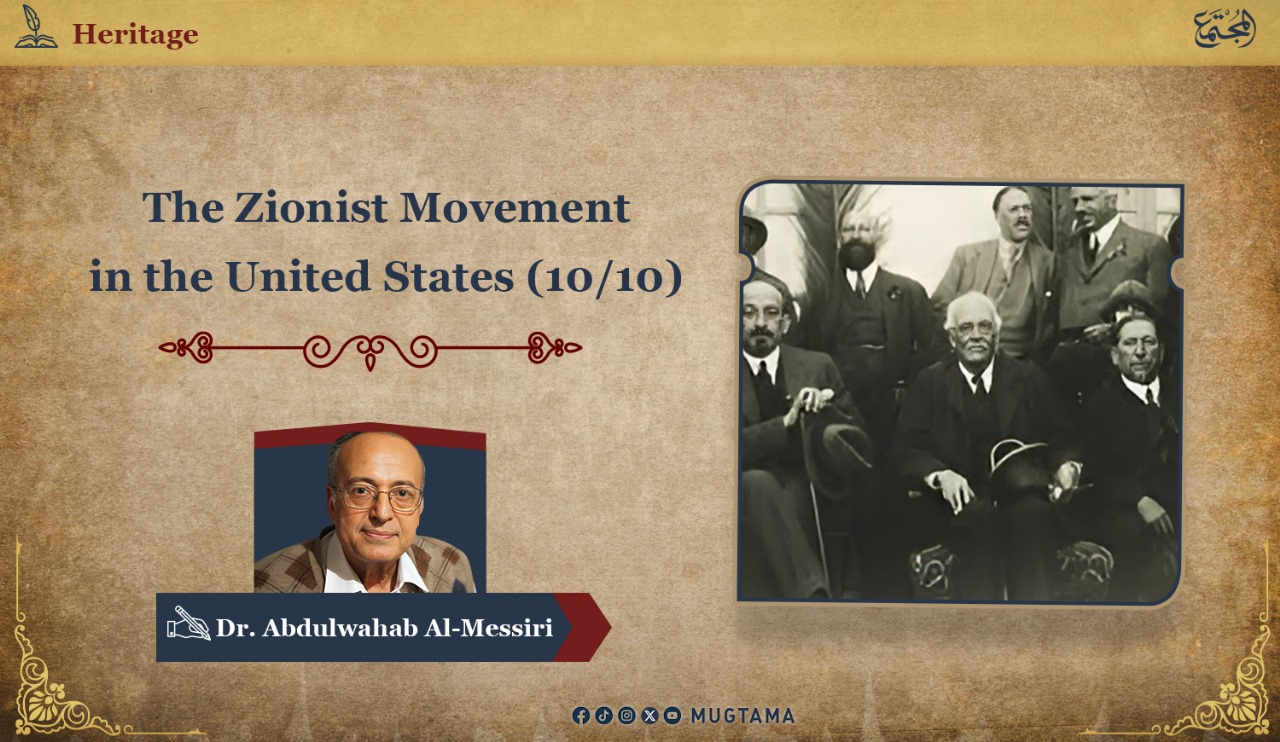
The Zionist Movement in the United States (10/10)
AIPAC’s strategy to confront
pro-Palestine supporters in America
AIPAC expanded its activities beyond
the traditional legislative sphere in an attempt to influence American
institutions and groups sympathetic to the Palestinian cause, such as students,
liberal Protestant churches, and minorities—particularly African Americans. On
university campuses, AIPAC organized free seminars aimed at training and
mobilizing pro-Israel students and coordinating their activities to confront
campus elements hostile to Israel or supportive of Palestinians, by labeling
them as extremists, radicals, anti-American, and accusing them of anti-Jewish
and anti-Semitic attitudes.
AIPAC also established the
Christian-Jewish rapprochement program, working to improve relations and find
common ground with African American organizations and other minority groups,
whom AIPAC fears are increasingly leaning toward hostility to Israel as they
shift toward Third World solidarity. To counter this, AIPAC seeks to portray
minorities as oppressed in the Arab world, which is ruled by backward and
authoritarian regimes, and to emphasize that African Americans would gain
little from investing their efforts and support in backing the Palestinians.
AIPAC also views with concern the
growing activity of the Arab lobby through its various bodies and organizations
in the United States. Although it acknowledges the Arab lobby’s ineffectiveness
due to its lack of organizational capacity, popular base, and voting power, in
1982 AIPAC appointed a full-time staff member tasked with monitoring and
analyzing the Arab lobby on a permanent basis and developing ways to confront
it.
The American Israel Public Affairs
Committee (AIPAC) includes in its executive committee the heads of thirty-eight
major American Jewish organizations and maintains a permanent operating body.
Its declared budget in 1980 amounted to $1.3 million to finance this apparatus.
AIPAC is funded through membership fees (44,000 members) and donations. As a lobbying
organization, it is required to submit quarterly financial reports every three
months to the Secretary of State and the Speaker of the House of
Representatives.
The principal position within AIPAC is
that of the Executive Director, while the position of Committee Chairman is
usually held by a wealthy and influential man. He enjoys the respect of the
Jewish community in the United States and belongs to one of its important
institutions or organizations.
The Israeli-American Friendship League
An American tax-exempt organization,
founded in 1971, that works to promote relations between the United States and
Israel. It brings together a group of Americans with diverse interests and
beliefs, though they share a common conviction in the existence of mutual
interests and values between the two countries.
The organization promotes the Zionist
state by organizing trips to Israel, launching student exchange programs
between the two countries, and facilitating exchanges of writers, scholars,
artists, and athletes. It sponsors cultural programs about Israel in American
schools, convenes conferences, and distributes publications highlighting
similarities between the United States and Israel. The organization also seeks
to build bridges between Jewish and non-Jewish communities in American society such
as Hispanic Americans and Christian religious institutions, in order to win
their support for Israel.
You may also like:
The Zionist Movement in the United States (5/10)
The Zionist Movement in the United States (6/10)
The Zionist Movement in the United States (7/10)
The Zionist Movement in the United States (8/10)
The Zionist Movement in the United States (9/10)
________________________________________________
______________________________________________
Source: Encyclopedia of the Jews, Judaism, and Zionism