






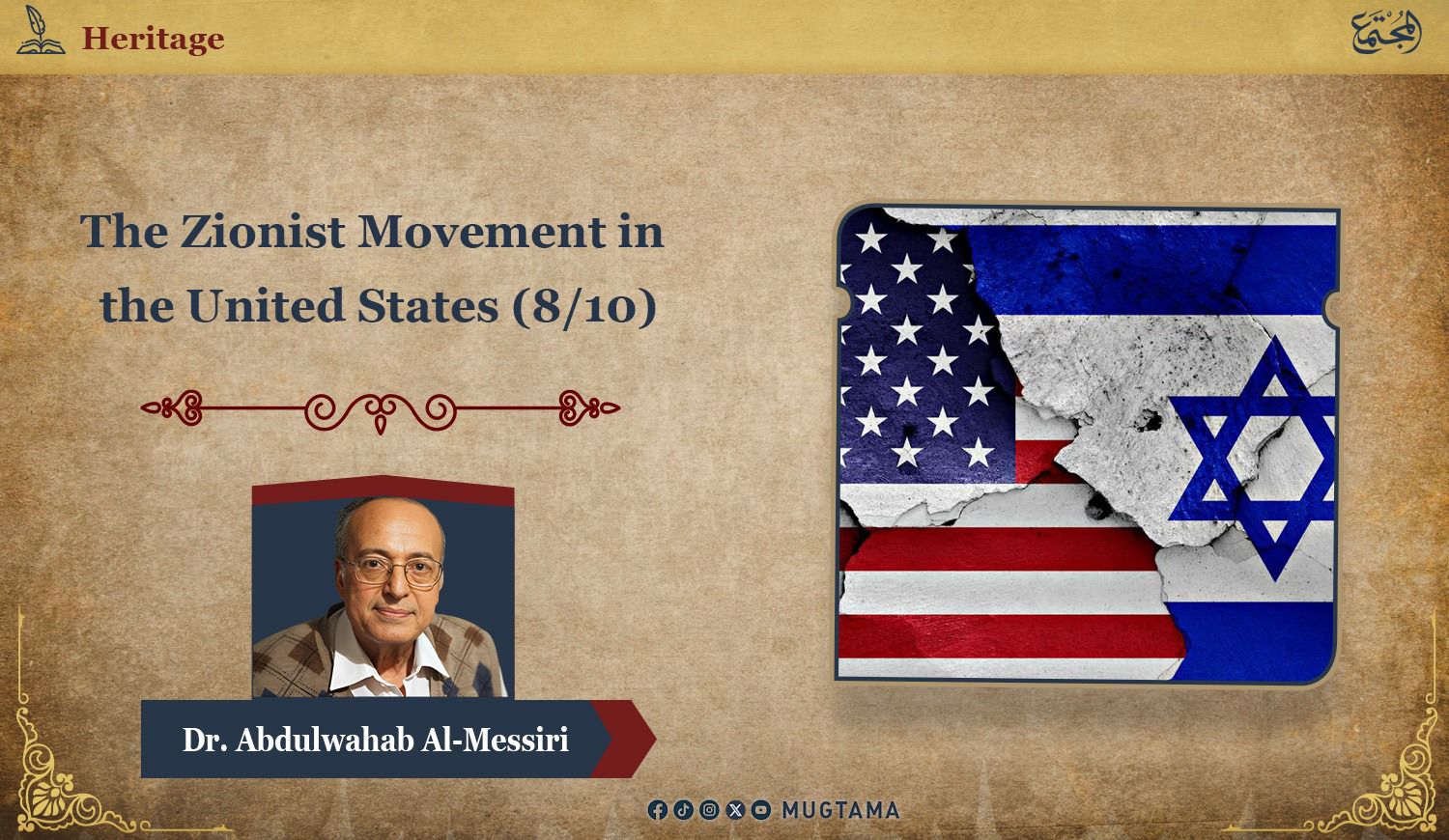
The Zionist Movement in the United States (8/10)
Components of the American Conference
The organizations affiliated with the
Conference of Presidents of Major American Jewish Organizations are:
The American Jewish Congress; the
American Federation of Labor Council for Israel; the American Israel Public
Affairs Committee (AIPAC); the American Zionist Federation; B’nai B’rith;
Hadassah; the Jewish Labor Committee; Jewish War Veterans; the Labor Zionist
Organization of America; the American Mizrachi Organization; the National
Interreligious Affairs Advisory Council; the Union of American Hebrew
Congregations; the Union of Orthodox Jewish Congregations of America; the
United Synagogue of America; the Zionist Organization of America; American
Mizrachi Women; the Anti-Defamation League; B’nai B’rith Women; B’nai Zion; the
Central Conference of American Rabbis; Emunah Women of America; Herut Zionists;
the Jewish National Fund; the Jewish Reconstructionist Foundation; the Labor
Zionist Federation; the National Committee for Labor Israel; the National
Council of Jewish Women; Young Israel National Council; the National Federation
of Temple Sisterhoods; the National Jewish Welfare Board; the North American
Jewish Youth Council; Pioneer Women; the Rabbinical Assembly; the Rabbinical
Council of America; the American Women’s Organization for Rehabilitation
Through Training (ORT); the Women’s League for Conservative Judaism; the
Workmen’s Circle; and the World Zionist Organization – American Section.
The American Israel Public Affairs
Committee (AIPAC)
“The American Israel Public Affairs
Committee” (in English: American Israel Public Relations Committee,
abbreviated as AIPAC) is an American Jewish organization founded in 1954 with
the aim of influencing U.S. policy toward the Middle East in a manner
consistent with Israeli and Zionist interests. The organization is registered
as an official lobbying group tasked with promoting support for Israel in the
name of the American Jewish community. In the view of some observers, it is among
the most powerful lobbying groups in the United States and one of the most
influential overall.
The roots of this organization go back
to 1951, when Isaiah Kenen, a member of the American Zionist Council, decided after
consulting with Israeli leaders at the time (Abba Eban, Moshe Sharett, and
Teddy Kollek)—to establish a Zionist lobby whose immediate objective (at that
time) was to increase U.S. economic assistance to Israel. In 1954, the American
Zionist Committee for Public Affairs was formed, and in 1959 its name was
changed to the “American Israel Public Affairs Committee” in order to work for
U.S. policies that would exert greater influence in the Near East and help
achieve a peaceful settlement of the Arab–Israeli conflict. This committee was
registered with the U.S. Congress in accordance with local lobbying laws, which
allow various groups with particular viewpoints or interests to present their
positions to members of Congress and its committees.
The American Israel Public Affairs
Committee leads lobbying campaigns to support the positions of the Israeli
government, works to strengthen the U.S.–Israeli alliance, and seeks to prevent
the formation of alliances between the United States and the Arab world that
could harm Israel. It also works to underscore Israel’s strategic importance to
the United States and the West and to emphasize Israel’s unmatched capacity to
protect American interests, whether in deterring Soviet expansion in the past,
confronting international terrorism, or facing any new forms of threats that
may emerge in this vital region of the Middle East after the collapse of the
socialist bloc.
The Committee further asserts that
Israel, like the United States, is a democratic state and therefore a reliable
ally, whereas its Arab neighbors are portrayed as backward societies ruled by
unstable and authoritarian regimes. It supports legislation that grants the
United States under its provisions aid and assistance to Israel, and it
pressures for a steady increase in such aid, for the conversion of loans into
grants, and for raising economic relations between Israel and the United States
to a level of parity by replacing assistance with trade. On the other hand, it
opposes legislation through which U.S. aid or grants are directed to states opposed
to the interests of the Zionist state. It also leads campaigns against arms
deals with Arab countries, against the Arab boycott, and against the Palestine
Liberation Organization.
______________________________________________
Source: Encyclopedia of the Jews, Judaism, and Zionism
____________________________________________
You may also like:
The Zionist Movement in the United States (3/10)
The Zionist Movement in the United States (4/10)
The Zionist Movement in the United States (5/10)
The Zionist Movement in the United States (6/10)
The Zionist Movement in the United States (7/10)
____________________________________