

The Houthis and Iran: Resistance Movement or Regional Power Project?
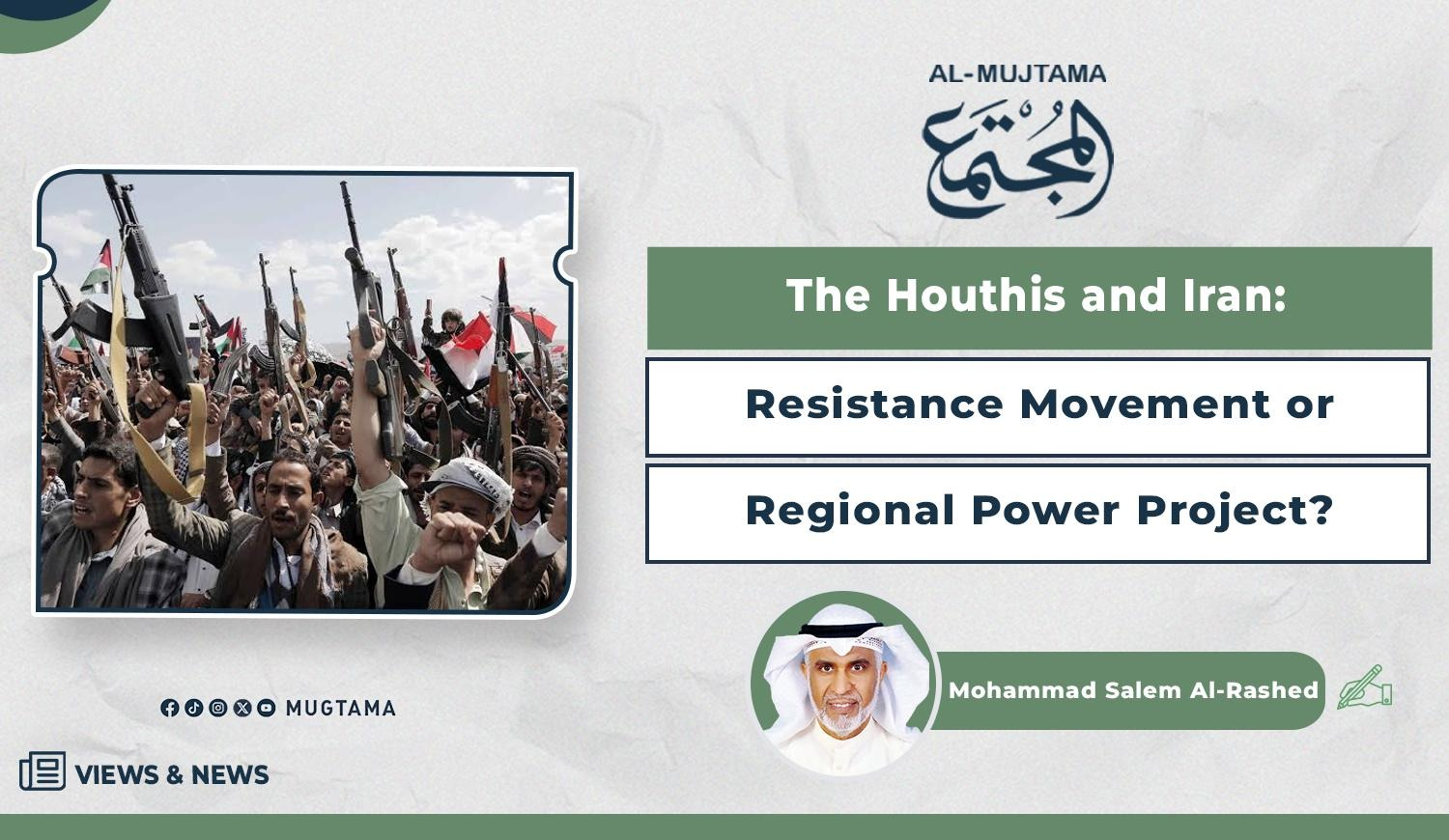
The Houthis’ war did
not erupt at the start with Israel nor did it begin with the Bab Al-Mandab
Strait. It began inside Yemen, with six rounds of fighting against the state in
Sa`adah between 2004 and 2010, followed by military expansion that culminated
in the takeover of San`aa in September 2014, with the support of forces loyal
to the late President Ali Abdullah Saleh.
Since then, state institutions have
become fragmented and the war has deepened, making the restoration of a unified
Yemeni state increasingly difficult. The Houthis alone are not responsible for
this collapse; government mistakes, the proliferation of armed groups, and
foreign interventions have also contributed to it. Nevertheless, seizing the
capital by force of arms marked a decisive turning point in undermining the
political process and the unity of Yemeni decision-making.
The Houthis’ Rise to Power and Their Growing
Ties with Iran
The movement emerged within Yemen’s
Zaydi environment, but it would be inaccurate to attribute its beliefs to all
Zaydis or Yemenis. Nor was its relationship with Iran equally extensive from
the outset. However, these ties expanded after the Houthis took over San`aa,
eventually developing into a military and strategic partnership.
A United Nations Panel of Experts
documented that Houthi fighters received technical and tactical training in
Iran, Lebanon, and Iraq, and benefited from Iranian expertise in developing
missile and drone capabilities.
The Houthis thus gained access to
tools that enhanced their ability to strike opponents and threaten maritime
traffic. Iran, in turn, gained an armed ally at the southern entrance to the
Red Sea, increasing its capacity to exert regional pressure, particularly on
Saudi Arabia. This partnership is documented, although not every Houthi action
is a direct order issued by Tehran.
The Houthis’ Ideology and Its Impact on
Yemeni Society
The danger extends beyond weapons. The
movement’s political ideology, which includes elevating the hereditary right to
leadership and placing loyalty to the group above equal citizenship, creates a
rift in Yemenis’ shared cultural identity.
Studies have also documented changes
to school textbooks in areas under Houthi control, highlighting the movement’s
leaders, images of combat, and the concept of martyrdom in children’s education.
In 2020, the Houthi authorities issued
a zakat regulation imposing khums, a 20% levy on certain natural
resources. The Yemeni organization Mwatana criticized the provisions governing
its distribution as discriminatory. Turning schools and public funds into
instruments for consolidating the power of a particular group undermines the
idea of a state in which all Yemenis enjoy equal rights.
The Human Cost of the War and Houthi Abuses
The Yemeni people have paid the
heaviest price. The United Nations Development Programme estimated that the war
in Yemen had caused 377,000 direct and indirect deaths by the end of 2021. This
figure represents the estimated casualties of the war involving all parties; it
is not a death toll attributable to the Houthis alone.
In September 2026, UNICEF reported
that 3.2 million school-age children were out of school. Human Rights Watch has
also documented the recruitment of children by the Houthis and their arbitrary
detention of civilians.
The Houthis’ abuses are documented and
remain etched in the consciousness of the Yemeni people. The suffering of
Yemenis will continue as long as the Houthis remain a driving force behind it.
On the global level, the volume of
cargo passing through the Suez Canal in May 2025 remained approximately 70%
below its 2023 level amid the Red Sea crisis and disruptions to maritime
traffic.
Are the Houthis an Independent Yemeni
Resistance Movement?
The Houthis may mislead some members
of the Yemeni public and Arab populations by launching a handful of missiles
toward Israel and presenting themselves as a component of what is known as the
“Axis of Resistance.”
The slogan of supporting Palestine may
win legitimate sympathy for the Palestinian cause. However, it cannot erase the
Houthis’ history of waging war against Yemenis, politicizing their children’s
education, or relying on foreign military support.
Judged by the standards of
sovereignty, people’s rights, and national unity, the Houthis are not an
independent Yemeni resistance project. Rather, they represent an armed power
project that has become strategically integrated into the system of Wilayat Al-Faqih—the
doctrine of the Guardianship of the Islamic Jurist—and has turned Yemen into a
card for advancing that system’s regional influence.
-------------------------------------------------------------
