









The Quran: A Book of Absolute Truth
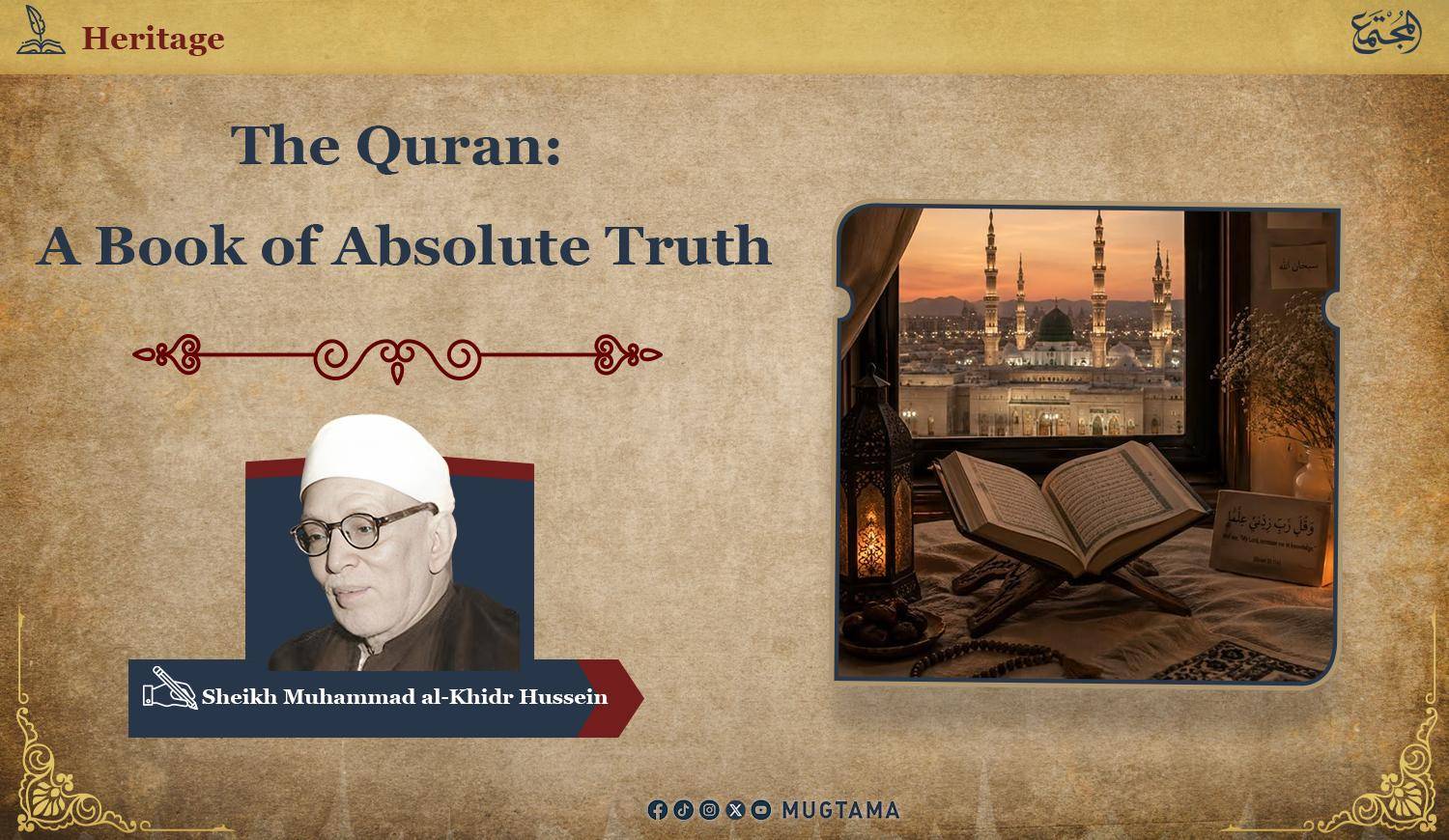
The Quranic
narratives are not fictional tales or stories invented for entertainment. They
are accounts of real events, revealed by Allah as guidance and lessons for
humanity. Yet some people attempt to cast doubt on their authenticity, claiming
that certain Quranic accounts contradict historical facts or contain scientific
inaccuracies. Such claims stem from misunderstandings of the Quranic text and a
failure to distinguish between apparent contradictions and genuine ones.
Quranic
Narratives Are Accounts of Truth
The Quran makes
clear that its accounts are founded on truth, not imagination. Allah says: {Indeed, the example of Jesus in the sight of Allah is
like that of Adam. He created him from dust, then said to him, “Be!” And he
was!.} [Ali-Imran 3:59]
This verse
establishes that the miraculous creation of Jesus, without a father, is no more
difficult for Allah than the creation of Adam, who had neither a father nor a
mother. It is therefore unreasonable to reject an account simply because it
falls outside the ordinary laws of nature.
Likewise, some
critics have questioned the Quranic reference to Mary as the sister of Aaron,
assuming that it confuses Mary, the mother of Jesus, with Mary, the sister of
Moses. Allah says: {O sister of Aaron! Your
father was not an indecent man, nor was your mother unchaste.} [Maryam 19:28]
However, the
name Aaron was not exclusive to the brother of Moses. The verse does not
establish that Mary was his biological sister; rather, it refers to another
righteous man named Aaron or uses the expression to associate her with a family
known for righteousness.
Misunderstanding
Is Not Contradiction
Many objections
raised against Quranic narratives arise from interpreting verses without
considering their linguistic, historical, and textual context. An apparent
contradiction does not necessarily constitute a real one. A sound understanding
requires examining the relevant verses together and considering the meanings
permitted by the Arabic language and the broader context of revelation.
As the scholar
Abu Ishaq al-Shatibi explains in Al-Muwafaqat, Quranic accounts are to
be understood according to the principles governing the interpretation of
revelation. A narrative that the Quran presents as true, without any indication
to the contrary, cannot simply be dismissed as fiction.
Holding
Firm to the Truth
The Quran is a
book of guidance, and its narratives carry lessons that extend beyond the
events themselves. They remind believers of Allah's power, wisdom, and control
over all things. Attempts to undermine these accounts through unfounded claims
should therefore be met with knowledge, careful reflection, and a sound
understanding of the Quran.
Believers must
remain alert to misleading arguments, examine claims critically, and avoid
turning away from the guidance of Allah because of doubts built on
misunderstanding. The Quran speaks the truth, and its message remains a source
of guidance for those who approach it with sincerity and an open mind.
-------------------------------------------------------------