









The Impact of Islamic Medicine on Human Civilization
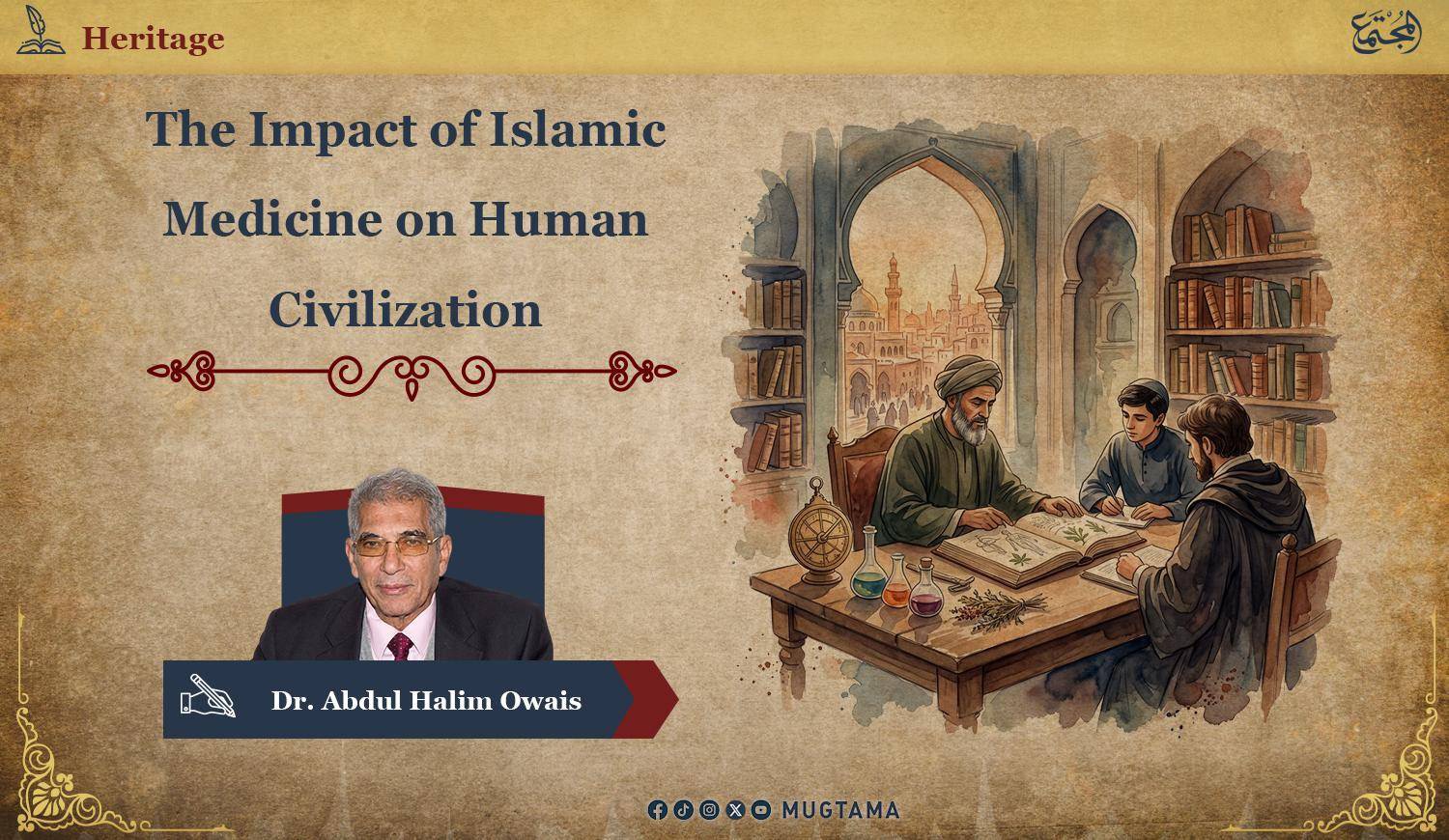
To fully grasp the profound impact of Islamic medicine on
Europe, one need look no further than the story of Richard the Lionheart’s
personal physician. Richard was subjected to primitive treatments aimed at
"exorcising demons," a process that brought him to the brink of
death. He was saved only when his adversary, Saladin—driven by his faith,
humanity, and chivalry—sent his own personal physician to treat the king with
medicinal herbs, leading to his full recovery.
Indeed, the annals of the Crusades are filled with medical
accounts revealing that Crusader physicians had little to offer patients beyond
physical beatings or amputation. Such patients often died mid-treatment,
largely due to the complete absence of anesthesia.
Beyond doubt, the Crusades—throughout their long periods of
both war and peace—alongside Islamic Spain (Al-Andalus) and the movement of
translation, served as the primary conduits through which Arab-Islamic medicine
flowed into Europe and beyond.
Among the most prominent of these works were the medical
treatises of Al-Zahrawi (Abulcasis, d. 1107 AH), an Andalusian physician who
lived during the reigns of Caliph Abd al-Rahman III and his son Al-Hakam II
(300–366 AH). His seminal writings were translated into various European
languages and became core textbooks in medical academies. European surgeons
were deeply influenced by Al-Zahrawi, adopting his pioneering techniques and
widely crediting him with the invention of numerous surgical instruments.
In his biographical work Tabaqat al-Atibba (The Classes
of Physicians), Ibn Abi Usaybi'ah wrote of Al-Zahrawi:
"He was an outstanding physician, expert in both simple and compound drugs, and highly skilled in treatment. Although he was particularly famous for surgery, he masterfully bridged all branches of medicine and its practical arts. Thus, it is rightly said of him: he is one of the three most celebrated Arab physicians, alongside his peers, Al-Razi (Rhazes) and Ibn Sina (Avicenna)."1
Beyond this direct clinical influence, Islamic medicine left
another far-reaching legacy through the widespread translation of its
literature. In 1381 AD, Paravici (Bravaci) translated Al-Taysir—a major
treatise associated with Al-Zahrawi's school of thought—which subsequently went
through multiple printed editions.
At a time when Arab surgeons were routinely performing
delicate operations for cataracts (traditionally termed "blue water"
in the eye), surgical education was strictly prohibited in the West until 1163
AD. Surgery only entered Western curricula after Latin translations of Arabic
medical books became accessible, enriched by practical insights from Islamic
medicine and clinical training in hospitals. Arab medical academies became
premier global hubs, drawing knowledge-seekers from every corner of the world.
Consequently, Europe remains deeply indebted to the Arab-Islamic world in the
scientific and medical fields.
A dedicated cohort of translators specialized in rendering
these medical masterpieces into Latin 2. Among the most prominent were
Constantine the African (Constantinus Africanus), Gerard of Cremona, and
Stephen of Antioch (Stephen of Pisa), who translated the compendium of Ali ibn
al-Abbas al-Majusi (Haly Abbas).3
Consequently, pioneer medical schools began to emerge across
Europe. Chief among them was the University of Montpellier, founded in 1137 AD,
which retained a number of Arab instructors until the early 13th century. The
names of these scholars were deeply intertwined with Arab medicine and its
teaching in southern Spain—a vital conduit through which a vast wealth of Arab
medical knowledge was seamlessly transmitted to Europe.
Countless fair-minded Western scholars and Orientalists have
widely acknowledged that Muslims played a monumental role in rescuing the
science of medicine from oblivion. Furthermore, they assert that Europe’s
medical progress was fundamentally built upon the groundbreaking advancements
introduced by Muslim physicians—discoveries that were transmitted to the West
and served as a cornerstone of European civilization.
Supporting this view, the scholar Camsten (Camesten) remarked:
"Had Muslims achieved nothing other than rescuing medicine from lost
antiquity, it would have sufficed as an immense service and a point of
pride."
Indeed, Muslim pioneers elevated the entire medical
profession. They hold the historic credit for establishing surgery as a
distinct scientific discipline, pioneering the concept of hospitals—including
mobile clinics—and introducing formal legal licensing for the practice of both
medicine and pharmacy.
Similarly, Muslims revolutionized the field of pharmacology,
reinforcing its foundational principles. They were the very first to establish
specialized schools of pharmacy, formulate novel types of drugs, and excel in
understanding their chemical properties and clinical applications. Furthermore,
they enriched the global pharmacopoeia by introducing a vast array of botanical
and plant-derived substances to both medicine and pharmacy. 4
Dr. Gustave Le Bon wrote:
"The most significant advancements made by the Arabs in the field of medicine lay in surgery, pathology, therapeutics, and pharmacology. Indeed, medicine remains indebted to the Arabs for a vast array of pharmaceuticals. It is equally indebted to them for novel treatment methodologies—methods to which modern medicine has only recently returned, hailing them as modern discoveries after they had been long forgotten. Furthermore, surgery owes much of its fundamental innovations to the Arabs, whose treatises on the subject remained essential textbooks in medical faculties until very recently.5
Source:
Footnotes
- 1 Farshoukh, Muhammad Amin. Encyclopedia of Islamic Geniuses (Mawsu’at Abaqirat al-Islam), Vol. 1, pp. 48–50.
- 2 Ghanimah, Abdul-Rahim. Fields of Islamic Civilization (Mayadin al-Hadarah al-Islamiyyah), Vol. 1, p. 352.
- 3 For more on Arab medicine and its impact on Western and Islamic civilization, see: Al-Aqqad, Abbas Mahmoud, op. cit., pp. 33–42.
- 4 Touqan, Qadri Hafiz. The Sciences of the Arabs (Al-Ulum ‘inda al-Arab), p. 9.
- 5 Le Bon, Gustave. The Civilization of Arabs (La Civilisation des Arabes), translated into Arabic by Adel Zuaiter, p. 488, Isa al-Halabi Publishing House, Cairo.