



Our Civilization: From Illness to Renaissance
Instinct and Effort: Building
Civilization
Our
civilization, by its very nature, welcomes any rational openness or
"modernity" in the fields of natural and cosmic sciences. It is
confident that natural scientists and others, if they adhered to an objective
methodology, would not — and have not, even at the height of their achievements
— reach any scientific conclusions capable of shaking its intellectual
foundations.
Consequently,
it sees the necessity of combining the "constant" (authenticity) with
the "variable" (the product of thought). It holds that what is found
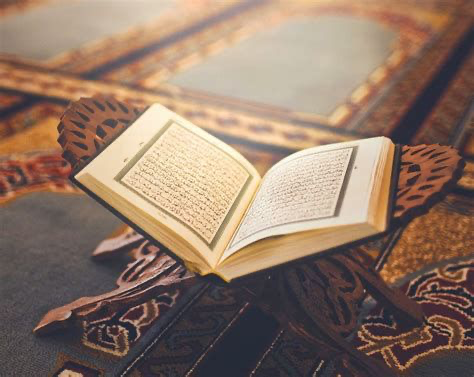
in the Quran and the authentic Sunnah represents this "constant" upon
which the "variable" floors are built. There is no contradiction
between the constant rooted in human nature — granted by the One who created
mankind and knows their essence — and the purely variable product of human
reasoning, which evolves year after year, and may in one generation reject what
many previous generations had firmly established.
"Authenticity"
is a fundamental condition for the survival of our identity and inner being in
a world filled with forms of civilizational conflict. Likewise, we need
"modernity" to be able to live alongside the people of this age — and
only by combining and blending both can we march forward in the procession of
history.
Reclaiming Our Civilizational Identity
Relying
solely on what authenticity offers means settling for solutions imported from
the past, just as relying solely on contemporary experiences means settling for
solutions imported from the outside. Neither form of importation will fully
correspond to what our own self and circumstances require, with all their
dimensions, components, and challenges.
Therefore,
resuming our Islamic civilization in the twenty-first century (the fifteenth
Hijri century) requires that we set out from a genuine Islamic thought — one
that is aware of its civilizational roots, conscious of the challenges it
faces, and grounded in the reality it inhabits — in order to express the Muslim
character, and its purposes and goals in civilization and history, in all their
depth and comprehensiveness.
This
is not a task that any single individual can accomplish, for it must encompass
all social dimensions: political, economic, and ethical. Rather, it is the
mission of academic and media institutions, Islamic thinkers, and rulers —
indeed, of everyone concerned with the question of this nation's future and its
civilizational role in history.
The Genius of Umar ibn al-Khattab
The second Rightly Guided Caliph, Umar
ibn al-Khattab, may God be pleased with him, faced two civilizations that
opened up to the Islamic state, bringing with them concepts, problems,
conditions, and pressures sufficient to shake the foundations of the nascent
Islamic state to its core. Yet the genius of Umar, may God be pleased with him,
and the genius of the first Islamic generation — their sense of conviction,
their faith in the superiority of their principles, and their awareness of the
role of authenticity in shaping modernity, ensuring mastery over it rather than
being absorbed by it — all of this was the greatest factor behind Umar ibn
al-Khattab and his Rightly Guided generation achieving a civilizational victory
as well, following the military one, over these new civilizations.
The Muslim society succeeded in
drawing upon their positives, rejecting their negatives, and ultimately melting
both civilizations into the Islamic mold, where they became an integral part of
Islamic civilization.
Reviving Civilization: The Bet on
Education
What Islamic civilization did in its
stance toward the Romans and Persians, Europe did in turn when it drew from
Islamic civilization — severing the Islamic roots of all that it borrowed.
A great thinker such as Arnold Toynbee
does not hesitate, throughout his civilizational research, to draw a direct
link between European civilization and the Catholic Church. In his view,
civilization in general arises from religion — that is, from a "creative
divine spark."
So why should we not set forth from
our religion and our authenticity, carrying the Quran and the Arabic language
in one hand, and all the scientific and artistic creativity we can reach in the
other?
The civilized world is led by the
finest of its educated elite, and this elite forms institutions that harness
all the achievements of the modern mind, enjoying — as a civilizational
leadership — all the social capacities that enable them to fulfill their role.
Japan recognized, after being devastated
in the Second World War, the importance of this foundation in nation-building.
It granted teachers the salaries of deputy ministers and the authority of
deputy prosecutors, and provided them with every possible means for
development.
As for the class of scholars and
technocrats, they enjoy throughout the developed world the same status that any
distinguished elite enjoyed in previous civilizations. It is therefore no
surprise that Japan returned, in less than a quarter of a century, to share in
leading the world — after having been almost completely destroyed by American
atomic weapons.
The Civilizational Safety Valve
The classes that lead thought and
ethics must at least be "consulted" in a deliberate, permanent, and
legally structured manner at every step of the civilizational path of the
Muslim nation — provided that these classes are trusted in their belonging to
the nation's creed and heritage, and that they are people of competence and
faith, not merely people of loyalty and worldly interest.
Through two complementary — not
parallel — lines: the line of civilizational leadership represented by the
chosen elite, and the line of the responsible citizenry, each accountable to
the extent of their role — "Every one of you is a shepherd, and every one
of you is responsible for his flock" (agreed upon) — through these two
complementary lines, the entire nation moves up the ladder of civilization in
harmony and solidarity.
"There is no doubt that the
burdens and responsibilities of guidance, innovation, looking toward the
future, and aspiring toward higher goals rest heavily upon the shoulders of the
elite and the vanguard. The more the vanguard feels the weight of these
burdens, and the more the elite confronts them with sound vision and open minds
— the more this elite becomes capable of overcoming civilizational challenges
and driving the nation toward advancement and elevation."
"The nation and its community
remain well as long as this vanguard is open in its horizons, aware of the
movement of progress, knowledgeable of the nature of its age and the emerging
ways of life. But when this elite begins to close in upon itself, or when it is
struck by corruption, or discord falls among its members — it will have
exhausted its purpose and become incapable of sound leadership."
The elite, supported by the popular
base that resonates with it, is able to translate the nation's aspirations into
tangible reality. Likewise, a conscious popular base is able to hold the elite
accountable and protect it from the diseases and deviations of leadership.
Thus, the elite and the base mutually influence one another, and the ship of
the nation sails through storms and upheavals by virtue of its complete
cohesion and full civilizational awareness.
The Global Role
Muslims will not be able to escape their
small, fragmented, and scattered problems — which pervade so many corners of
their thought and life — except by insisting on rejecting internal
disintegration and the psychological collapse that these problems produce. And
this will only be achieved through a sense of cosmic and global responsibility,
not merely toward themselves and their own societies, but toward all of
humanity. This is precisely what is defined for us in the noble verse: (We have made you believers into a just community, so
that you may bear witness to the truth before others) (Al-Baqarah: 143).
And as the Indian Muslim thinker
Wahiduddin Khan states: "There has never been an era in which the horizons
of action have opened up for the universal message of Islam as they have in the
twentieth century, thanks to the worldly outcomes of Islam's monotheistic
revolution.
There is every form of support for
Islamic thought and the Islamic conception of the universe and life, offered by
the human sciences — encompassing psychology, sociology, history, and
legislation. Moreover, the cosmic truths that have been discovered have refuted
certain myths put forward by other religions, while at the same time affirming
the rightful claim of the one religion truly deserving of that name: Islam.
Among what this age has offered as
means of support for the Islamic call and Islamic civilization:
1. The widespread prevalence of freedom of opinion and
research.
2. The widespread contemplation of cosmic phenomena and
their harnessing.
3. The widespread adoption of the scientific method and
historical thought, which has done away with myth and superstitious thinking.
4. The availability of media tools, including audio,
visual, and print outlets.
There is also another significant
dimension that facilitates the Muslim's transformation into an ambassador of
human civilization in this age — one whereby he is seen as the savior from the
threat of total human extinction.
This dimension is embodied in the
condition to which European civilization has arrived, as it stands on the verge
of destroying human humanity itself and its future.
When Civilizations Fade
Under this civilization, "we
do not know where we are going... but we are going" — as the American
poet Stephen Vincent Benét expressed it. René Dubos, for his part, describes
this collapse in his book So Human an Animal, portraying European
civilization in few words: "Every successful personal life and every
successful city was permeated by an organized network of relationships
connecting man to society and to nature. These fundamental relationships are
now being disrupted with alarming speed and depth by the modern life we live.
The danger is not confined to our violation of nature alone, but extends to our
threatening of the future of humanity itself.
From Dubos we turn to the words of the
Mayor of Cleveland, who remarked sarcastically: "If we are not careful,
history will record us as the generation that lifted a man to the moon, while
he was sinking to his knees in mud and filth."
We cannot trace everything said by
those who have diagnosed European civilization from within its own ranks — such
as Alexis Carrel in his book Man the Unknown, or Arnold Toynbee in his
study of history, or Spengler in The Decline of the West, or Roger
Garaudy in Dialogue of Civilizations, or Vintilă Horia in his novel The
Twenty-Fifth Hour — the hour by which Horia symbolizes the twilight and
collapse of European civilization, and the sweeping advance of a new
civilization coming from the East:
"Where the man of the East overtakes
the machine society, he will use electric light to illuminate streets and homes
— but he will not be reduced to its slave, nor will temples and shrines be
raised to it, as is the case in the barbarism of the Western machine society.
He will not illuminate the lines of heart and mind with neon light. The man of
the East will make himself the master of machines and of the machine society.
The liberated human thought that has
fully grasped the crisis of the materialist civilization — one that is on the
verge of suffocating human humanity and destroying the human race — this
thought will find in the Islamic formulation of civilization a shelter, a
refuge, and a sanctuary. But what matters is that Muslims recognize their role,
plan for it, seize the available opportunities for the call in this age, and
step forward with a confident and faithful heart, and a strong and open mind,
onto the stage that calls out to them: (On that
day, the believers will rejoice(4) at
God’s help. He helps whoever He pleases: He is the Mighty, the Merciful.(5) ) (Ar-Rum)
You may also like:
Swords and Stories: Civilizational Exchange in the Crusades
5 Reasons Behind the Decline of Islamic Civilizational Contribution
=========================================