





The Greatest Man on Earth
Aspects of the Hijrah
We are in Mecca, where a fierce struggle rages: Monotheism
against Polytheism, Reform against Stagnation, and Muhammad against Quraysh. Quraysh
poured in all its power, wealth, and worldly devotion for a single aim: to
block this goodness from reaching the world.
Muhammad pleaded, "Clear the way for me to go forth
into the world—to champion the weak, succor the oppressed, and restore
humanity's dignity and the reign of reason." They refused. He urged, "Make
room for my message to resonate through time, for it is not bound to one land,
nor confined to a single day." They refused yet again, answering, "Come,
we shall make you our king if you wish, shower you with our riches, and crown
you the undisputed leader of this land.
History scoffed at Quraysh. Muhammad called them to inherit
the sovereignty of the earth and the leadership of the world, placing in their
hands the keys to boundless treasure—wealth and wisdom alike—and offering them
all the domains of Khosrow and Caesar. Yet, in return, they offered him mere
governance over a secluded village, nestled between two mountains behind the
desert sands.
When enticements failed, they turned to intimidation,
subjecting him to harm and relentless threats. They cast thorns in his path as
he walked, threw animal entrails upon him while he prostrated in prayer, pelted
him with stones in Taif until his blood flowed, mocked him, and unleashed their
fools against him.
Yet, none of this stirred his anger; it only deepened his
compassion—the compassion of a wise elder toward mischievous children, or a
sane soul toward the deranged. His only response was: "O Allah, guide
my people, for they do not know." Nothing could veer him from his
course—no more than a button cast into the sky or a stone hurled at the moon
could alter its orbit through the celestial dome.
The Resilience and Unyielding Faith of the Early Muslims
They persecuted the early Muslims to turn them away from their
faith, subjecting them to ruthless torture. They would lay a Muslim bare on
scorching sands hot enough to roast flesh, place a massive boulder upon his
chest, and wave water before his eyes, demanding, "Renounce the Lord of
Muhammad, and we shall slake your thirst and set you free." Yet he
would only cry, "One! [God is] One!" The sheer bliss of
revelation eclipsed the sting of torment, and the euphoria of longing for
Paradise dissolved the agony of earthly pain.
For the sake of God, they endured everything—beatings, wounds,
fire, hunger, and sleepless nights. They embraced every bitterness and welcomed
that which human nature most abhors, so long as it earned the pleasure of God.
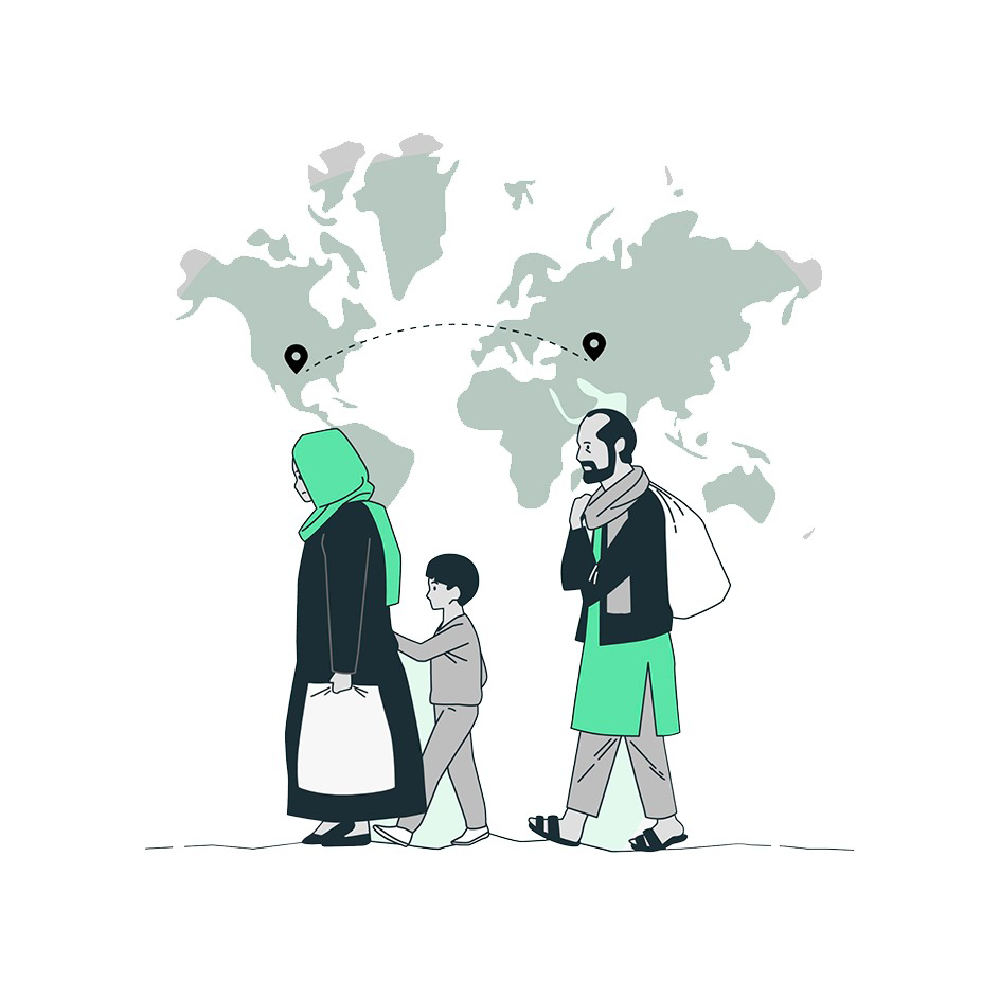
Then the Prophet called upon them to endure something even
more grueling: to abandon their homeland, leave behind their families, and flee
with their faith to a distant, unfamiliar land—where the soil was not theirs,
nor was the language or the religion. They set out for Abyssinia to live
alongside Christians, for the Christians of Abyssinia were closer to them than
the pagan Arabs—as the Quran notes: "And you will find the nearest of
them in affection to the believers those who say, 'We are Christians.'"
So they left their homes, parted from their kin, and journeyed
to Abyssinia, yet the persecution of Quraysh pursued them even there. Quraysh
plunged ever deeper into disbelief, opposition, and defiance—but could Quraysh
ever extinguish the light of God?
Steam, whose very nature is to rise skyward, cannot be trapped
in a bottle; constrain it, and it will find a breach or shatter the vessel
altogether. So too was Islam.
The Muslims migrated once more, but this time to an Arab
land—to a town destined for ages to remain obscure, lost behind the desert
sands, until it was honored by Muhammad. Thereupon, it transformed into the
mother of cities and the capital of capitals. From its heart gushed springs of
virtue and guidance to irrigate the earth with blessings, while rivers of wealth,
majesty, and power poured into it from every corner of the world.
All the Muslims had migrated; none remained in Mecca save the
Prophet and two men—his companion on the journey and his deputy in the city.
Two men who were the first to embrace Islam and the last to migrate: Abu Bakr,
the master of the elders, and Ali, the master of the youth.
Muhammad stayed behind, just as a noble captain remains aboard
a doomed ship, refusing to disembark until every passenger is safely ashore—or
like a faithful shepherd at a perilous pass, who will not cross until the
entire flock has safely passed. He stayed behind to shield his followers,
confronting danger head-on.
And danger arrived in its
most sinister form: the leaders of Quraysh conspired to commit the most horrific
crime in the history of humankind.
Footnotes:
Source:
Men from History
(Volume 1) by Sheikh Ali Al-Tantawi