




The Female Legacy of the Hijrah
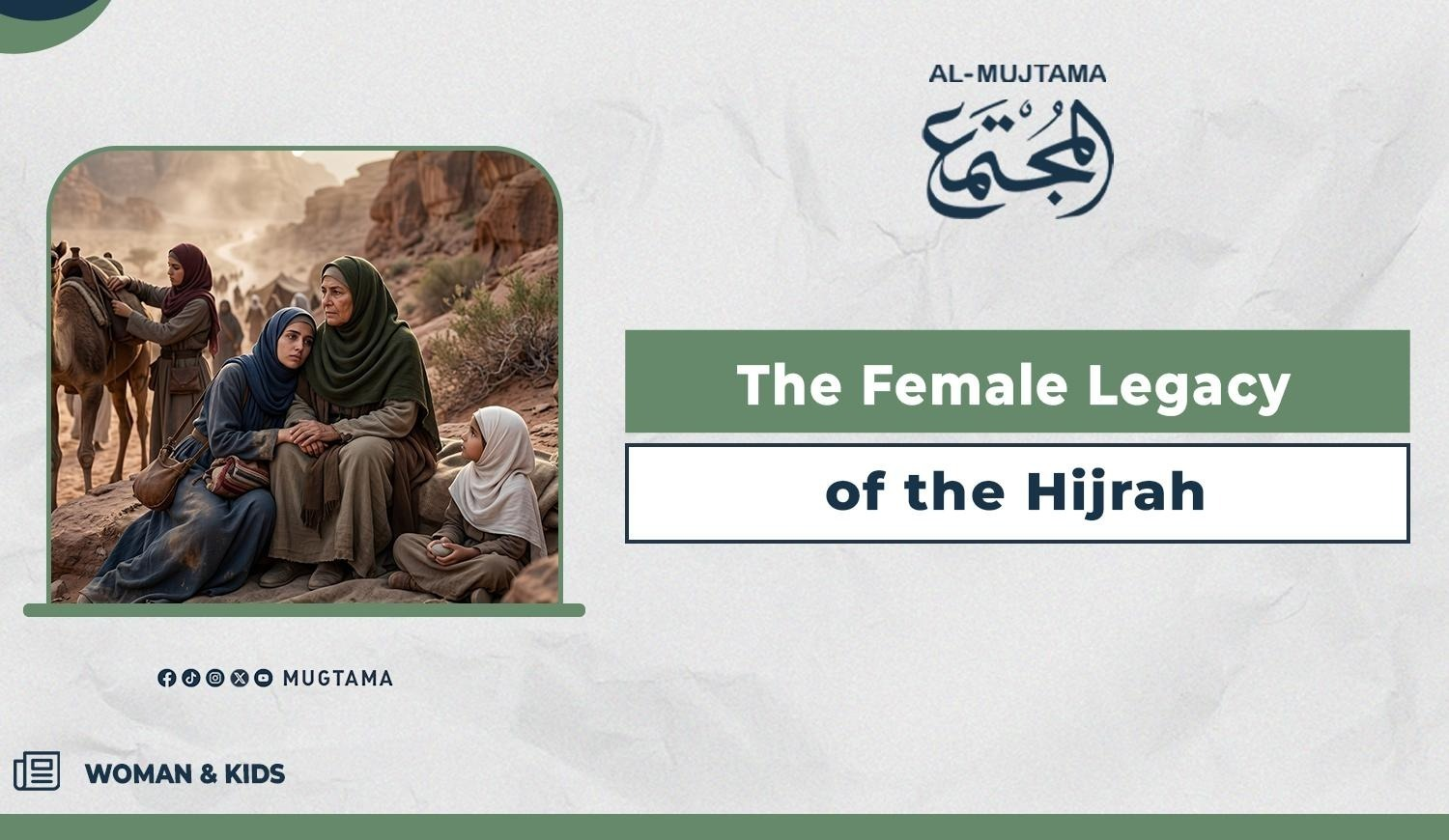
When people think of migration in Islamic history, they often picture long journeys, desert roads, and
the courage of the Prophet Muhammad (peace be upon him) and his companions.
Yet behind this defining moment stood other
stories that deserve equal attention: the story of women whose faith,
sacrifice, and resilience helped make those historic transformations possible.
The Hijrah was not
merely a relocation from one city to another. It was the birth of a new
civilization, a turning point that changed the course of history. And women
were not passive observers of that change. They were active participants who
protected the message, sustained the believers, and bore extraordinary
hardships for the sake of their faith.
Faith Beyond Gender
One of the remarkable features of the
Islamic worldview is that it measures people by faith and deeds rather than
gender. The Quran repeatedly emphasizes that men and women share equal
spiritual worth before Allah: {Surely ˹for˺ Muslim men and women, believing men and
women...} [Quran 33:35]
Likewise, the Quran declares: {I will never deny any of you—male or female—the reward
of your deeds. Both are equal in reward.} [Ali `Imran 3:195]
The Prophet (peace be
upon him) reinforced this principle when he
said: “Women are the counterparts of men.”
(Sunan Abu Dawud)
This spiritual equality was not merely
a theological statement. It was reflected in the lived reality of the earliest
Muslim community, where women stood alongside men in carrying the burdens of
faith and helping shape the future of Islam.
Khadijah: The Woman Who Made the
Beginning Possible
Long before the migration to Madinah,
another form of migration was already taking place: the difficult transition
from isolation to prophethood, from uncertainty to divine mission.
At the center of that transformation
stood Khadijah Bint Khuwaylid. When the Prophet (peace be upon him) received the first revelation and returned home
shaken by the weight of the experience, it was Khadijah who comforted him with
the famous words: “Allah will never disgrace
you.”
Her support was not limited to
emotional reassurance. She invested her wealth, her energy, and her unwavering
confidence in the mission. She stood beside the Prophet during the most
difficult years of persecution and hardship.
History often remembers public
leaders, but great movements also depend on those who provide strength behind
the scenes. In that sense, Khadijah was not simply a supporter of the Islamic
message; she was one of the foundations upon which it was built.
Asma’ Bint Abu Bakr: Courage in the
Shadows
Every major transformation requires
people willing to accept risk. During the Prophet’s migration, Asma’ Bint Abu Bakr
played a critical role in supporting him and her father while they were hiding
in the Cave of Thawr. Despite the dangers posed by Quraysh, she repeatedly
traveled difficult routes carrying food, water, and news.
When she could not find a rope to
secure their provisions, she tore her waistband into two pieces and used them
instead. Because of this act, she became known as Dhatul-Nitaqayn—“the
Woman of the Two Waistbands.”
Her contribution may appear simple
compared to dramatic battlefield stories, yet without logistics, secrecy, and
perseverance, great missions often fail. Asma’ reminds us that history is
shaped not only by visible leadership but also by quiet acts of courage.
Umm Salamah: The Strength to Endure
Separation
The story of Umm Salamah reveals
another dimension of sacrifice. As she attempted to migrate with her husband
and child, tribal disputes tore her family apart. Her husband was forced to
leave, her child was taken from her, and she was prevented from joining them.
For months she endured separation, uncertainty, and grief.
Yet she refused to surrender her
commitment to faith. Eventually she was reunited with her son and undertook the
difficult journey to Madinah largely on her own. Her story is not merely about
travel; it is about resilience in the face of loss.
In an age when many people associate
strength primarily with physical power, Umm Salamah demonstrates a different
kind of strength—the ability to remain steadfast when life falls apart.
The Women of the First Migrations
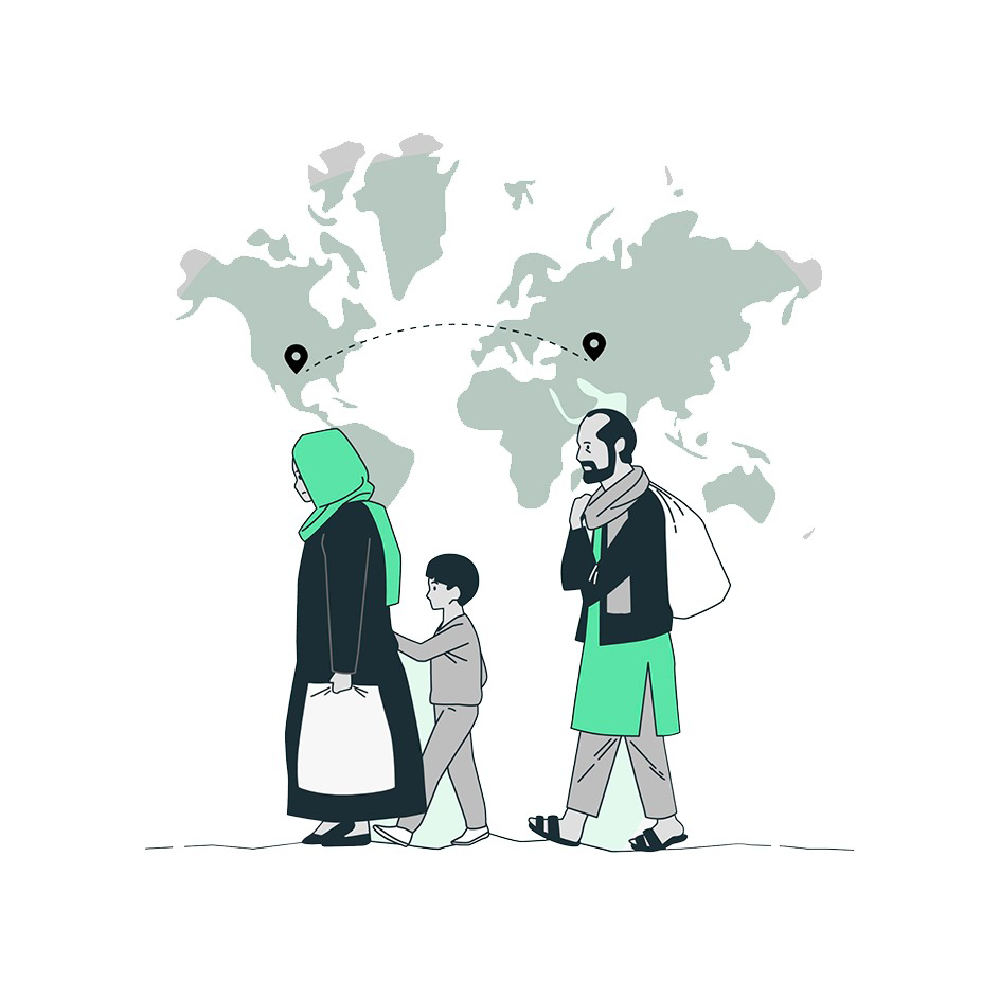
The migration to Madinah was not the
first migration in Islamic history. Years earlier, Muslims had migrated to
Abyssinia seeking safety from persecution.
Among them were remarkable women such
as Ruqayyah, the daughter of the Prophet (peace be upon him), who migrated first to Abyssinia and later to
Madinah, earning the title “the woman of the two migrations.”
Other women, including Sahlah Bint
Suhayl and Layla Bint Abi Hathmah, left behind their homes and familiar
surroundings to preserve their faith. Their stories remind us that the early
Muslim community was built by families, not individuals; by women as well as
men.
These women understood that preserving
faith sometimes requires leaving comfort behind and embracing uncertainty for a
higher purpose.
Guardians of Trust
Not every contribution to the Hijrah
involved travel. `A’ishah Bint Abu Bakr, still very young at the time,
witnessed crucial moments in the planning of the migration. She knew sensitive
information and understood the importance of protecting it.
In a period when a single disclosure
could have endangered lives, she demonstrated remarkable maturity and
responsibility.
The success of great movements often
depends on trustworthiness as much as heroism. The early Muslim women excelled
in both.
Lessons for Today
The women of the Hijrah challenge many
modern assumptions. They were neither passive figures nor background characters
in history. They were believers who combined conviction with action, compassion
with courage, and faith with responsibility.
Their examples show that meaningful
change is rarely achieved by a single leader or a single group. It is built
through the contributions of many people—some visible, others unseen.
For contemporary Muslims, the stories
of Khadijah, Asma’, Umm Salamah, Ruqayyah, Aisha, and countless other women
offer an enduring lesson: faith is not measured by public recognition but by
sincere contribution.
The great transformations of history
are often remembered through famous names, but they are sustained by ordinary
people who choose sacrifice over comfort and purpose over convenience. The
women of the Hijrah were among those people, and their legacy continues to
inspire generations today.
For Further Reading:
- Women’s Role in Society and Family in Islam vs. the West
- 5 Powerful Roles of Muslim Women in Shaping the Ummah’s Identity
- The Role of Women in Times of Crisis
-------------------------------------------------------------