









West Bengal Voter Roll Revision: Muslims Disproportionately Targeted in Electoral Appeals, Analysis Finds
India: 90% of Muslim Voters Facing Deletion in West Bengal
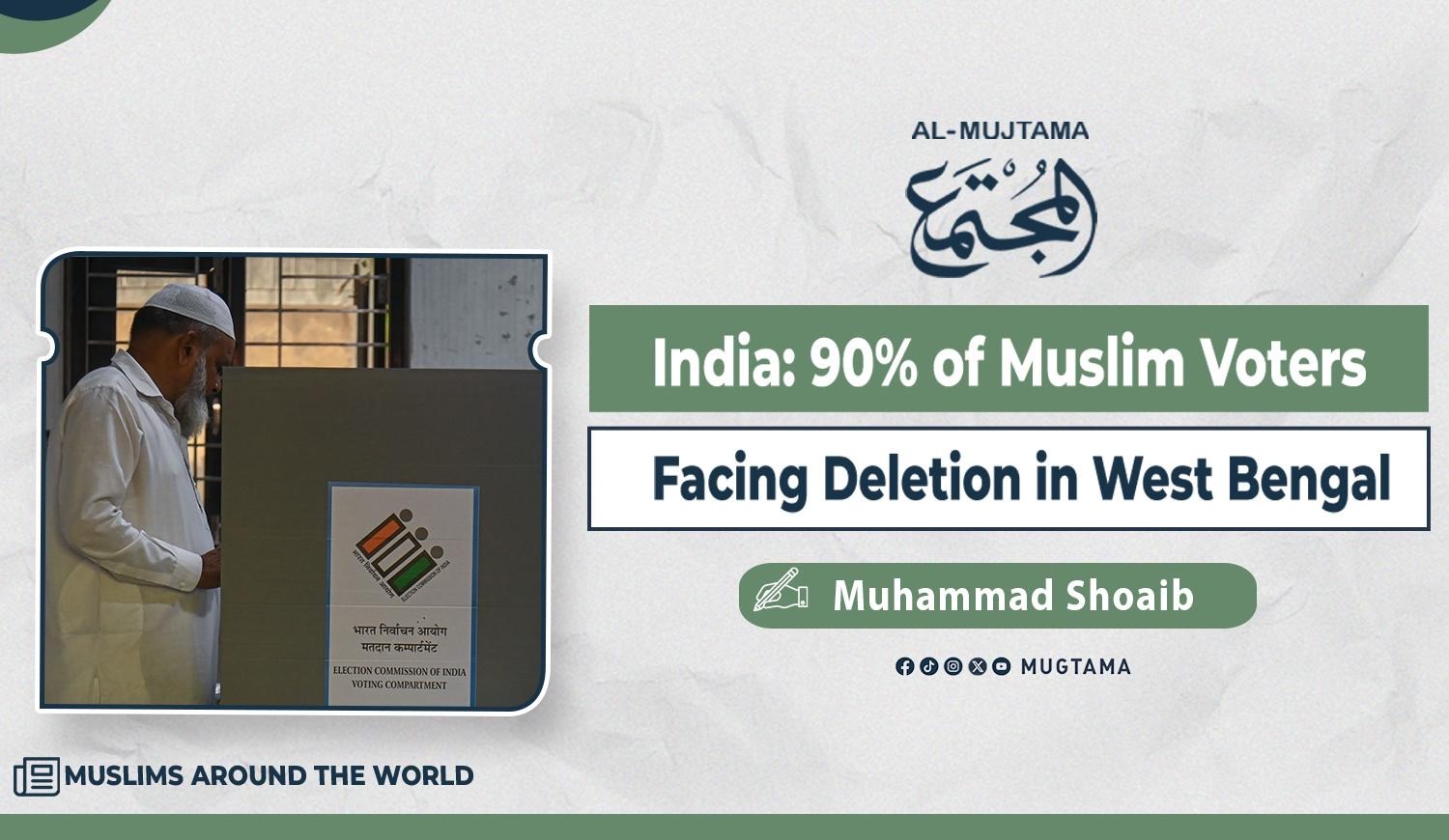
An analysis of more than 1.6 million appeal records linked to West Bengal's electoral roll revision process has found that Muslims were overwhelmingly represented among voters whose eligibility was challenged by election authorities, despite judicial officers ruling them eligible. The findings raise concerns about potential discrimination in the state's voter verification process.
Muslims Account for Nearly 90% of Challenged Voters
According
to data compiled by the Civic Research Group and examined by The Wire,
at least 1,439,797 of the 1,608,175 voters targeted through appeals during the
Special Intensive Revision (SIR) process were Muslims, representing
approximately 89.5% of all cases.
The
figure stands in stark contrast to demographic data from the 2011 Census, which
shows Muslims comprise roughly 27% of West Bengal's population and around 29%
of its electorate.
Disproportionate Impact Across Constituencies
The
analysis found that Muslim voters were disproportionately affected even in
constituencies where they form a small minority.
In
areas where Muslims account for only 6% of the population, they represented
more than 60% of voters challenged through Election Commission appeals. In
constituencies where Muslims make up between 30% and 50% of residents, their
share among targeted voters climbed to 93.8%.
These
patterns suggest that the phenomenon was not confined to Muslim-majority
constituencies.
Pattern Extends Beyond Border Districts
The
investigation found similar trends in Hindu-majority districts located far from
India's international borders, including East Midnapore, West Midnapore,
Bankura, Hooghly and East Burdwan.
In
East Midnapore, where Muslims constitute only about 12% of the population, they
accounted for 92.9% of voters targeted through official appeals.
The
findings indicate that the pattern extended well beyond border regions often
associated with migration-related political debates.
High Share of Muslims Among Removed Voters
Among
voters whose names were ultimately removed from electoral rolls after judicial
decisions were reversed, approximately 79.3% were Muslims.
Overall,
Muslims represented more than 53.7% of the nearly 3.8 million voters whose
eligibility underwent judicial review, more than double their share of the
state's total population.
Questions Over Responsibility for Appeals
In a
counter-affidavit submitted to India's Supreme Court, the Election Commission
stated that the appeals were filed by officials from the office of West
Bengal's Chief Electoral Officer without the Commission's knowledge.
The
Wire
reported that it sought clarification from the state election authorities but
had not received a detailed response at the time of publication.
Concerns Over Earlier Stages of the Verification Process
The
report suggests that potential disparities may have emerged before cases
reached judicial scrutiny, including during the identification of voters for
review and the assessment of alleged inconsistencies in electoral records.
Researchers
argue that the data indicate Muslim voters were disproportionately affected
throughout several stages of the voter verification and appeal process, both in
border districts and in regions where Muslims constitute a relatively small
share of the population.
The
findings have intensified scrutiny of West Bengal's electoral revision process
and prompted questions about transparency, accountability and equal treatment
of voters. While election authorities dispute direct responsibility for many of
the appeals, the scale of the disparities identified in the data is likely to
fuel continued legal and political debate over voter rights and electoral
fairness in India's fourth-most populous state.
