





How Islamophobia Is Manufactured: Media Narratives and Western Fear of Muslims
On a grey morning, while sipping his usual coffee at a café on Edgware Road—known for its Arab gatherings in London—a heated yet friendly discussion broke out between British teacher Thomas Wilkins and a group of young people of Arab, Asian, and European backgrounds in a neighborhood known for its dense immigrant communities. Suddenly, everyone reacted in shock as the radio announced a terrorist attack targeting civilians celebrating a Jewish holiday on Bondi Beach in Sydney, Australia.
As one young Briton moved toward a physical altercation with
an Asian youth—who had praised the attack because it targeted “the cursed
Jews”—the Briton’s face flushed with anger, accusing all Muslims in his country
of being potential bloodthirsty terrorists.
The group quickly intervened to break up the fight. One
attendee, speaking calmly and confidently, condemned the killing of civilians
as an act of terrorism
that neither serves Muslims nor represents them, stressing that such attacks
only fuel the rise of Islamophobia.
The Growth of Islamic Presence
For decades, Wilkins had walked the streets of London, the
city he moved to early in life. He noticed the increasing visibility of Islamic
culture: “halal”
signs on shop windows, the growing number of Muslim women wearing hijab, and
the vibrant community activities hosted by major mosques for Muslims and non‑Muslims
alike. None of this, in his view, threatened the identity of a country long
accustomed to diversity despite being a bastion of classical European culture.
He often met his Muslim African and Asian students at the
university where he teaches comparative literature, forming genuine friendships
that transcended the walls of hatred woven daily by the media.
Wilkins recently read a Pew Research Center survey showing the
rising number of Muslims in Europe and the United States, leading to greater
Muslim representation in public life. Among the examples was the election of
Muslim politician Zohran Mamdani as mayor of New York—an act seen as a direct
challenge to President
Donald Trump’s anti‑Muslim, anti‑immigrant policies. Even earlier,
Sadiq Khan, a Labour Party politician of Pakistani origin, became London’s
first Muslim mayor in 2016 and was re‑elected three times due to his success in
reducing social divisions and improving quality of life.
Scrolling further, Wilkins paused at a striking statistic: by
2050, the Muslim population is expected to rise from 4.9% to 7.4% of Europe’s
population—and under high‑migration scenarios, potentially up to 14%, driven by
immigration and higher birth rates among Muslim families.
Western media outlets such as The Times and The
Guardian discussed these demographic projections cautiously, with political
debates about identity, pluralism, and predictions of the “Islamization
of the West” or rising Muslim influence.
He also recalled a 2024 report by the Council on American‑Islamic
Relations (CAIR) documenting a sharp rise in hate crimes against Muslims and
Palestinians in the first half of the year, alongside efforts by the growing
far‑right to restrict Islamic organizations in Europe and the US—such as the
French Muslim Councils, the Muslim Council of Britain, the Islamic Society of
North America, and student and women’s associations—by linking them to
political groups and labeling them extremist.
Threat or Opportunity for Coexistence?
To Wilkins, the media narrative often felt like a conspiracy.
Every terrorist incident was generalized as if synonymous with Islam itself,
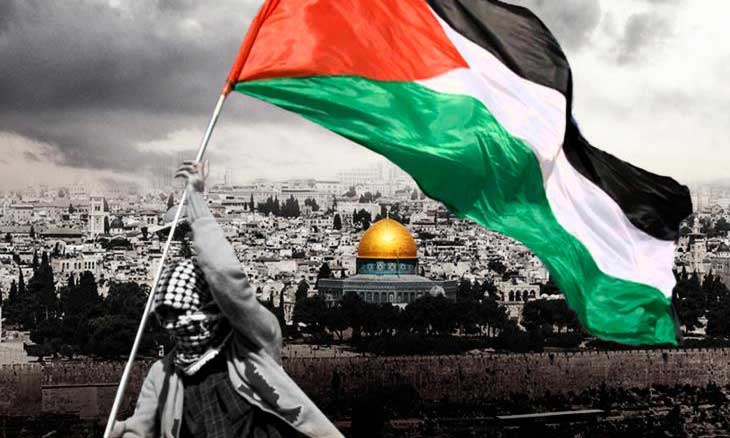
while most Western outlets ignored the genocide unfolding in Palestine—the
mass killing of civilians, the erasure of an entire city within months, and
more than 70,000 innocent people killed by Israeli bombs and bullets, leaving
the rest as prisoners, wounded, or refugees in tattered desert tents ravaged by
disease and harsh weather.
His heart ached during protests as he saw images of Palestinian
children and women. He felt disgust toward European governments that
failed to stop the slaughter—and even armed it—while issuing vague political
statements of “condemnation.”
He asked himself: “Is this the Islamic terrorism they
warn us about invading our countries? Or is terrorism a craft born from our own
Western history—from the colonial campaigns that looted and killed across Arab
and Muslim lands, and still do?”
A colleague in digital communications once explained to him
how major social media algorithms—such as Facebook’s—reinforce negative
stereotypes about Muslims and suppress criticism of Israel or right‑wing
policies when Muslims are involved. A 2019 study by Bertram Vidgen on anti‑Islam
hate speech in Britain
confirmed that these algorithms amplify anti‑Islam narratives while
strengthening “antisemitism” accusations tied to Muslims.
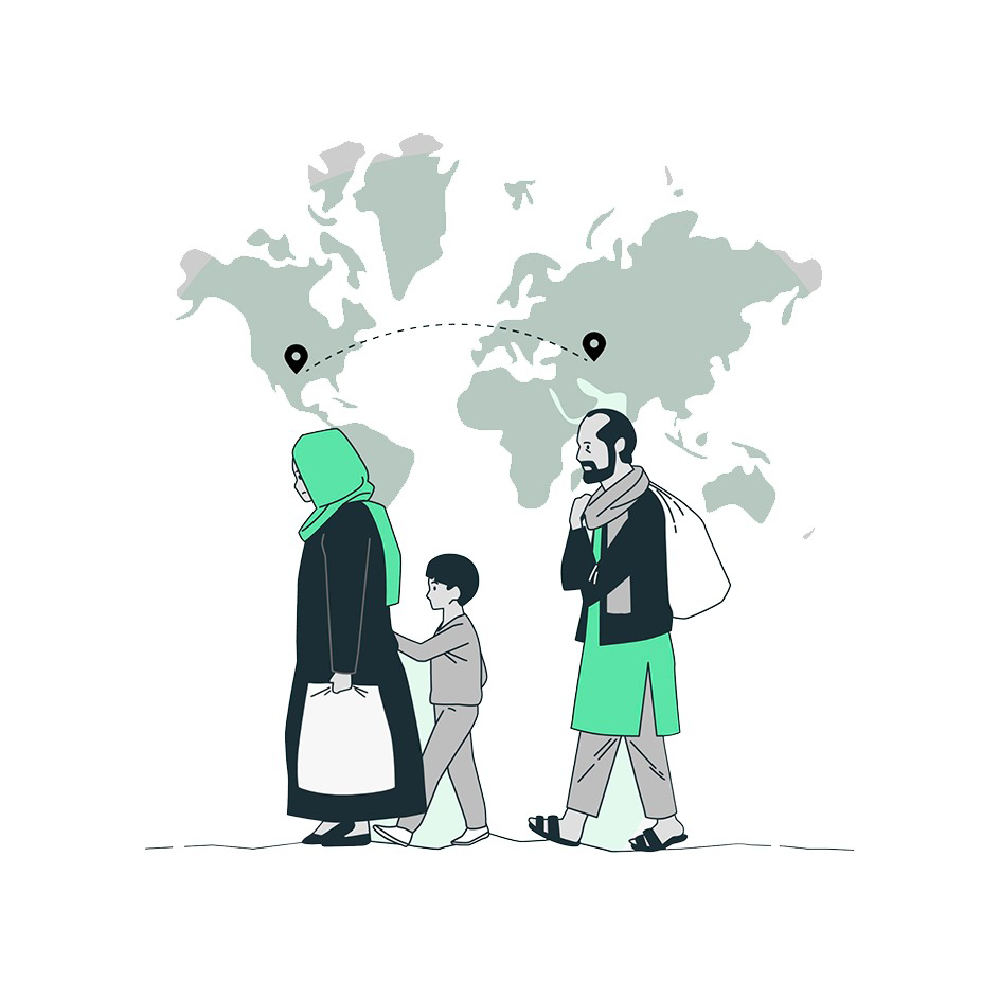
Wilkins knew that migration from outside Europe had increased
the visibility of Muslims, and that some Europeans felt uneasy when
encountering visibly Muslim individuals. Irregular migration surged after the
Arab Spring: over 5 million Syrians fled their country, with nearly 4 million
stuck in Turkey seeking safe passage to Europe, while others reached Europe
through smuggling networks.
Statistics from 2020 indicated that Western Europe had around
20 million Muslims—6 million in France, 5 million in Germany, over 3 million in
Britain, and 2 million in Spain. The US had around 4 million Muslims, and
Canada about 1 million, according to Pew Research.
Yet conservative elites warned of demographic shifts: Europe’s
Christian population is projected to decline by 100 million between
2010 and 2050, while the Muslim population is expected to rise from 43 million
to 71 million.
Unfortunately, this new religious landscape may heighten
social tensions. A Swiss Digital Publishing Institute report on “Media and
Islamophobia in Europe” noted that hostility toward Muslims is strongest among
those who feel their cultural or religious identity is threatened.
A Path Toward Dialogue
Wilkins decided to gather his team of researchers and students
to join a new UK‑based initiative combating anti‑Muslim hatred. They began
speaking with angry individuals in shops and streets, carrying signs and images
promoting the true message of compassion at the heart
of Islam. Wilkins encouraged them to write in unbiased newspapers about
the achievements of Muslims in their countries and how they have contributed to
national progress, expanding the space for coexistence and understanding the
other half of the world.