



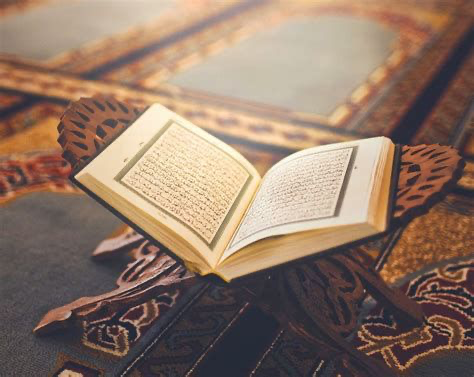





How Quranic Education Nurtures the Heart

When we
reflect on Quranic education, we find ourselves before a methodology that does
not merely produce knowledge, but rather shapes the human being. The Quran addresses the heart before it addresses the mind, and forms the inner
conscience before directing outward behavior. Every verse carves into the soul
a measure of awe and a measure of love, until the heart becomes filled with
Allah—fearful of Him, drawn toward Him, and steadfast upon His path.
The Philosophy of Awe and Love in the Quran
The awe
that the Quran instills is not a
fear that disrupts life, nor a feeling that extinguishes the light of the soul.
Rather, it is an awakening that makes a person more attentive to their path and
more aware of their standing before Allah. Likewise, the love that the Quran
pours into the heart is not a fleeting emotion, but a profound bond that makes
the Muslim feel a constant divine closeness, a mercy that precedes them, and a
gentleness that accompanies them at every step.
This
remarkable Quranic equation appears in every surah: awe that elevates you, and
love that embraces you.
Balancing Divine Majesty and Mercy
The Quran
opens by unveiling the majesty of Allah,
reminding the human being that life is not meaningless, that Allah is Supreme
over His servants, All-Subduing, knowing everything, seeing everything, and
holding all accountable. At the very moment the heart feels the weight of
responsibility, the Quran brings verses of mercy to calm its fear: {But My mercy encompasses everything.} [Al-A`raf 7:156],
and {He is the Most Merciful of the merciful.} [Yusuf
12:64].
Thus,
education is completed, and the heart settles between a reverent awe that
drives it forward and a mercy that draws it closer.
How
profound is the effect of this balance in the believer’s life. He does not fear
in a way that paralyzes the mind, nor does he love in a way that makes him
forget his limits. Rather,
he lives firmly grounded, steady on his path, never neglecting an act of
obedience nor belittling a sin—because he truly knows his Lord. Here lies the
secret of influence: knowledge of Allah is what builds the heart, and it is
what unites awe and love at the same time.
Models of Living Hearts in the Quran
When the Quran
presents its great models of faith—such as Ibrahim, Musa, and Zakaria —it does
so to show us living hearts: hearts
that are not deceived by their own faith, nor feel secure from the deception of
the self. Hearts that call upon their Lord in secret, fear Him, hope in Him,
seek His pleasure, and feel shy of their shortcomings—even while standing at
the highest levels of obedience.
This is
the education the Quran seeks for the believer: a heart that struggles against
itself and never becomes self-satisfied; a heart that seeks Allah every day as
though seeking Him for the first time.
Lessons from Quranic Stories
As for
the stories of the Quran, they
represent the other side of this methodology. They display the fates of past
nations, the consequences of heedlessness, and the laws of Allah concerning the
oppressors. At the same time, they reveal the gentleness of Allah toward His
allies, His covering of their faults, and His opening of doors of salvation at
the darkest moments. In this way, the lesson of awe and the lesson of love are
completed together: awe that prevents you from following their path, and love
that urges you to walk the path of the righteous.
The Fruit of Education: From Inner Feelings to Outward Conduct
Therefore,
the Quran constantly links faith with action. Feelings alone do not build a human being.
Awe that does not lead to abandoning sin, and love that does not lead to
obedience, remain nothing more than temporary emotions. But when they bear
fruit in action, conduct, and steadfastness, then the effect of the Quran
appears fully in a person’s life, and the meanings of excellence (ihsan)
emerge: to worship Allah as though you see Him, and if you do not see Him, to
know that He sees you.
Thus, the
Quran nurtures the heart to be a
living, present heart—one that knows its path and knows its Lord, living under
the shade of the verses between majesty that inspires reverence and beauty that
inspires love; between fear that corrects it and mercy that embraces it.
This
heart is the ultimate aim of the Quran. Through it, the Ummah is built, the
human being is set upright, and life itself is illuminated.
For Further Reading:
- Quranic Methods of Encouraging Reflection
- Book Review: “Introduction to the Study of the Qur'an” by Sheikh Abul A'la Maududi
- 5 Practical Ways to Better Reflect on the Quran
-------------------------------------------------------------