





For Palestine, We Crossed a Quarter Earth’s Circumference (1 / 2)
.jpeg)
I was
walking through these memories along a clear path, then the ways branched out
and the roads diverged before me (as I have mentioned before). So, where do I
go from here? Shall I finish the account of my work in the judiciary? Do I
continue speaking of Palestine? Or do I carry on showcasing samples of my
writing styles? And would I even be able to present them all?
Once, I
selected passages about love from my youthful writings, specifically from my
books Reflections and Images, Stories from History, and Stories
from Life. Rest assured, I spoke but did not act, for 'poets say what they
do not do.' Even though I described a woman’s beauty and charm with honest
precision, I never engaged in, nor even approached, any forbidden pleasure. My
wife overheard a portion of it while I was dictating it over the phone to my
dear brother, Tahir Abu Bakr—the secretary of Asharq Al-Awsat. May God
reward him; he records and types them. May He also reward my son, Mr. Adel
Salahi, who proofreads them, and before them, the noble publishers, the
brothers Hisham and Muhammad, owners of the newspaper, for their patience with
me and my lengthy memoirs.
She
disapproved of what she heard from me and said: 'What will people say about a
Sheikh who writes about love?' So, I hesitated and delayed publishing what I
had selected. Then, a great professor—whose name I prefer not to
disclose—called upon me, adjuring me not to do it. Instead, he asked me to
recount the story of the journey we took for the sake of Palestine, which I had
alluded to in the previous episode.
Casting Aside Doubt: The Journey to Palestine Begins
This
professor was just like Jahizah, who—as the story goes—entered her people's
assembly while they were attempting to mend a rift between two of their clans.
A man from the first clan had killed a man from the second, and the mediators
were trying to persuade the victim's kin to accept blood money, yet they would
settle for nothing but retribution. The deadlock had tightened and the dispute
had grown fierce when she said to them: 'The son of the murdered man has
already taken his father's revenge and killed the slayer.' They then said:
'Jahizah has cut short the speech of every orator,' and it became a proverb
that remains to this day.
I said to
the professor: 'Thank you; you have relieved me of this hesitation and made my
path clear. However, the journey took place in 1954, and I am still dwelling on
the memories of 1945.' He replied: 'And who required you to pace your memories
with the passing years? Readers want the story whole and complete, even if its
exact date is obscured. They do not want to see it dismembered and its parts
scattered just to preserve the chronology of when it happened.
I said:
'Do you know the tale of the Sultan’s daughter, which grandmothers used to tell
us as we lay in bed during the long winter nights to lull us to sleep? I shall
summarize it for the readers—not to put them to sleep, but to keep them wide
awake. For I intend to make it the prologue to a vast chapter of these memoirs
that have grown so lengthy; the start of a long saga: the story of the journey
to the Orient that we undertook for the sake of Palestine.
The
Sultan’s daughter possessed a necklace of precious gems and costly pearls. Yet
its true distinction—beyond the value of its jewels and the price of its
pearls—lay in its marvelous arrangement. It was composed of twenty different
colors, but the artisan had made them harmonize and contrast, converge and
diverge, until they formed a sight that dazzled the eye and captivated the
heart. Then, the string of the necklace snapped—and with it, its order—and its
beads were scattered. She spent the remainder of her life searching for them
and trying to gather them together, but she retrieved only a fraction. And even
those she found, she could never re-arrange exactly as they once had been.
Now, dear
readers, the thread of my memories has snapped, and I am no longer capable of
organizing them chronologically year by year. The dates are lost, and the
events have become intertwined. What, then, am I to do? I expressed this to the
professor who had suggested I write the story of the journey, and he replied:
'If the original form of the necklace is gone and its beads are scattered, then
take what you have recovered and fashion them into smaller necklaces. Set
within each one the beads you find from the original great necklace; then, once
you have finished, you can re-order and harmonize them all.
That is
to say: publish these memories now just as they occur to you; then, should you
release a second edition, you can rearrange them. This is precisely what your
great friend, Khayr al-Din al-Zirikli, did in his book, 'The Arabian
Peninsula during the Reign of King Abdulaziz'. He initially presented it
with overlapping accounts and a disorganized structure. Later, he revisited the
work and compiled everything pertaining to the King’s own history into a volume
he titled 'Al-Wajiz fi Sirat al-Malik Abdulaziz' (The Concise Biography
of King Abdulaziz). And you, if God grants you longevity, shall follow suit;
otherwise...
...you
have among your scholarly brothers, your educated daughters, and your
grandchildren—be they doctors or engineers who can rearrange and rewrite these
memories. The crucial thing is that you record whatever remains in your mind
before you forget it.
The Orient Journey: From Jerusalem to the Far Reaches of Asia
This
journey was an extraordinary voyage; we trod the same paths as Ibn Battuta, yet
we reached reaches of Southeast Asia that even he did not attain. Wherever he
alighted in a land, he would assume its judgeship and take a wife, fathering
children from those marriages before eventually leaving both wife and child
behind to move on. As for us, we neither presided over people in a court, nor
did we 'sentence' ourselves to marriage! Moreover, Ibn Battuta would find a
constant companion to translate for him, while we would meet reception
committees in every country we entered, who would then leave us—or rather, we
preferred they leave us—to our own devices for the greater part of our time.
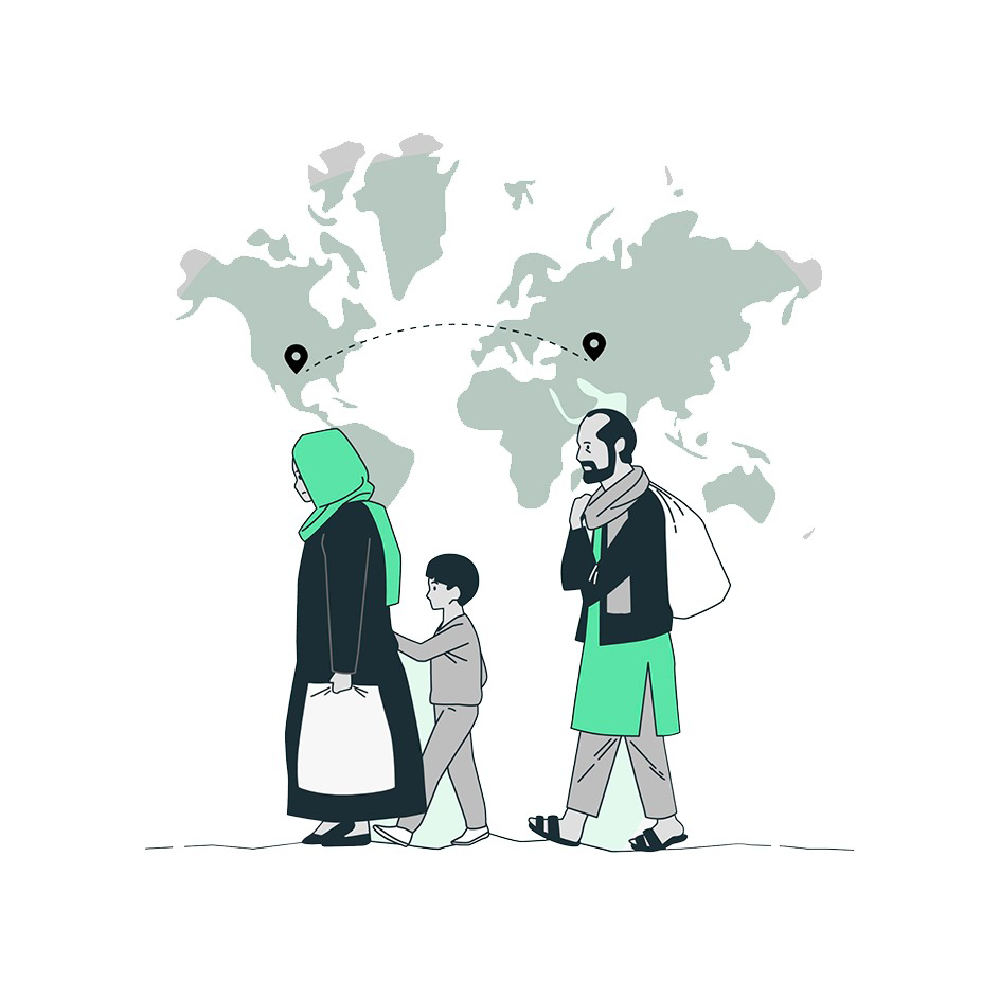
We
journeyed from Jerusalem to Amman, then to Baghdad, Karachi, and all the way to
the furthest reaches of East Pakistan. We visited India and saw its cities:
Dehli (not 'Delhi' as the English call it), Bombay (which is one of the most
beautiful cities in the world), Lucknow (the home of our friend, the scholar
and caller Sheikh Abul Hasan al-Nadwi), and Calcutta, which in those
days—thirty years ago—was home to five and a half million people.
Sheikh
Muhammad Mahmoud al-Sawwaf was with us; he was the one who managed our affairs,
eased our hardships, and spared us the burdens of travel and relocation,
arranging everything on our behalf. When he was forced to return from Karachi
to Baghdad, Sheikh Amjad—may God have mercy on him—and I were left alone.
Imagine two people where the more 'resourceful' and 'experienced' in the ways
of the world was me—and I am someone with no experience and not a single skill
to his name.
I said:
Al-Sawwaf was the third of us in number, yet the foremost in action. He was the
driving force behind this conference, the only one I have ever attended in my
life. It was he who prepared for it, and to him—after God—belongs the greatest
credit for its success. He was a social man who would address everyone he met
by name, inquiring about their news and the well-being of their families and
friends. Meanwhile, Sheikh Amjad would forget those he had met just the day
before! I had recorded some of his extraordinary stories with his permission
and consent, but as I sit to write these memoirs now, I find that I have become
just like him; what I once related about him has now become true of me!
The most
arduous challenge Sheikh Amjad and I faced after Al-Sawwaf’s departure was our
ignorance of the English tongue. Wherever we visited, English was the medium of
communication—a 'lame' language with no lineage, ranking fifth in status among
the world’s languages. It possesses neither firm rules nor consistent
standards, unlike Arabic with its noble ancestry, the strength of its sabab
(its tethering bond), the stability of its roots, the precision of its scales,
and the elegance of its derivations. Arabic is the preeminent language whose
birth remains unknown to linguistic history, for its origin is older than
history itself. History never witnessed its childhood; it saw it only as a
youth in the full bloom of maturity.
It
[Arabic] stands in the first rank, while the second and third ranks remain
vacant, unoccupied by any other language. In the fourth rank come French and
German together. However, the English—through their diligence, vigor, and
immense resourcefulness—
...and
that day came for them when they possessed one-fifth of the earth and ruled
over realms where the sun never set; for if it set in their west, it appeared
in their east. The English imposed their language upon people despite its
crookedness, weakness, and flaws, while we, through our laziness and lethargy,
have squandered our own language. Were it not for the fact that it is sustained
by the Book of God—and God has pledged to preserve His Book, and what God has
pledged to preserve, no one can touch—it would have vanished and been
forgotten.
We said
to them: 'How can we proceed when we know nothing of English? How shall we
address the people?' They replied: 'We will show you a magic word that opens
every lock, eases every hardship, and unties every knot. Whenever you encounter
such a situation, just say it.' We asked: 'What is it?' They said: 'It is the
phrase: "No speaking."' So, the Sheikh—may God have mercy on
him—whenever he faced an obstacle or we found ourselves in a tight spot, would
say: 'Effendi, say it! Say it!
I
remember that the Dutch KLM aircraft, which was so punctual that people set
their watches by its departure and arrival times, was delayed in Singapore for
fifteen minutes for our sake. They brought us printed forms in English, so we
said: 'No speaking.' They asked: 'Speaking' French?'—meaning 'Do you know
French?' I thought to myself: 'I have studied it, mastered its grammar and
morphology, and am well-versed in its literature, even if I haven't mastered
its pronunciation and eloquence. Why shouldn't I try my luck today?' Seeing
that the matter had become simple, I said: 'Yes.' They brought me a man—I have
no idea where they found him—who spoke French with the eloquence of
Chateaubriand and the speed of the actor Fernandel, whom Ismail Yassin used to
imitate. I could not understand a single thing he said. So, I returned to the
magic phrase and said: 'No speaking' French.' They said, in effect: 'Speaking'
what?' I said: 'Arabic.' But they found no one at the Singapore airport who
knew it.
Among the
incidents that occurred: When we first reached Karachi and they learned that I
was an Arab who spoke Arabic, they rejoiced and summoned one of their own. I
imagined him to be another Sibawayh—a non-Arab master of the language
appearing in these latter days—who, in his mastery of Arabic, was like the Imam
Sibawayh himself. When he arrived, he offered his greetings, which I returned,
and he asked: 'Arabic?' I replied: 'Yes.' He then rushed toward me, embracing
and kissing me. I caught the scent of that 'Tanbul' (betel leaf) which
Indians are so fond of, and his kisses and embraces became quite distressing to
me.
"Then
the dialogue began. He asked: 'What is my name?' I replied: 'I do not know what
your name is.' He said: 'No, no... name YOU.' I said: 'My name is Ali.' He then
asked: 'My father's name?' I thought: 'Here we go again, back to what we just
escaped from. How should I know your father's name?' He said: 'You are my
father! You are my father!' I exclaimed: 'May God wreck your house! I am
your father?' He replied: 'No, no... name of father... name of father YOU.' I
then understood that he wanted to know my father’s name, but he had
mixed up the pronouns... and indeed, most of our errors arise from the ailments
of pronouns!
You may
also like:
Culture and Scientific Production in Palestine
Source:
The book "Thikrayat" (Memoirs)