









Trump’s mockery of Islam Amid Limited Official Muslim Response
Double Standards: Western Unfair Framing of Islam

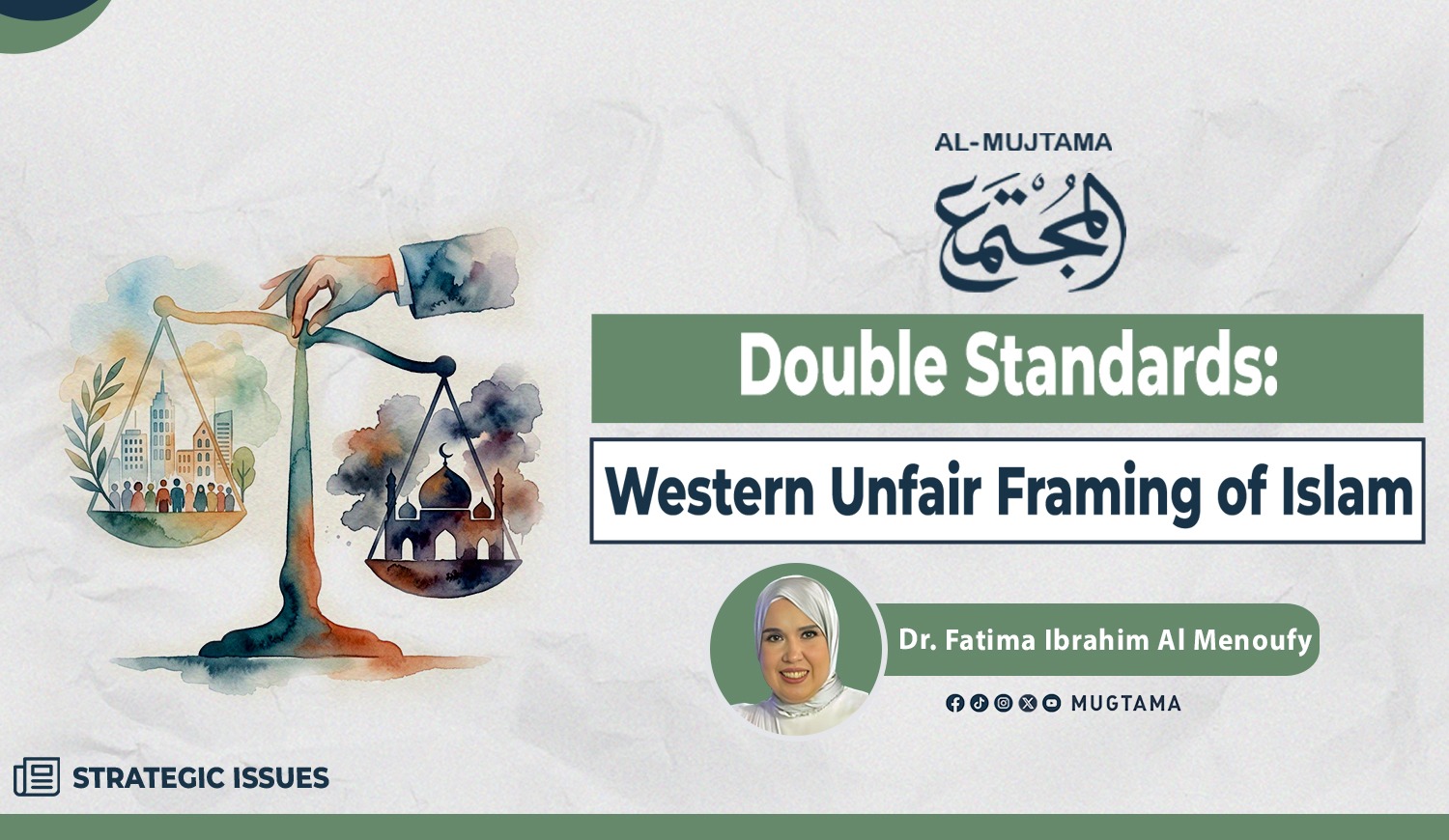
In an era where politics and media are increasingly intertwined with religion, faith has become both influential and contested in public discourse.Yet, approaches to religion in Western politics—particularly in the United States—seems inconsistent, with “religious freedom” at times applied in ways that appear shaped by political interests rather than uniformly upheld principles. This debate is often linked to the rise of Christian nationalism, where religious identity is closely tied to political authority and raises questions about the separation of church and state and unequal treatment of different religions.
Religion and Politics in the US
Recent developments in American political culture show how religion can be invoked in support of political
goals. Public representations of political figures, including President Trump,
have sometimes included explicitly religious framing.
A notable example is the
public messaging of Trump’s spiritual advisor Paula White, who described
his political struggles using language reminiscent of Christian narratives
of suffering, betrayal, and resurrection. During an Easter-related address, she
stated:
"No one has paid the
price like you have paid the price"
"It almost cost you your life"
"You were betrayed and arrested and falsely accused"
"It’s a familiar pattern that Jesus showed us"
"But it didn’t end there for Jesus, and it won’t end there for you"
Critics argue that such
rhetoric risks transforming sacred theological concepts into political
symbolism, raising concerns about the boundaries between genuine religious
expression and political messaging.
Concerns Over Abuse of Religion
Beyond symbolic framing,
broader concerns have been raised regarding the use of religious texts in
political contexts. Public figures, including secretary of war, Pete Hegseth,
have faced criticism for citing non-biblical material
in a religious context, which indicate how references to faith can become
detached from their original theological grounding.
Double Standards in the Treatment of Islam
Ironically,
religion is viewed as problematic in some western contexts when it comes to Islam and acceptable
or even useful in others. Islam is sometimes associated with instability or
extremism when it intersects with political affairs. At the same time, similar
critical scrutiny is not always applied to religious or narratives used within
Western political contexts, particularly when they align with geopolitical
interests. One example often cited in this regard is the use of biblical
references in certain Israeli political claims regarding territorial heritage.
Is the Issue Truly
the Presence of Religion in Politics, or Which Religion Is Being Invoked?
This raises a fundamental question: is the concern truly about the
presence of religion in politics, or about which religion is being invoked?
Selective Narratives and Misrepresentation of Islam
“The people in charge don’t want you to know this, but Muslims
love Jesus.” Tucker Carlson said. Islam is often
misrepresented in Western media. Voices such as Tucker Carlson have highlighted
lesser-known aspects of Islamic belief—particularly the reverence Muslims hold
for Jesus the Christ peace be upon him. In Islamic tradition, Jesus (ʿĪsā) is regarded as a prophet and the
Messiah, born miraculously to Mary, who herself occupies a uniquely elevated
status in the Qur’an.
The Islamic Perspective on Religious Reverence
Islamic teachings emphasize respect for all prophets and recognize Jews
and Christians as “People of the Book.” The holy Qur’an mentions Mary, the
mother of Jesus the Christ, by name (34 times) and describes her as purified
and chosen above all women of the worlds.
For example, the Qur’an states
(An-Nisāʾ 4:171):
إِنَّمَا الْمَسِيحُ عِيسَى ابْنُ مَرْيَمَ رَسُولُ اللَّهِ
وَكَلِمَتُهُ أَلْقَاهَا إِلَىٰ مَرْيَمَ وَرُوحٌ مِّنْهُ ۖ فَآمِنُوا بِاللَّهِ
وَرُسُلِهِ ۖ وَلَا تَقُولُوا ثَلَاثَةٌ ۚ انتَهُوا خَيْرًا لَّكُمْ ۚ إِنَّمَا
اللَّهُ إِلَٰهٌ وَاحِدٌ ۖ سُبْحَانَهُ أَن يَكُونَ لَهُ وَلَدٌ ۘ لَّهُ مَا فِي
السَّمَاوَاتِ وَمَا فِي الْأَرْضِ ۗ وَكَفَىٰ بِاللَّهِ وَكِيلًا
The Messiah
'Iesa (Jesus), son of Maryam (Mary), was (no more than) a Messenger of Allah
and His Word, ("Be!" - and he was) which He bestowed on Maryam (Mary)
and a spirit (Ruh) created by Him; so believe in Allah and His Messengers. Say
not: "Three (trinity)!" Cease! (it is) better for you. For Allah is
(the only) One Ilah (God), Glory be to Him (Far Exalted is He) above having a
son. To Him belongs all that is in the heavens and all that is in the earth.
And Allah is All-Sufficient as a Disposer of affairs.
Despite all this, western narratives often ignore to fully
represent these theological commonalities, contributing instead to
misunderstanding and tension rather than dialogue.
Trump’s Sarcastic use of “Praise Be to Allah” Amid Muslim’s
Silence
Also Trump drew backlash when he used “Praise be to Allah” in a
manner widely perceived as sarcastic during a Christian event and in some posts.
For Muslims, the phrase carries deep spiritual meaning, though
linguistically “Allah” is simply the Arabic word for God, used by
Arabic-speaking Christians and Jews as well.
From a critical
perspective, such usage may reflect a lack of awareness of the term’s religious
weight and shared linguistic heritage. While official responses from Muslim-majority states were limited,
organizations such as the Council on American-Islamic Relations (CAIR) issued
statements:
“President Trump’s deranged mocking of
Islam and his threats to attack civilian infrastructure in Iran are reckless,
dangerous, and indicative of a mindset that shows indifference to human life
and contempt for religious beliefs.
“These statements are not made in a
vacuum. They follow a long pattern of anti-Muslim rhetoric and policies that
have dehumanized Muslims at home and abroad. The casual use of ‘Praise be to
Allah’ in the context of violent threats reflects a disturbing willingness to
weaponize religious language while simultaneously denigrating Islam and its
followers”.
Also Trump’s political opponents described it as an unbalanced and
unrestrained outburst.
The central challenge is not merely the presence of religion in
political life, but the conditions under which it is used—and whether all
religions are treated with respect, equal seriousness and intellectual
integrity.
Sources:
Trump
tests loyalty of Christian supporters as erratic behavior escalates
Hegseth
channels his inner Tarantino with fake Bible verse from Pulp Fiction
سخرية مستفزة للمسلمين.. ترامب يدرج عبارة "الحمد لله" في
تهديداته لإيران ويواجه انتقادات واسعة
Trump has underestimated the Pope
