









Can a Marriage Survive When Couples Cannot Afford Divorce?
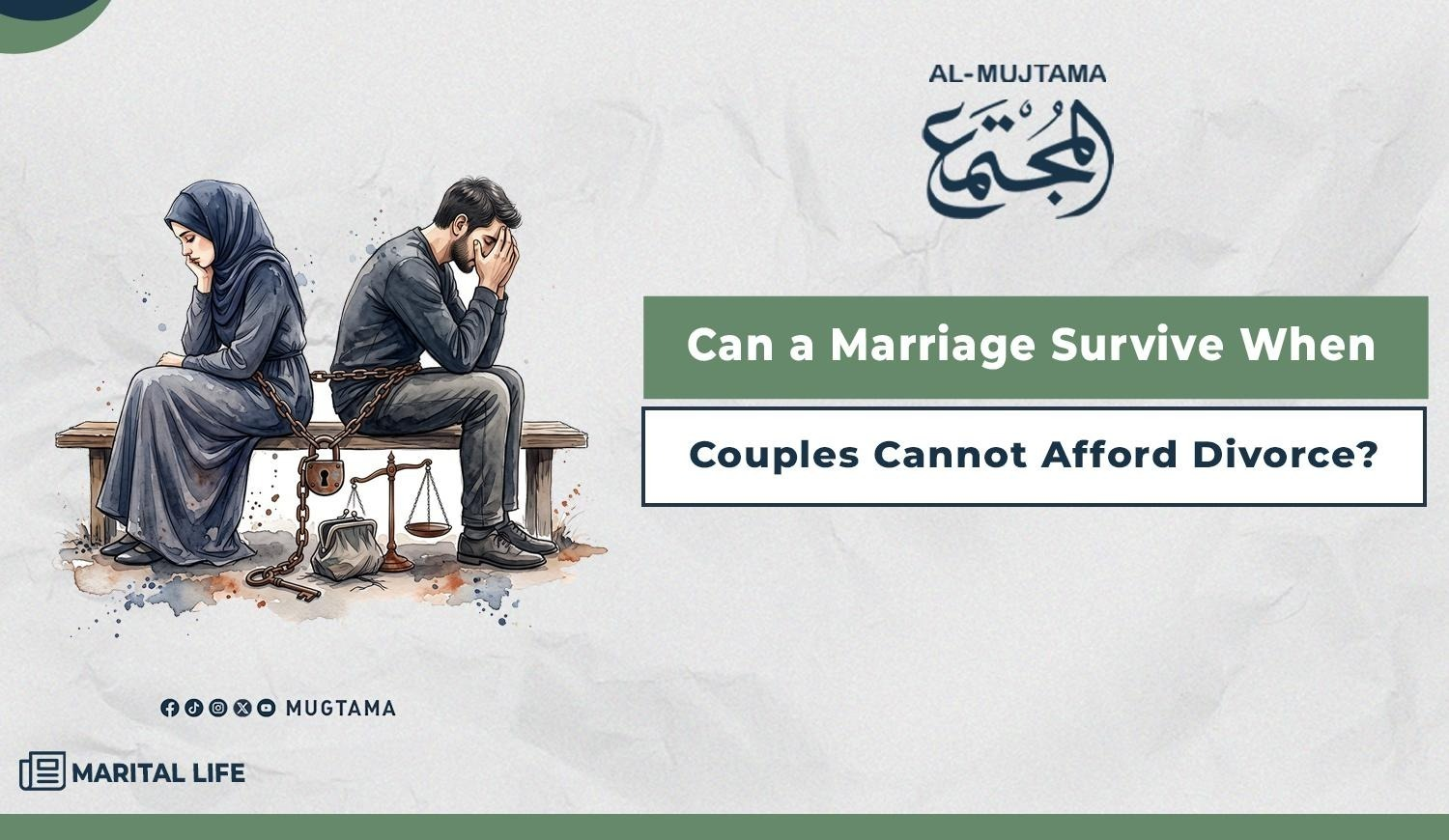
Can a marriage survive simply
because a couple cannot afford to separate?
For some couples, the rising cost
of living makes postponing divorce a financial necessity rather than a sign of
renewed love or resolved conflict. Setting up two separate households instead
of one can be an expense they simply cannot afford.
In England and Wales, figures
from the Office for National Statistics (ONS) show that the median duration of
marriages ending in divorce reached 13 years in 2025, the longest since records
began in 1963. In 1985, the figure stood at 8.9 years.
These figures do not establish
that financial pressures directly caused couples to delay divorce. However,
family lawyers interviewed by The Guardian in September 2026 pointed to rising housing and childcare
costs, alongside the difficulty of maintaining two separate households, as
factors that may lead some couples to put off separation.
Postponing Divorce Due to Financial Pressure
In some circumstances, choosing
to stay together may seem understandable. A couple with children, financial commitments
and joint loans may find that separating immediately would place an even
greater strain on their finances. They may decide to remain under the same roof
temporarily or delay legal proceedings until they have a clearer idea of how
they could afford two separate lives.
In such cases, postponing divorce
because of financial pressure can provide time to organize financial
obligations, arrange housing and plan for future expenses rather than risk
falling into a more serious financial crisis.
The problem begins when a
temporary arrangement becomes permanent and fear of poverty or losing a home
becomes the only reason to remain together. A couple may continue sharing a
house while growing increasingly distant emotionally. Silence and resentment may replace meaningful
conversation, leaving their children in an environment dominated by tension.
This does not mean that every
marriage experiencing emotional distance is beyond repair, or that every
disagreement should lead to divorce. A
relationship may recover when both partners are genuinely willing to
communicate, acknowledge their mistakes, change harmful behavior and seek help
from a trusted mediator or a qualified relationship counsellor.
But money, however important,
cannot restore affection on its own or repair the damage caused by a lack of
respect and trust.
A Marriage Without Affection: What Does Islam Teach?
Islam does not treat marriage
merely as an economic arrangement designed to provide housing, financial
support and a division of responsibilities. Rather, the Quran describes the marital relationship as a source of tranquility, affection and mercy: {And one of His signs is that He created for you spouses
from among yourselves so that you may find comfort in them. And He has placed
between you compassion and mercy.} [Ar-Rum 30:21]
A marital home is meant to offer
more than a shared roof. It should be a place of emotional security,
companionship and mercy. Simply sharing expenses is not enough when respect has
disappeared, communication has broken down and life together has become a
persistent source of distress.
Postponing divorce because of
financial pressure does not, by itself, restore the tranquility and affection
that marriage is meant to provide. Without meaningful change, remaining
together may deepen the loneliness and fear within the relationship.
At the same time, a decline in
affection does not necessarily mean that a marriage has lost its chance of
survival. Relationships go through difficult periods, and affection can grow
again when both partners make a sincere effort to repair the relationship and
approach each other’s struggles with honesty and responsibility.
Therefore, the Quran encourages
couples to address serious marital conflict before it escalates: {If you
anticipate a split between them, appoint a mediator from his family and another
from hers.} [An-Nisa’ 4:35]
Wise mediation can open the door
to reconciliation, provided its purpose is to address the causes of conflict,
remedy injustice and help both partners understand one another. It should not
become a means of pressuring either spouse to remain in a harmful relationship
regardless of the circumstances.
When Does Money Become a Tool for Control?
There is an important difference
between a couple who mutually agree to delay separation while organizing their
finances and a relationship in which one partner uses money to control the
other or prevent them from leaving.
Controlling bank accounts, preventing
a partner from working or denying them access to money and essential needs can
all be forms of economic abuse. The UK government defines economic abuse as behavior that negatively affects a person’s ability to
acquire, use or maintain money, or access goods and services.
According to the Office for
National Statistics, 2.7% of people aged 16 and over in England and Wales
experienced economic abuse in the year ending March 2025.
In such situations, money is no
longer simply an obstacle to separation. It can become a means of keeping
someone trapped in a relationship they cannot safely leave. It is therefore
important not to confuse patience in dealing with marital difficulties with
accepting abuse, or commitment to preserving a family with surrendering one’s
rights out of fear of financial hardship.
Reconciliation or Separation: Which Best Protects the Family?
Islam encourages reconciliation between
spouses, but it does not make preserving a marriage an objective that justifies
every possible means. Allah says, {The husband must
retain ˹his wife˺ with honour or separate ˹from her˺ with grace.} [Al-Baqarah
2:229]
It also warns against keeping a
wife in a marriage with the intention of harming her: {But
do not retain them ˹only˺ to harm them ˹or˺ to take advantage ˹of them˺.} [Al-Baqarah 2:231]
When there is a genuine
possibility of reconciliation, it is wise for both spouses to make a sincere
effort to save their relationship, seeking help where necessary to overcome
their differences. But when it is no longer possible to continue the marriage honorably,
an amicable separation that protects both parties’ rights and minimizes harm
may be more compassionate than prolonging a relationship that is draining them
both.
If financial pressure is the main
obstacle to separation, seeking legal advice early, exploring mediation,
preparing a realistic budget and understanding one’s financial rights and
housing options can help couples make more informed decisions. A life-changing
decision should not be driven by fear alone. Equally, couples should not rush
into separation without understanding its implications, particularly when
children or shared financial commitments are involved.
Postponing divorce because of
money may give a couple time to organize their affairs or offer them one final
opportunity to repair their relationship. But it does not guarantee that
affection will return. The question is not simply whether a couple can afford
to separate, but whether they can distinguish between a marriage that can still
be repaired and one whose continuation has become a source of harm.
Ultimately, the strength of a
marriage cannot be measured solely by how many years it lasts, but by whether
it offers tranquility, dignity and kindness. Money may help a family weather
difficult times, but it cannot, on its own, create a healthy marriage.
