









Book review: "Palestinian Resistance Literature Under Occupation 1948–1968
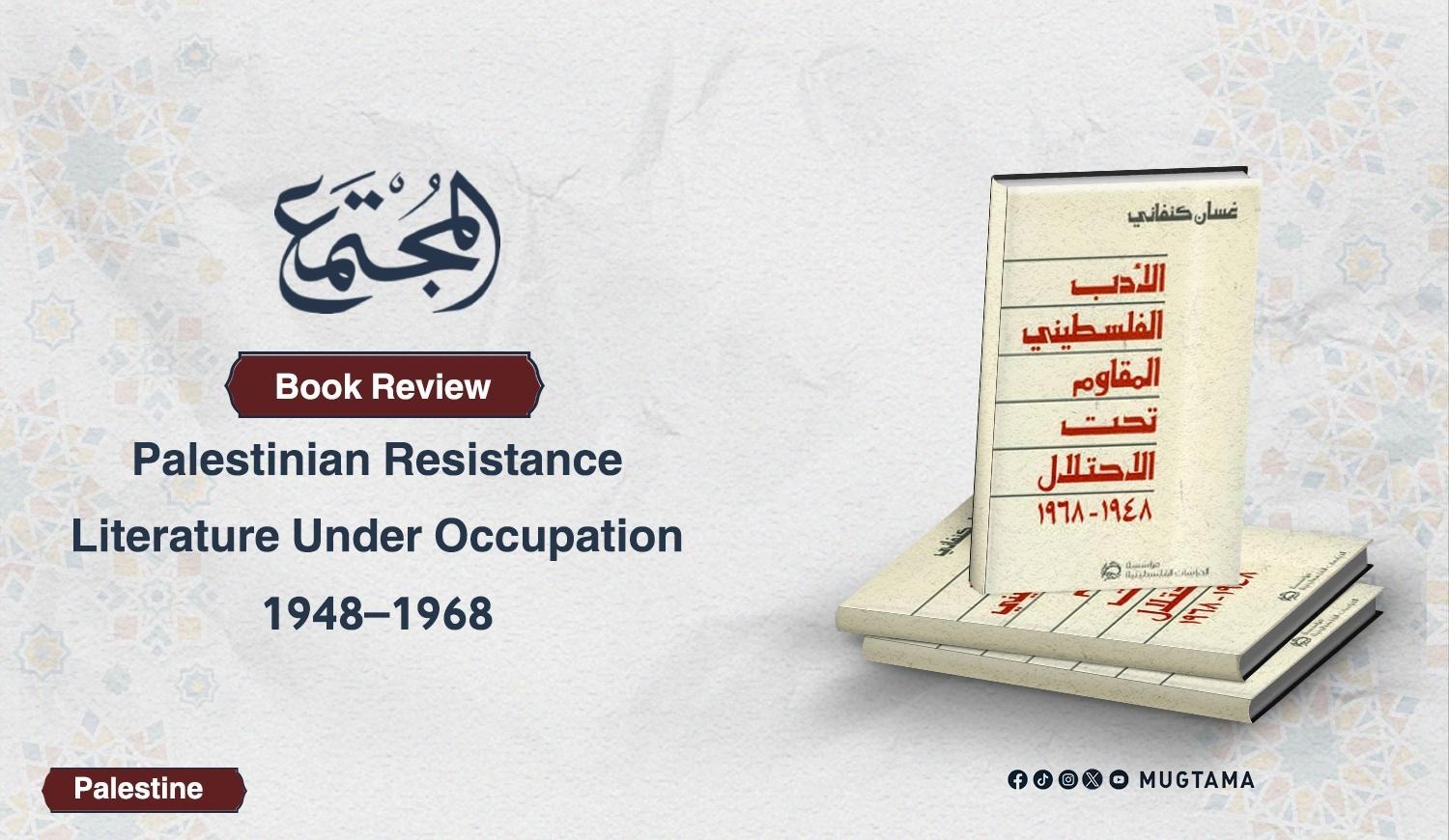
The book 'Palestinian
Resistance Literature Under Occupation 1948–1968' by Ghassan Kanafani
constitutes a document that traces the mechanisms of cultural steadfastness and
reveals how Arab intellectuals confronted policies of erasure to entrench the
roots of resistance.
The roots of cultural resistance
The book
stems from a fundamental premise that views armed liberation as a natural
byproduct of a culture of rejection and a steadfast adherence to identity. The
author explains that resistance literature is not a transient phenomenon, but
rather a continuation of an earlier struggle led by prominent figures such as
Ibrahim Tuqan and Abd al-Rahim Mahmud.
This
publication serves as a sequel to his previous study, 'Resistance Literature
in Occupied Palestine,' shifting progressively toward a documentary format
and introducing literary models that had not been available for publication
before.
Below is
a detailed analytical presentation of the three aforementioned chapters, in
accordance with Ghassan Kanafani’s documentary vision:
Chapter One: The Cultural Situation of the Arabs in Occupied Palestine
In this
chapter, he explains how education and culture were transformed into a primary
battlefield in an attempt to domesticate the Palestinian Arab minority.
Kanafani
demonstrates that the 'Israeli' authorities pursued a deliberate policy to
degrade educational standards by imposing distorted curricula, appointing
unqualified teachers, and placing bureaucratic and military obstacles in front
of students to ensure their isolation from contemporary Arab and global
cultures.
The
chapter highlights how writers and intellectuals were placed under the
microscope of military censorship. Tools of repression—such as administrative
detention, house arrest, travel bans, and character assassination—were deployed
in an attempt to force them into silence or to abandon their national role.
Furthermore,
the book describes how Arab intellectuals inside the occupied territories
suffered from a state of 'forced isolation' from their Arab national and
cultural extension, which Kanafani characterized as an attempt to sever the
body from the memory.
Chapter Two: Palestinian Resistance Literature: Dimensions and Positions
This
chapter analyzes how literature was transformed from a mere emotional
expression into an active tool in the process of social and national change.
Kanafani
emphasizes that 'committed literature' (al-adab al-multazim) during this
era was not an elitist slogan, but rather an existential choice imposed by
historical necessity; the writer here is a resistance fighter before being a
man of letters.
The
chapter also points to a qualitative shift in literary discourse from 'the
poetry of lamentation' or self-pity, to the poetry of 'incitement' and
'action,' as poems and short stories began adopting a confident language that
engages with reality rather than fleeing from it.
Kanafani
presents a vision stating that resistance literature was built upon three
interconnected dimensions:
1.
Awareness of Identity: A rigid
adherence to roots in the face of attempts at assimilation and displacement.
2.
Social Change:
Struggling against obsolete traditions that hinder social progress,
specifically the liberation of women and youth as active forces in the national
battle.
3.
International Dimension: Linking
the Palestinian cause to global liberation movements, thereby making
Palestinian literature part of the human historical movement against
colonialism.
Models from the Trenches of the Word
The book
dedicates its final section to presenting living models of artistic production
written under siege, including sub-sections for poetry, short stories, and
plays. These models review texts by poets who personally endured the
experiences of imprisonment and persecution—such as Tawfiq Zayad and Hanna Abu
Hanna—rendering their works tangible proof of the word's power to break the
occupier's chains and protect the national memory from fading away.
You may
also like:
