









Assam Demolishes 73 Homes in Goalpara Eviction Drive, Residents Challenge Action

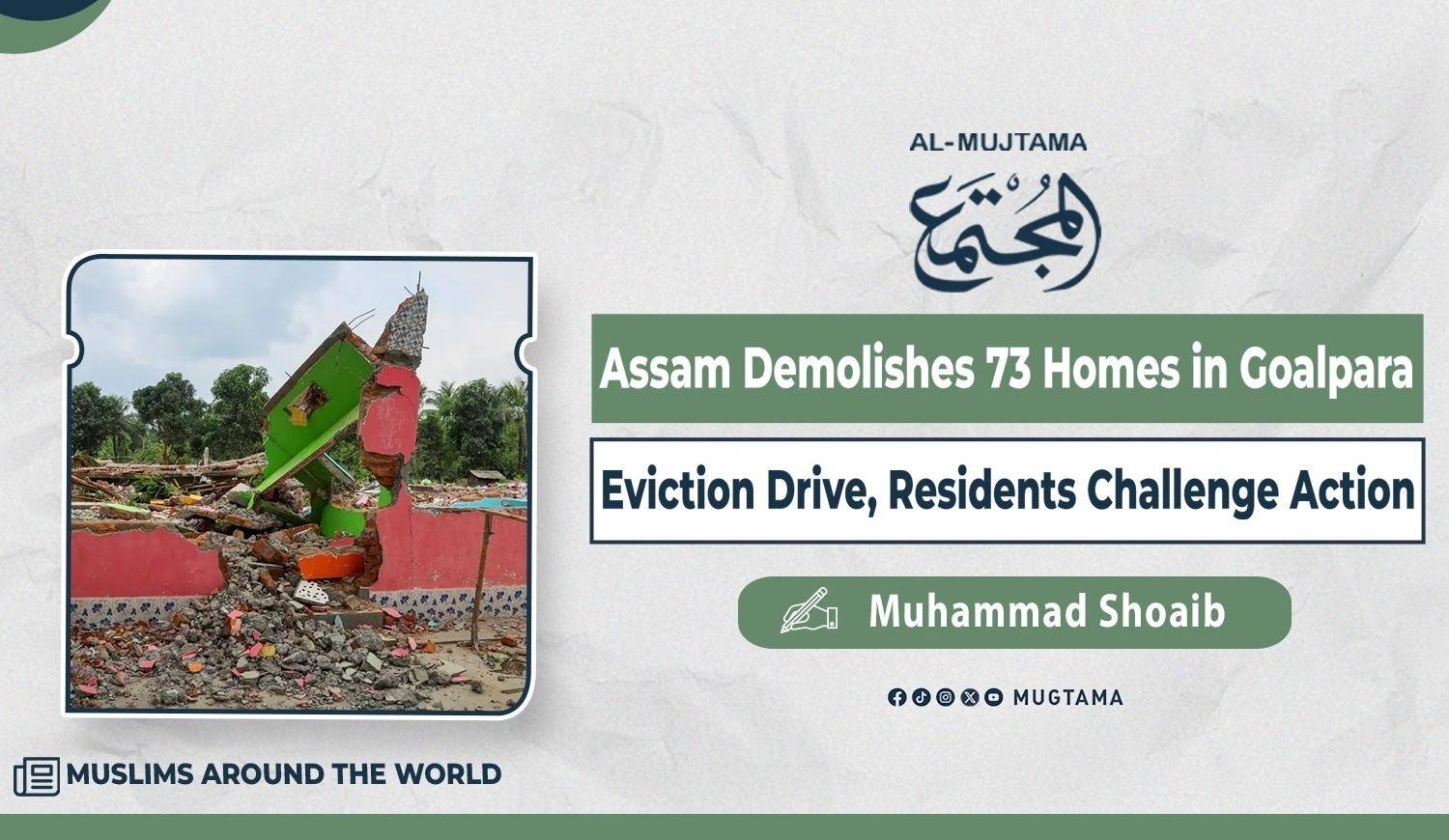
Authorities in Assam’s Goalpara district have demolished 73 houses in an eviction drive in the Krishnai area, saying the structures were built on agricultural land without the required approval for residential use.
The operation, carried out on September 7 under the Matia
revenue circle, covered several villages, including Kharija Paikan, Khamar
Manikpur, Bhojmala Part-II, Jatsharbadi and Tengabari. Excavators, JCB machines
and bulldozers were deployed during the operation, while a large police
presence was maintained in the area.
Administration cites land-use regulations
Goalpara District Commissioner Pradip Timung said the
administration’s action was aimed at preventing unauthorized construction on
agricultural land and protecting wetlands and natural drainage channels.
According to the administration, residents had constructed
houses on land classified for agricultural use without obtaining the necessary
approval to change its land-use status. Officials also said that construction
in low-lying areas and around wetlands had obstructed natural water channels
and contributed to waterlogging.
Timung said the administration had no objection to
agricultural use of the land but maintained that residential construction was
subject to applicable rules and procedures. He also said that people had
arrived from several districts, including Darrang, Barpeta, Dhubri and
Mankachar, and settled in the area.
Authorities said residents were served notices giving them 24
hours to vacate the area and remove the structures. The administration said the
residents did not comply within the stipulated period.
Residents say they own the land
The demolition has drawn protests from affected
residents and minority organizations, who say some of the families possessed
documents showing ownership of the land.
Nurul Islam, acting president of the Northeast Minority
Students’ Union, said the affected families were living on privately owned
land and argued that their properties should not have been demolished simply
because the land was classified as agricultural.
Ashiq Rabbani, president of the Muslim Students’ Union of
Assam, also questioned the administration’s action and called for the
affected families to receive compensation.
The dispute therefore centers not only on the legality of the
structures but also on whether the authorities followed the required legal
procedure before demolishing homes on privately held land.
Gauhati High Court questions the demolitions
The issue subsequently reached the Gauhati High Court, after
21 residents challenged the notices issued by the Matia Circle Officer.
In an order dated September 11, Justice Devashis Baruah
questioned whether there had been an immediate or “imminent” danger that could
justify the demolition of houses on private land. The court said the material the state submitted did not, at first sight, establish such an emergency and observed that the use of the Disaster Management Act, 2005, prima facie appeared to misuse the law.
The court also examined provisions of Assam’s 2015 law
governing the reclassification and transfer of agricultural land for
non-agricultural purposes. Reports on the proceedings said the legislation
permits, under specified conditions, a person to build their own dwelling on up to one bigha of agricultural land without prior permission,
provided the building does not exceed two storeys. The court stressed that this
did not amount to a final determination that every demolished structure
complied with the law.
The High Court has allowed the Goalpara district commissioner and the Matia circle officer to file affidavits explaining the
circumstances surrounding the demolition. The matter is scheduled for further
hearing on October 13.
Administration rejects claims of communal targeting
The demolition has received particular attention because the
affected families are reported to be Muslim, in a district with a large Muslim
population. Minority organizations have criticized the operation, while the
district administration has rejected any suggestion that the drive was directed
at a particular religious community.
Officials have maintained that the action was related to
land-use regulations, agricultural land and the protection of wetlands and
drainage systems, rather than the religious identity of the residents.
The High Court proceedings are now likely to determine whether
the administration had adequate legal grounds and followed due process in
carrying out the demolitions.