







Al-Andalus: From the Islamic Conquest to Spanish Forced Christianization

The Islamic conquest of Al-Andalus and the
fall of the Visigothic state took place between 711 and 714 CE under the
leadership of Ṭariq ibn Ziyad, followed by Musa ibn
Nuṣayr, who joined him and completed the conquest, later
returning to North Africa. This marks the beginning of the Islamic era in Al-Andalus,
which lasted for nearly eight centuries, until the fall of the Kingdom of
Granada—the last stronghold of Islam in Al-Andalus—in 1492 CE. With this event,
the end of Islamic rule was recorded, paving the way for the eventual
disappearance of Muslims from the region, despite the fact that Islamic
civilization had taken root there and flourished, leaving behind a legacy that
remains a lasting example of tolerance, refinement, and prosperity across all
fields of human civilization.
The Islamic conquest of Al-Andalus, like
that of other regions opened by Muslims in the East and the West, marked the
beginning of a new era, given the religious, cultural, social, economic, and
political consequences that reshaped history and brought about a profound
transformation in its civilizational output. However, most historians have
focused primarily on the military and political aspects of these conquests,
paying far less attention to other civilizational dimensions such as
architecture, medicine, engineering, philosophy, poetry, literature, and
inventions. Comprehensive treatment of cultural, social, civilizational, and
economic aspects has been relatively rare compared to the overwhelming emphasis
on political and military narratives.
For this reason, the majority of the
inhabitants of Al-Andalus adopted a positive stance toward the Muslim
conquerors and welcomed them, hoping to enjoy freedom. This contributed to the
rapid integration of Andalusians into Muslim society, and large numbers of them
embraced Islam, becoming an integral part of the Muslim Andalusian community.
The Muslim conquerors, who embodied the principles of Islam and opened the door
for them to assume all positions they were qualified for, enabled tangible
contributions by these new Muslims to the formation of Islamic civilization in Al-Andalus.
Spread of Islam in
Al-Andalus
On the eve of the Islamic conquest of Al-Andalus
in 92 AH, the overwhelming majority of its population consisted of Christians,
pagans, and Jews. This facilitated the entry of many of these inhabitants into
Islam during the very early years of the conquest, out of conviction and
without hesitation. Not a single person was forced to abandon their religion
without personal belief. As a result, Islam spread among them with remarkable
speed wherever its message and news reached. This unparalleled response came
after they learned of the virtues of Islam, its greatness, and its innate
harmony with human nature, and after they witnessed firsthand the tolerance of
the conquerors, the nobility of their character, the dismantling of the unjust
class system imposed by the Visigoths, the establishment of the principle of
equality among people, and the absence of distinction between one Muslim and
another except by piety. Through them, they also breathed in the air of freedom
by which their humanity was fully realized.
Some hostile Orientalists interpreted the
rapid conversion of the people of Al-Andalus to Islam as being motivated by
fear of the jizyah.
This is a pure fabrication. Islam is
explicit in its treatment of those who choose to remain upon their religion, by
requiring the payment of jizyah—a very small amount—from which the elderly,
women, children, and the incapacitated are exempt. Monks secluded in their
monasteries were also exempt, and its collection could be deferred for those in
hardship until their circumstances improved. Islam clearly stipulates the
absence of compulsion in religion in decisive and unequivocal verses that grant
human beings full freedom in choosing their faith.
Rapid Spread of
Arabization in Al-Andalus
This conversion to Islam by the indigenous
population of Al-Andalus marked the beginning of demographic intermingling and
cultural fusion. Only a small number of Catholics, along with a minority of
Jews, remained upon their original beliefs. Yet even these groups soon became
Arabized in culture, language, and way of life after several decades—without
resentment or coercion. Thus, as the native population entered the religion of
Allah, Muslims of Arab and Berber origin became a minority among them. The
spread of Islam directly contributed to the spread of the Arabic language, as
it is the language of the Qur’an, and every Muslim was required to learn Arabic
in order to understand the Book of Allah and fulfill their religious duties.
It can therefore be said that Islam and the
Arabic language advanced side by side, helping to dismantle the psychological,
moral, and linguistic barriers that separated the Muslim conquerors from the
indigenous population.
Marital ties and neighborly relations
between the Muslim conquerors and the local inhabitants also played a
significant role in the spread of Islam among the people of Al-Andalus, and
with its spread, Arabic and Islamic culture likewise expanded.
Since Arabic was the official language of
the state, it became the language of administration after the Umayyads Arabized
the bureaucratic registers. Consequently, anyone dealing with the state had to
learn its language, foremost among them the state’s subjects from the conquered
lands, including Al-Andalus. This greatly contributed to the spread of Arabic
among newly converted Andalusian Muslims as well as among those who remained
upon their original religions.
The Reconquista and
the Fall of Granada
The project known as the Reconquista,
launched by the Spaniards against the Islamic presence in Al-Andalus and led by
the kings of Aragon and Castile—Ferdinand and Isabella—following their
political and religious marriage, aimed at exterminating Muslims and ending the
Islamic presence in Al-Andalus.
This genocidal project was founded upon an
extremist religious doctrine that called for the use of the most horrific forms
of killing, torture, and displacement against Muslims, and for expelling the
Muslim “occupiers” from the land of Al-Andalus.
This project achieved successive victories
and steadily reduced the Islamic presence in Al-Andalus until only the city of
Granada remained—the last stronghold of Muslims. With its fall in 897 AH / 1492
CE, the great ordeal of the Muslims of Al-Andalus began, following a long
series of earlier tribulations. Although the terms of surrender included 67
conditions—among them guaranteeing Muslims security over their lives, religion,
wealth, honor, property, freedom, the practice of their religious rites, respect
for places of worship (mosques), and exemption from taxes—not a single one of
these conditions was honored.
Instead, the two crusading monarchs of
Spain, Ferdinand and Isabella, intensified the persecution of Muslims in Al-Andalus
by issuing successive royal decrees mandating their oppression. Among these was
a royal order banning the presence of Muslims in the kingdom—Granada, the city
of the treaty mentioned above—which Allah had supposedly chosen them (Ferdinand
and Isabella) to “purify” of infidels. Some historians estimate that the number
of Muslims subjected to imprisonment and torture after the fall of Granada
reached three million, many of whom were killed or burned alive.
Another royal decree mandated that every
Muslim male over the age of fourteen and every Muslim female over the age of
twelve leave Granada within no more than three months. In March 1524, the Pope
issued a decree urging the agents of the Inquisition to hasten the forced
conversion of Muslims to Catholic Christianity. Those who refused were required
to leave Spain, and anyone who did not convert faced enslavement for life. This
was followed by an order of the Inquisition in 1526 compelling Muslims to convert
to Christianity, a decision that was enforced throughout all Spanish
territories without exception.
The Spanish monarchs pursued yet another
policy in addition to killing, forced conversion, and exile.
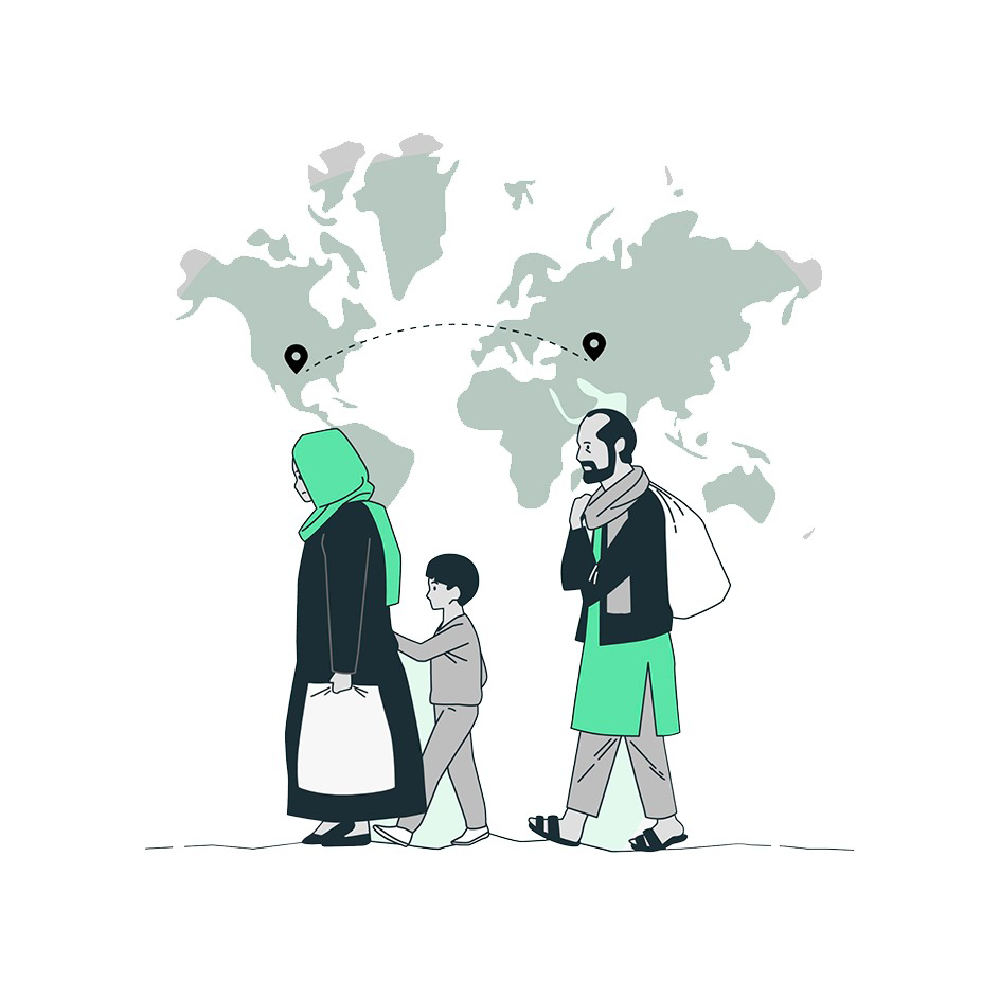
Historians estimate that by the end of
1609, the number of exiles exceeded 150,000 people.
As for the total number of those expelled
from Spain following the campaign of ethnic and religious cleansing against
Muslims after the fall of Granada and its aftermath, estimates range—according
to differing historical accounts—from one million to 600,000 Muslims, not
including those who were forcibly converted or killed in prisons and under
torture during a wide-ranging campaign of extermination.
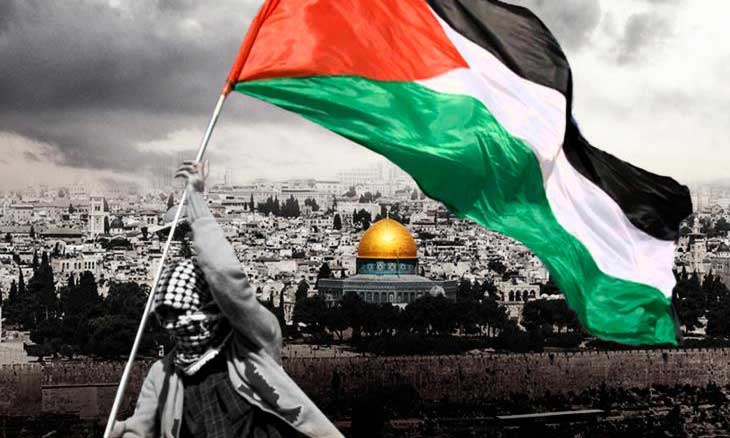
How similar today is to yesterday. What the
Zionist usurpers of the land of Palestine have done—and continue to do—since
1948 to the Muslim Palestinian people, in terms of persecution, displacement,
killing, genocide, imprisonment, and forced exile across the world to establish
a global Zionist state under the slogan of the “Jewishness of the state,”
mirrors what the crusader kings of Spain did to the Muslims of Al-Andalus.
Read Also:
- Why Must Our Nation Uncover Al-Andalus' Hidden History?
- Al-Andalus: The Golden Age of Humanity... Between Lies and Realities
- Egypt and the Gains of the Islamic Conquest
-------------------------------------------------------------
Head of Al-Kindi Center for Studies and
Research.