









Abdulrahman Al Ateeqi: A Life of Service and Legacy
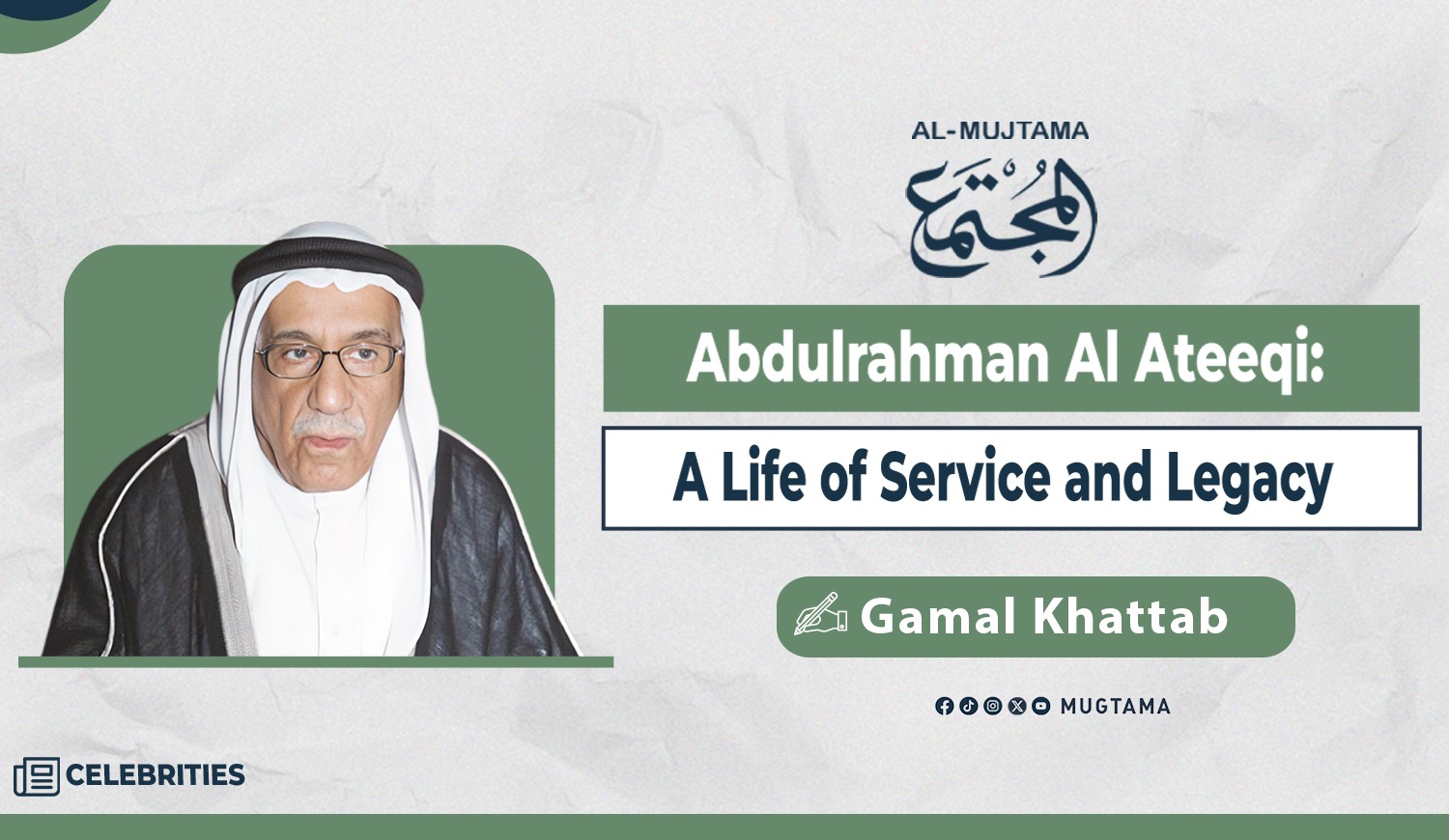
Counselor at the Amiri Diwan, Abdulrahman Salem Al Ateeqi, has
passed away at the age of 92, June 12, 2020. Al Ateeqi, former Minister of
Finance and Oil, held the finance portfolio from 1967 until 1981. He also
served as Undersecretary of the Ministry of Foreign Affairs, Kuwait’s envoy to
the United Nations, and Ambassador to Washington. He is regarded as one of the
most important statesmen who contributed to building modern Kuwait.
Early Life and Education
Dr. Abdulmohsen Al‑Kharafi recalls: Abdulrahman Al Ateeqi was
born in April 1928 in the Al Ateeqi neighborhood known as “Sikka Anza.” He
began his education at age six with Mulla Abdullah Abdulatif Al‑Othman, then
joined Al‑Mubarakiya School until the second secondary grade, leaving due to
illness in his eyes. He later spent several months at the Religious Institute,
studying Hanbali jurisprudence, before leaving in 1949. Sheikh Sabah Al‑Salem,
may God rest his soul, asked him to work in the police, where he served as a
translator, later moving with Sheikh Sabah to the Ministry of Health.
Career and Advisory Role
Al Ateeqi’s career was filled with achievements and successes
that left a positive impact on Kuwait and its people. In 1981, he was chosen as
advisor to the late Amir Sheikh Jaber Al‑Ahmad Al‑Sabah, may God rest his soul.
Islamic Guidance Society
His charitable and social contributions were numerous. His
first social initiative was helping establish the “Islamic Guidance Society” in
1952 (now the Social Reform Society), focusing on religious matters and raising
youth on virtuous morals. He also chaired the Disabled Association, being a
founding member since 1973. The association began with four beds and grew to
four facilities in Kuwait, Jahra, Ahmadi, and Sulaibikhat, with an annual
budget of one million Kuwaiti dinars.
Memories of the Iraqi Invasion
Al Ateeqi recalled his memories during the brutal Iraqi
occupation: “It suffices me to have accompanied the virtuous man, Sheikh
Jaber Al‑Ahmad Al‑Sabah, may God rest his soul, for seven months—the duration
of the occupation. By fortune, I was with the late Amir during this period.
When the invasion occurred, I was on a plane from Germany to Jordan, where my
family resided during summer vacation. I then sought the flight to Riyadh, and
from there to the Eastern Province, to be with the late Amir in Dammam.”
Role in Founding Kuwait Finance
House
Al Ateeqi played a pivotal role in establishing Kuwait Finance
House. Ahmad Bazie Al‑Yaseen and Badr Al‑Mukhizim said: “He contributed by
making the political decision to approve its establishment, a decision
requiring great courage at the time.” Al Ateeqi himself recounted: “Brother
Ahmad Bazie visited me at the Ministry of Finance and presented the idea. I
told him it could not succeed under existing banking laws. It needed a special
law, which was impossible under Parliament. Later, in July 1976, Article Four
of the Constitution was suspended, Parliament dissolved, and I seized the
opportunity. I asked Dr. Issa Abdu in Egypt to prepare a draft law for an
Islamic bank. I presented it to Sheikh Jaber Al‑Ahmad, who immediately approved
it. The law passed smoothly, and the name was amended to Kuwait Finance House.
I never sought personal gain, never bought shares, nor participated in any
financial venture, so no one could say I pursued this project for myself.”
“Listen, Qaddafi” Incident
Al Ateeqi is remembered for his historic confrontation with
Muammar Qaddafi at the Arab Summit in Cairo after Iraq’s invasion of Kuwait.
When Qaddafi proposed a compromise involving simultaneous Iraqi withdrawal and
foreign troop withdrawal, Al Ateeqi responded: “Listen, Muammar. If
Kuwaitis present here are too polite to ignore you, I will reply. I am a
Kuwaiti citizen, and as a Kuwaiti I am ready to ally with the devil to restore
my country and expel the Iraqi occupation.” When Yasser Arafat tried to
intervene, Al Ateeqi told him: “You are the last person entitled to speak.” He
reminded King Hussein of Jordan of Kuwait’s generosity in financial aid. His
bold words were praised by GCC leaders, and King Fahd of Saudi Arabia
reportedly seated him beside him.
Role in Foreign Ministry Since 1961
Sheikh Sabah Al‑Salem recognized Al Ateeqi’s talents and took
him to the Ministry of Health in 1959, assigning him to study and reform the
ministry. He was appointed Director of Health in March 1959. In 1961, Sheikh
Abdullah Al‑Salem appointed him Kuwait’s first envoy to the UN and first
ambassador to the US. His credentials were accepted by the US President in May
1962. Despite his success, he struggled with family separation and
communication difficulties. After his father’s death in 1963, he returned to
Kuwait. Sheikh Abdullah Al‑Salem then appointed him Minister of Foreign
Affairs. He served four years, achieving agreements such as border demarcation
and easing tensions with Iraq.
In 1967, he became Minister of Finance and Oil, succeeding Sheikh Jaber Al‑Ahmad. Later, the ministries were separated, and he remained in Finance. Among his achievements was ending the British Bank’s concession and converting it to Bank of Kuwait and the Middle East. He represented Kuwait in founding OAPEC. In 1981, Sheikh Jaber Al‑Ahmad appointed him as his advisor, recognizing his service and competence.