








Book Review:
Benefactors from My Country
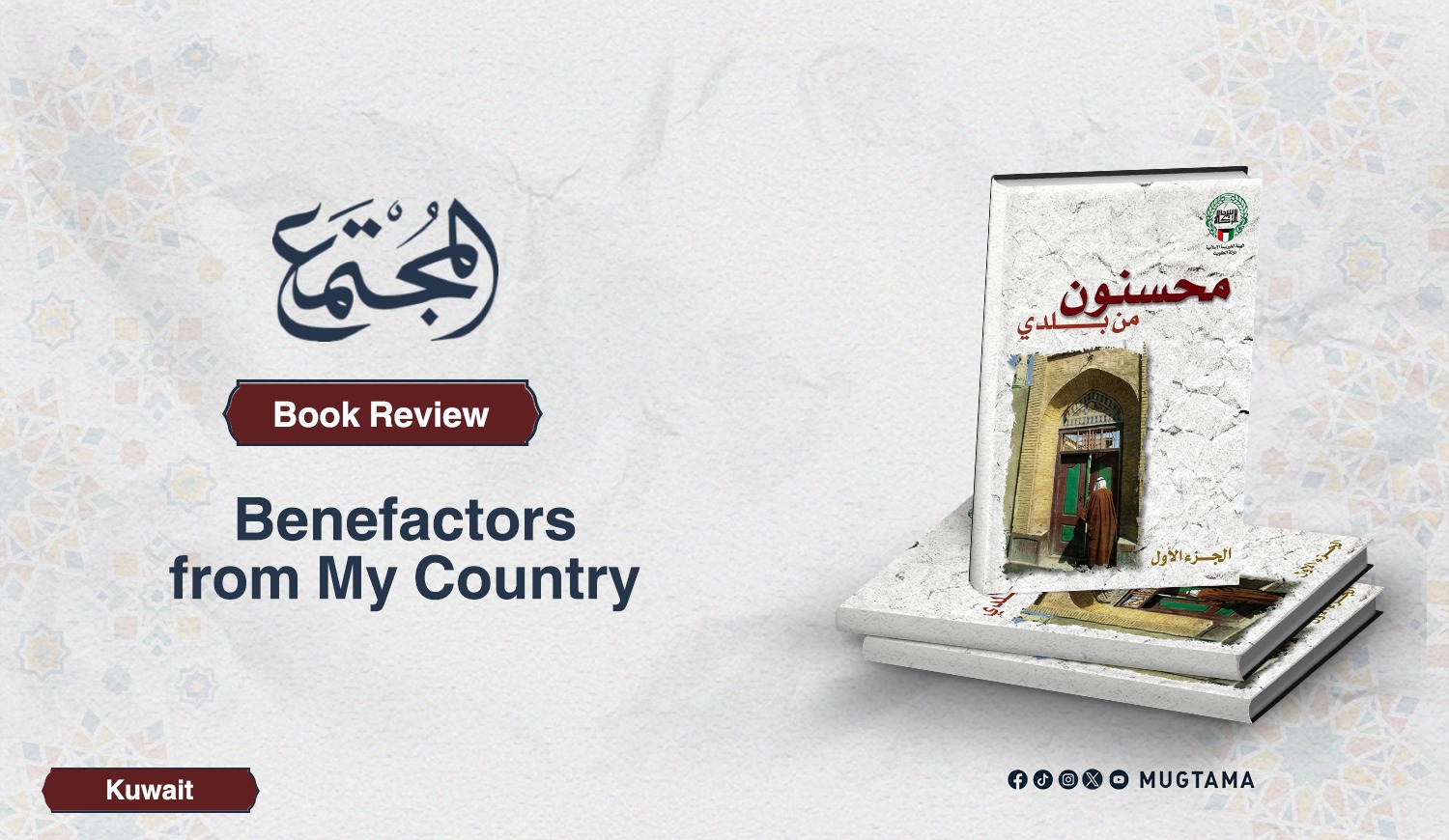
The first volume of Benefactors from My Country,
published by Kuwait’s Zakat House in its second edition in 2001, stands as an
important historical and humanitarian record.
Documenting the Pioneers of Giving
The book chronicles the noble lives of twenty‑five figures who
pioneered charitable work in Kuwait. The number was chosen symbolically to
coincide with Kuwait’s National Day on February 25.
It highlights the early generation of Kuwaiti men who laid the
foundations of charitable and voluntary work before the emergence of
official institutions. Their efforts met the needs of Kuwaiti society in
earlier times and extended to serve Arab and Islamic causes, becoming living
models of solidarity, school building, relief work, and mosque construction.
Kuwait’s Map of Giving
The book reveals strategic themes that outline Kuwait’s
charitable landscape, foremost among them education and enlightenment. These
pioneers carried the burden of combating ignorance and establishing the
country’s first educational infrastructure.
Their generosity and personal supervision were evident in
founding schools such as Al‑Mubarakiya and Al‑Ahmadiya, with
benefactors like Ibrahim Al‑Mudhaf, Sultan Al‑Kulaib, and Ali Al‑Rifai.
The mission extended to marginalized groups, as Shamlān bin
Ali Al‑Saif did by establishing Al‑Saada School in 1924 to provide free
education for orphans and poor children. Sheikh Abdulaziz Al‑Rashid also fought
ignorance through journalism and challenged widespread superstitions of the
time.
Social Solidarity
The book shows how these men confronted living and natural
crises with unique social responsibility.
Benefactor Rashid Abdullah Al‑Farhan built forty houses to
shelter the poor, while he and Shamlān Al‑Saif dedicated ships such as Shu’ai
to bring fresh water from Shatt al‑Arab and provide free drinking water during
Kuwait’s harsh summers.
Sheikh Saleh Al‑Ibrahim played a vital role in aiding victims
of the devastating “Haddama” floods of 1934. Abdullah Abdul Latif Al‑Othman
opened his diwaniya to relieve debtors, quietly paying widows’ debts and
returning their mortgaged homes.
Global Humanitarian Reach
The book affirms that Kuwaiti generosity was not confined by
geography. Sheikh Abdullah Al‑Nouri traveled to distant lands such as India,
Indonesia, and Australia to establish schools and Islamic centers and support
minorities.
Abdullah Al‑Othman extended his philanthropy to build mosques,
hospitals, and endowment complexes in Syria, Lebanon, Africa, Asia, and
America, while also supporting the Algerian resistance.
Abdulaziz Ali Al‑Mutawa founded committees to sponsor families
of Palestinian martyrs and prisoners and supported medical institutions in
Egypt.
Deep Roots of Humanitarian Work
The book provides tangible evidence that Kuwait’s humanitarian
strategy did not emerge from modern economic prosperity but from deep
historical roots. These men combined commercial success, religious devotion,
and social responsibility.
They invested their wealth in building people before
buildings, making their lives a rich source of inspiration and a model for
shaping contemporary charitable and voluntary strategies.
SEO Elements
· Kuwait, charity, philanthropy, humanitarian work, education, social solidarity, Islamic history, voluntary work, global aid, Saif Bakir