







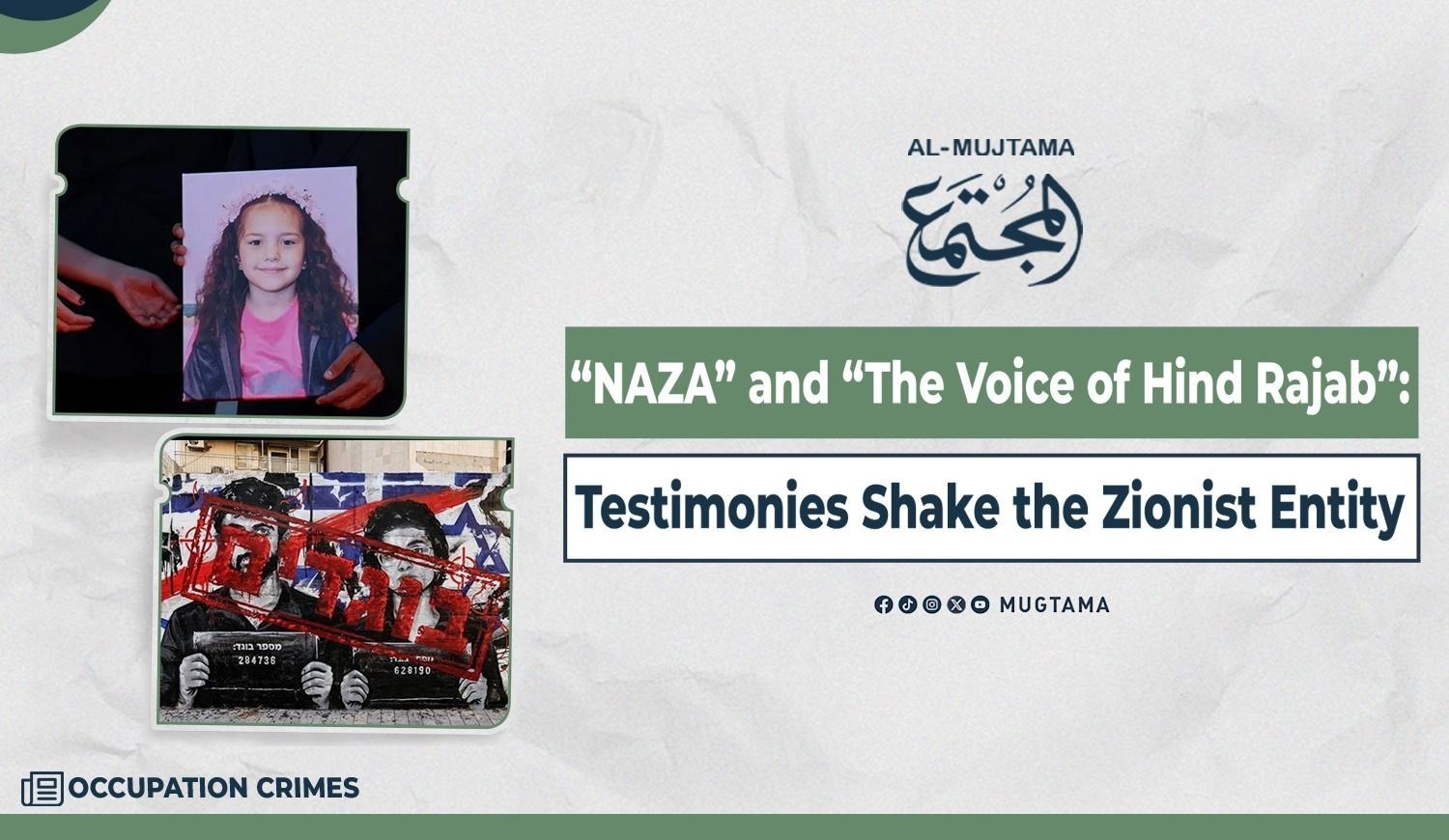
“NAZA” and “The Voice of Hind Rajab”: Testimonies Shake the Zionist Entity
Before the film NAZA
arrived at the Venice Film Festival, cinema had already succeeded in conveying
the tragedy of Gaza to a global audience through The Voice of Hind Rajab. The film reconstructed the final hours of the five-year-old
Palestinian girl’s life, relying on the actual audio recordings of her calls
with the Palestinian Red Crescent dispatch center.
On January 29, 2024, in the
Tel al-Hawa neighborhood west of Gaza City, occupation tanks closed in on a
civilian vehicle carrying Hind and her relatives, spraying it with more than
335 bullets—according to a forensic investigation conducted by Forensic
Architecture in collaboration with Fault Lines and Earshot. Everyone in the car
was killed, with the exception of Hind and her cousin, Layan Hamadeh.
The child was left alone
among the bodies of her family, trapped inside the bullet-riddled vehicle,
pleading over the phone: "I’m scared... please someone come save
me." When an ambulance was dispatched to rescue her, it too was targeted,
killing paramedics Yousef Zeino and Ahmed al-Madhoun. Hind was not found until
February 10, twelve days later, in the very spot where her voice had gone
silent.
At its Venice premiere on
September 3, 2025, the audience gave the film a standing ovation that lasted
over 20 minutes, before it went on to win the Grand Jury Prize, the
"Silver Lion," at the 82nd edition of the festival.
But just a year later, Gaza
returned to the Venice screen from an entirely different angle. This time, the
voice was not that of a trapped Palestinian child pleading for help, but the
voices of the killers themselves.
"NAZA" is a Hebrew acronym for "Nezek
Agavi" (collateral damage)—a cold, technical term referring to the
number of civilian casualties Israeli intelligence expects in a given strike
before greenlighting its execution.
The film is based on
testimonies from 24 individuals within the military and intelligence
establishment—all speaking under condition of anonymity. They detail the
mechanisms behind target selection in the Strip and the deployment of
AI-powered targeting systems. According to what the two directors relayed from
their sources, some accounts describe operating these systems as though working
inside a "kill factory"—or playing a video game!
What proved even more
controversial is that the film was directed by two Israeli journalists—Yuval
Abraham and Rachel Szor, who previously won an Oscar for No Other Land.
Following its premiere at the festival's 83rd edition on September 10, the
audience gave it a standing ovation that lasted roughly 25 minutes, before it
went on to claim the Special Jury Prize.
What Did the Whistleblowers
Reveal to Warrant Such Acclaim?
The Israeli backlash was
neither an artistic critique nor a challenge to the film's sources; instead, it
took the form of calls to revoke the directors' citizenship. The situation
escalated even further when, on September 16, Israeli Prime Minister Benjamin
Netanyahu announced in a video address his intent to push forward a legislative
package dubbed the "NAZA Laws." One of the proposed measures mandates
stripping citizenship from anyone who "defames" state or military
personnel anywhere in the world.
24 Military Insiders Reveal
How Targeting Operations Are Run
Rather than relying on
Palestinian testimonies or accounts from outside the military establishment, NAZA
was built entirely on clandestine interviews with 24 Israeli soldiers and
intelligence personnel who, according to the filmmakers, took part in the war
on Gaza—including veterans of the intelligence elite, Unit 8200. Conducted over
roughly three years, the interviews were filmed covertly at night on scattered
rooftops across Tel Aviv, with the subjects’ identities concealed and their
voices altered for their protection.
The testimonies detail
intelligence-gathering and target-identification systems, including AI-driven
tools and pre-calculated estimates of anticipated civilian casualties for
specific strikes. One source in the film alleges that authorization was once
granted for a strike expected to kill 500 civilians to eliminate a single Hamas
operative.
In response, the Israeli
military categorically rejected the film’s narrative, stating that reliance on
anonymous sources makes verifying the testimonies impossible. It questioned
whether certain sources possessed access to strategic details at such a level,
explicitly denied planning any strike projected to kill 500 civilians or
anything close to that figure, and maintained that target selection and strike
authorizations remain entirely human decisions, with artificial intelligence
never autonomously deciding to bomb.
“NAZA” Did
Not Come from Outside Israel: Its Directors Confront the Establishment They
Belong To
The issue takes on an added
dimension due to the filmmakers' own identities: NAZA was directed by
Israeli journalists Yuval Abraham and Rachel Szor, co-produced in collaboration
with The Guardian, and screened in the official competition of the 83rd
Venice International Film Festival in 2026.
The film diverges in its
angle from most works that have covered the war through victim testimonies or
imagery emerging from Gaza. Instead, its directors turn the camera inward,
telling the story through the voices of those who carried out the actions
rather than those who endured them. Abraham stated that the objective was to
give soldiers and officers the space to speak about what they did, adding: "We
wanted to hear, in as much detail as possible, what the killing systems in Gaza
looked like and how they operated.
From Venice Acclaim to Netanyahu: How Revoking Citizenship Entered
the Fray
The fallout from the film did not stop at the
festival. Immediately following the win, Culture and Sports Minister Miki Zohar
issued a scathing statement calling the documentary "despicable" and
accusing its directors of "self-hatred" and pandering to antisemitic
applause worldwide. He announced his intention to take immediate steps to
revoke their citizenship on charges of "high treason." In response,
Abraham stated that the film had exposed truths that no one with a conscience
could conceal.
The controversy then
escalated to the highest levels of government when, on September 16, Prime
Minister Benjamin Netanyahu announced plans to push two bills through the
Knesset: one stripping citizenship from anyone who "defames" the
military or the state anywhere in the world, and another sharply raising the
cap on statutory damages in defamation lawsuits.
In just a matter of days, the
controversy shifted from a debate over a documentary and its testimonies into a
political showdown over the limits of speech, dissent, and critique inside
Israel itself.
Gaza has never been far from
the international spotlight, but across two consecutive editions of the Venice
Film Festival, it became the centerpiece rather than a footnote. From The
Voice of Hind Rajab, which returned the plea of a trapped child to the world,
to NAZA, which pried open the vault of insider confessions, the world’s
oldest film festival transformed into a stage for a single question: Who holds
the right to tell the story—and who is punished for having told it?
Nor did the repercussions
stop with the filmmakers alone. Within those very halls, Oscar-winning American
actress Susan Sarandon appeared wearing a red pin representing the
"Artists4Ceasefire" campaign in support of a ceasefire in Gaza. It
was far from her first such stand; having already been dropped by major talent
agency UTA in 2023 over her political stances, she stated plainly that she
continues to lose roles to this day because Hollywood agencies tell people not
to hire her. Even so, she stood in Venice declaring that global public opinion
has shifted completely in favor of Palestine, and that among those who stand in
solidarity with her, she found her family and her people.
From Kaouther Ben Hania, who dedicated her award to the Palestinian Red
Crescent, to Abraham and Szor, who faced treason accusations from their own
government, to Sarandon, who paid for her stance with her very career—they all
trace a single map: when art approaches the truth, it cannot long remain
neutral. And as fiercely as the authorities in Israel attempted to silence
these voices by stripping citizenships and threatening prosecution, the silver
screen alone proved capable of compelling the world to listen to what so many
had long refused to hear.