







'Naza': Why Israel Fears Its Own Soldiers' Testimonies
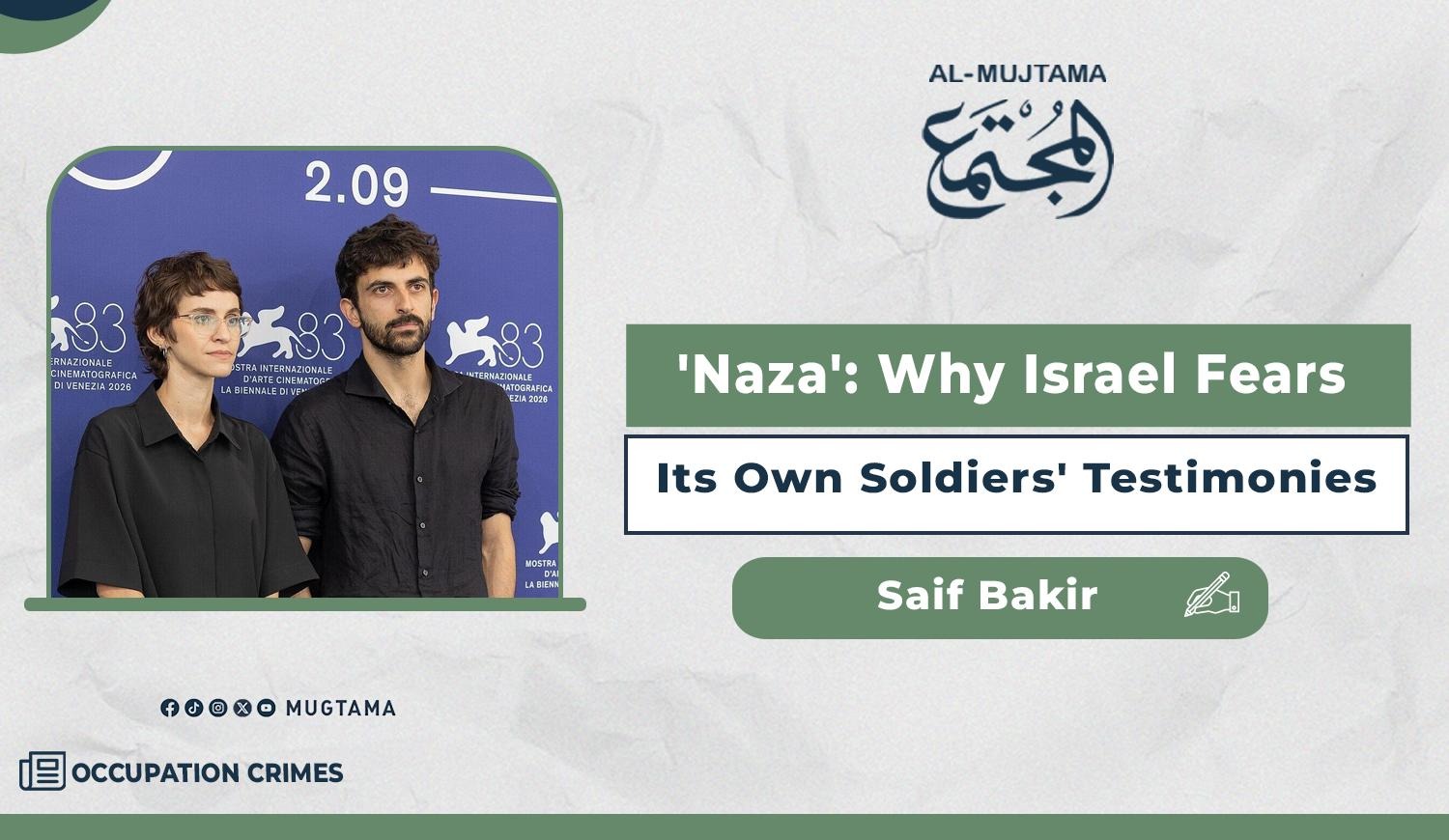
The documentary film 'Naza'
has sparked fierce controversy in Israel after winning the Special Jury Prize
at the Venice Film Festival, fueled by testimonies from Israeli soldiers,
officers, and intelligence personnel regarding the military assault on Gaza.
The uproar intensified after
Israeli Culture and Sports Minister Miki Zohar threatened to push for revoking
the citizenship of co-directors Yuval Abraham and Rachel Szor, accusing them of
'treason.' The move shifted the clash from the film's content to broader
questions over freedom of expression and the boundaries of scrutinizing the
military and the government in wartime.
'Naza': Inside Accounts from the Military and Intelligence
Spanning 80 minutes and based
on a three-year investigation, 'Naza' draws on interviews with 24
Israeli soldiers, officers, and intelligence personnel who spoke on condition
of anonymity.
The documentary details how
targets were selected in Gaza, the mechanics of carrying out airstrikes, and
the formulas used to calculate projected civilian casualties, alongside the
deployment of artificial intelligence systems to designate targets.
The filmmakers derived the
title 'Naza' from a Hebrew acronym for 'collateral damage'—a military
term used to describe anticipated civilian losses when striking a military
objective.
According to the directors,
the testimonies reveal prior knowledge of civilians inside several targeted
buildings, offering a stark look into how bombing operations are conducted
across the Gaza Strip.
Israeli Soldiers' Testimonies in 'Naza'
The testimonies presented in 'Naza' carry particular
weight given the nature of their sources, drawing directly from personnel who
operated within the Israeli military and intelligence establishment.
The accounts point to the use of various technologies for
intelligence gathering and target designation, advance assessments of civilian
toll, and operations that struck inhabited homes.
The filmmakers emphasize that the documentary does not rely on
an outside narrative about the military; rather, it places insider accounts
before the public—thrusting the film into the center of a political and media
storm both inside Israel and abroad.
In response, the Israeli military dismissed the film, calling
its claims false and baseless. Meanwhile, Israeli media outlets noted that the
documentary's revelations reflect the personal accounts and claims of its
sources rather than conclusive judicial findings.
Zohar Threatens to Strip Citizenship of 'Naza' Directors
The standoff escalated following remarks by Israeli Culture
and Sports Minister Miki Zohar, who vowed to work toward stripping the Israeli
citizenship of Yuval Abraham and Rachel Szor, branding their documentary 'Naza'
as 'treason against the state.'
Zohar accused the co-directors of tarnishing the image of
Israel and its military on the international stage, describing the film’s win
at the Venice Film Festival as a shocking development.
However, the minister’s announcement does not grant him direct
authority to revoke citizenship. Under Israeli law, revoking citizenship on
grounds of 'breach of loyalty to the state' requires a stringent legal
procedure involving authorized agencies and, ultimately, a formal court ruling.
Calls for punitive action were not confined to the governing
coalition. Former Defense Minister and head of the Yisrael Beiteinu party,
Avigdor Lieberman, called for prosecuting the filmmakers on treason charges,
arguing that the documentary provides ammunition that could be leveraged
against Israel and its leaders in the international arena.
'Naza' Rekindles Debate on Freedom of Expression
The fallout surrounding 'Naza' has moved far beyond its
cinematic merit or the specific accounts it presents, shifting into the realm
of civil rights and freedom of expression.
At the core of the standoff lies a fundamental dilemma: Should
the testimonies be addressed through open scrutiny and factual verification, or
by prosecuting the filmmakers and branding them as traitors?
The issue has grown increasingly fraught as the culture minister
tied the uproar over the documentary to his plans for overhauling film
subsidies, insisting public funds must not support projects deemed harmful to
the image of the state and its military.
This has plunged the film industry into a delicate balancing act—weighing
the government’s prerogative to set public funding criteria against the rights
of artists and journalists to probe sensitive military affairs and hold state
institutions to account.
Abraham: 'Watch the Film Before Attacking It'
Pushing back against the fierce backlash, co-director Yuval
Abraham urged the Israeli public to watch the film before passing judgment,
stressing efforts to make it accessible to as wide an Israeli audience as
possible.
Alongside Rachel Szor, Abraham seeks to bring the firsthand
accounts of soldiers and officers directly to viewers inside Israel, following
the documentary's world premiere at the Venice Film Festival on September 10,
2026.
The film clinched the Special Jury Prize at the festival's
closing ceremony, cementing its global profile and catapulting it to the
forefront of Israel's media and political debate.
'Naza': From Venice to the Israeli Domestic Debate
The award at the Venice Film Festival marks a turning point
for 'Naza', elevating it from an investigative documentary built on
military whistleblowers into a work drawing global scrutiny.
The documentary's resonance is magnified against the backdrop
of the ongoing war in Gaza and mounting international legal fallout over
military operations, alongside surging interest in firsthand accounts emerging
from within the Israeli defense establishment.
Co-directors Abraham and Szor previously collaborated on the
Oscar-winning documentary 'No Other Land' alongside Palestinian
filmmakers Basel Adra and Hamdan Ballal.
This positions 'Naza' within a cinematic trajectory
that transcends artistic documentation, directly challenging the official
wartime narrative through testimonies from those who operated inside the
military and intelligence apparatus.
Can Cinema Break the Silence on the War in Gaza?
The fallout over 'Naza' has snowballed into a
confrontation that transcends the medium of film itself. While the documentary
puts forward whistleblowing testimonies from within the military establishment,
these accounts have been met with an intense political and media backlash.
While critics argue the film tarnishes the image of Israel and
its armed forces, the co-directors stand firm on the public’s right to know the
findings they unearthed, urging critics to debate the substance of the
testimonies rather than attacking the film and its creators.
Ultimately, 'Naza'
has shifted the discourse on the war in Gaza from the battlefield to the silver
screen, and from the official line to firsthand insider accounts. In doing so,
the film has become an acid test for the limits of free expression and a
society's capacity to confront the realities of war—even when exposed from
within its own ranks.