




Muslims in Ohio USA
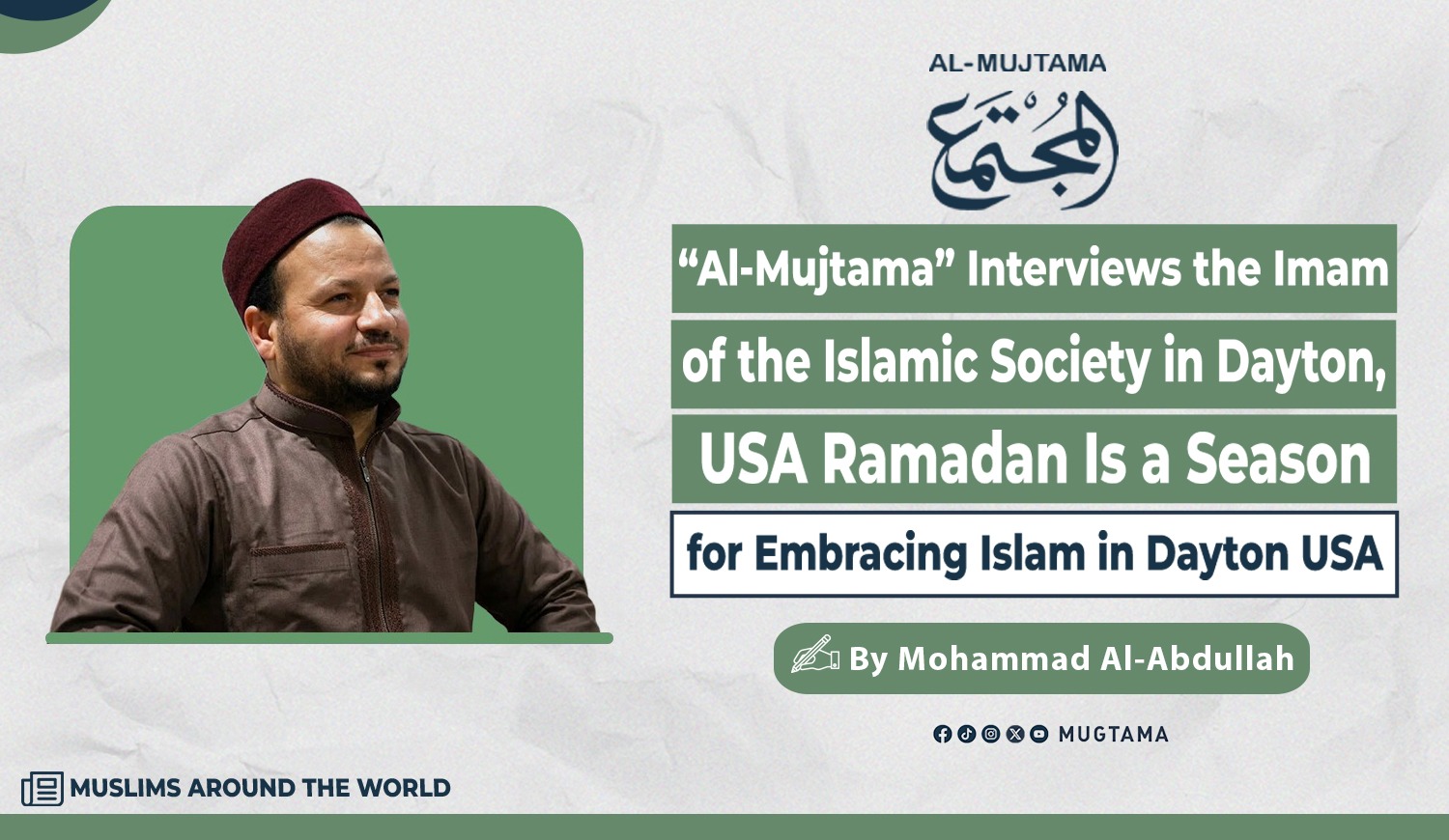
“Al-Mujtama” Interviews the Imam of the Islamic Society in Dayton, USA

Estimates indicate that the number of Muslims in the U.S. state of Ohio ranges between 100,000 and 125,000, about 1% of the state’s population.
These figures are based on statewide estimates and national
surveys that have tracked the growth of the Muslim community since 2000.
The presence of Muslims in each city of the state began with a
story of struggle, guided by faith and vision. Dayton became a model of Islamic
outreach, as young Muslims purchased a church and converted it into a
mosque. Later, they sought burial grounds for Muslim deceased, and then
established schools.
Al-Mujtama interviewed Sheikh Mahmoud
Shaban, Imam of the Islamic Society in Dayton, Ohio, to learn more about
Muslims there during Ramadan.
Muslim Presence in Ohio
Q: How did Muslims establish their path
of worship in Ohio? What is their proportion in the state?
A: Ohio is large and has about 15
cities. Dayton is one of the most famous, despite its small size, because it is
a center of aviation and industrial innovation, home of the Wright brothers. As
for the number of Muslims, unfortunately there are no accurate statistics. I
cannot specify the number of Muslims in the state or in Dayton.
For example, Dayton has about 160,000 residents. Muslims are
in the thousands, but I cannot give an exact number. They come from various
communities, including Turkish and Palestinian, as well as others.
Milestones of Muslim Community
Q: Reports indicate Muslims in Ohio
began by renting an apartment, which became the start of a mosque, then a
school, then a cemetery. Tell us about the major milestones.
A: Yes, before that there was a
small church purchased by Arab students and converted into a mosque. That was
the beginning.
Muslims came for study, work, or migration, gathering first in
apartments they rented to pray and hold Friday prayers.
Later, God facilitated the purchase of a mosque in the
early 1980s, the Islamic Society, the first mosque in Dayton. Then mosques
expanded as more Muslims arrived for study, work, or migration. Mosques spread
until they reached about 12 in Dayton.
After establishing mosques and with the growing number of
Muslims, they sought burial grounds. Now Dayton has about two cemeteries for
Muslims.
Then came the effort to educate Muslim children and preserve
their identity. Islamic schools spread, starting from kindergarten, then
elementary, middle, and later a high school for Muslim students.
Challenges and Racism
Q: Do you face obstacles or racist
rhetoric in the state? How do you overcome them?
A: Obstacles are not many, but
there are some racist speeches and reckless individuals. For example, about
five years ago, our mosque was attacked. A man came with a gun, tried to break
in, and threw stones at the glass. He shouted racist words. Cameras recorded
him, and we called the police.
Ramadan Atmosphere
Q: How do you welcome Ramadan? What are
the main mosques, and what are Tarawih and night prayers like?
A: Mosques prepare for Ramadan by organizing Tarawih prayers. If there are imams, they arrange themselves for
Tarawih. Mosques are decorated and host collective iftars.
Tarawih is held, people come in large numbers, donate, and
give charity. Some mosques provide daily iftar, attended by the community and
those without families.
Collective Iftars
Q: Do Muslims eat iftar collectively in
each neighborhood, or only gather for prayers?
A: Our mosque provides daily iftar
for those without families, such as students or workers. Families gather on
weekends—Friday, Saturday, and Sunday for family iftars.
There is a weekly schedule. Families volunteer to prepare
iftar on specific days. Muslims share in charity and collective meals.
Ramadan and Conversions
Q: Does Ramadan increase non-Muslims’
knowledge of Islam? Are there conversions during the holy month?
A: Certainly. Ramadan gatherings
allow non-Muslims to see Muslim worship. It is an opportunity to
introduce neighbors and others to Islamic practices.
Some neighbors congratulate us, send sweets to Muslims or
mosques. There is goodwill from all.
Mosques and Islamic centers play a role in introducing Islam.
Conversions occur throughout the year, but they increase in Ramadan.
Non-Muslims may be influenced by Muslims, hear about Islam, or study it.
Ramadan becomes an opportunity for them to embrace Islam.
Muslims and Relief Efforts
Q: Ohio often experiences natural
disasters or storms. Do Muslims participate in relief efforts? Do mosques play
a role?
A: During disasters and snowstorms,
as happens in the U.S., Muslims try to help as much as possible.
Recently, there were severe snowstorms, electricity outages in some states.
Muslims contribute according to their numbers and capabilities.
I’tikaf and Zakat al-Fitr
Q: How is i’tikaf practiced? How is
Zakat al-Fitr collected and distributed? Do non-Muslims benefit? What is its
impact on Islam’s spread?
A: Yes, i’tikaf is available for
those who wish. Mosques are open and accessible, with precautions. In
the last ten nights of Ramadan, mosques are open all day and night for
worshippers.
Zakat al-Fitr is collected in mosque boxes and distributed before or after Eid prayer, as possible. It goes first to the poor, and sometimes non-Muslims receive a share if funds are sufficient.