









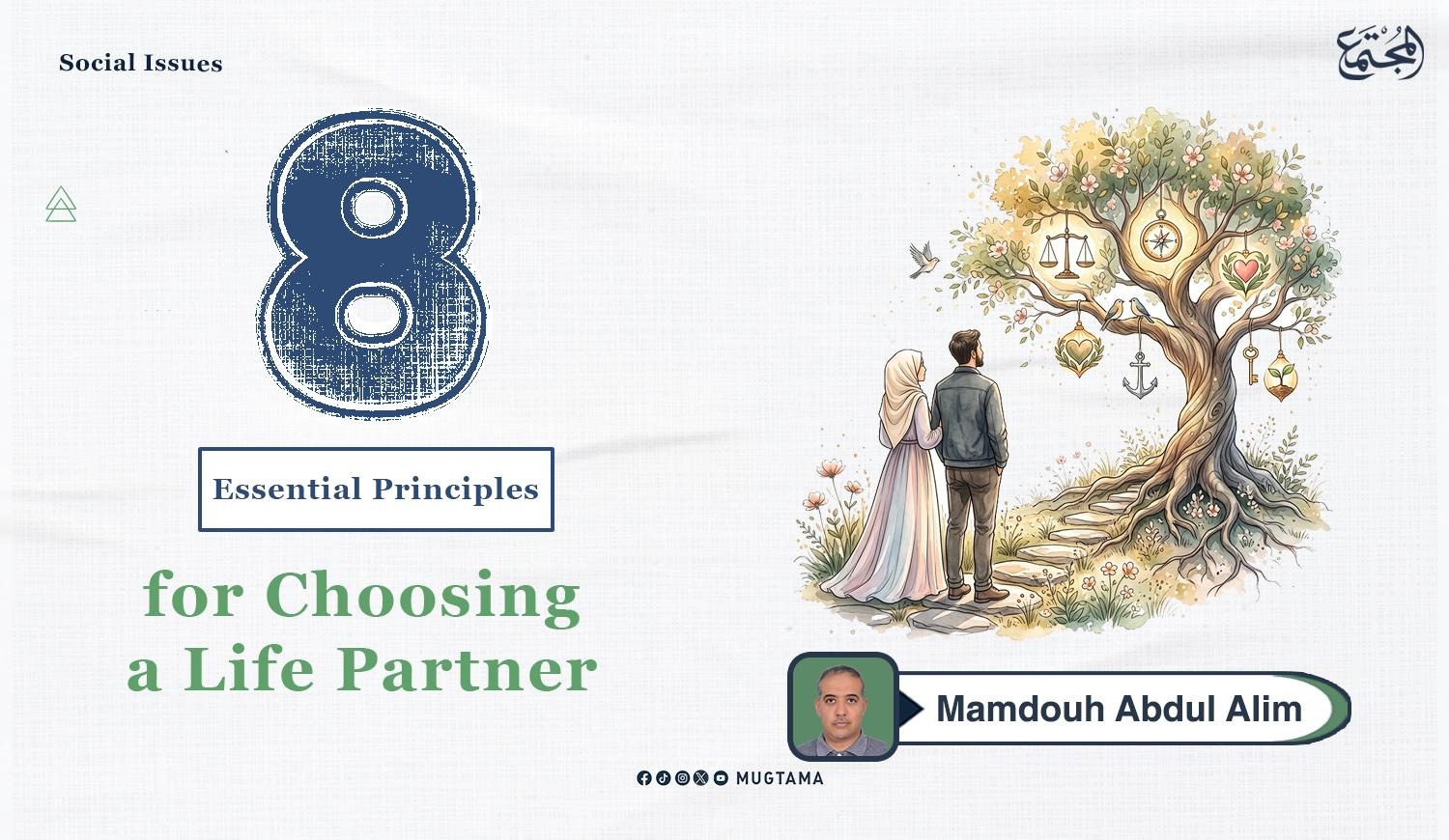
8 Essential Principles for Choosing a Life Partner

There are
decisions in life that we can reverse when we make a mistake, and others whose
consequences we may have to live with for years or even a lifetime. Choosing a
life partner is one of the most important decisions that should never be based
solely on a moment of fascination, a surge of emotion, or a passing attraction.
Your spouse is not simply someone you choose to spend your days with. They are
someone who will become part of every aspect of your life, sharing your joys,
sorrows, and challenges, influencing your emotional well-being and the way you
live, and even shaping the environment in which your children grow up.
That is why the
more mature question is not, “Who should I marry?” but rather, “Who is the
right person to build a life with?”
Physical beauty
may catch your eye, sweet words may win your heart, and early compatibility may
create a powerful sense of excitement. But building a home and preserving it
through disagreements requires foundations far deeper than these.
Choosing a life
partner wisely does not mean searching for a perfect person. It means
consciously looking for someone who is righteous in both their religious and
worldly affairs, someone with whom you can build a life worth living. The
sounder the foundations on which you choose your partner, the more likely your
family life will be happy and stable, by the grace of Allah.
Here are some
essential principles to consider when choosing a life partner.
1.
Faith and Values: The Foundation of Choosing a Life Partner
In today's
world, physical beauty may captivate you, a gentle way of speaking may attract
you, and a charismatic presence may leave you impressed. But a life partner
should not be chosen solely for what dazzles the eye in a fleeting moment. The
right person is someone who reassures the heart and satisfies the mind.
Attraction may give a relationship a beautiful beginning, but it cannot, on its
own, build a stable home. Faith and values, however, reveal their true worth
when emotions settle, responsibilities arise, and disagreements occur.
This is why the
Prophet Muhammad, peace and blessings be upon him, encouraged choosing a wife
for her religious commitment, saying: “So you should marry the religious woman
(otherwise) you will be a losers.” (Al-Bukhari and Muslim)
This does not
mean focusing on outward displays of religious observance alone. Rather, faith
should be a genuine guiding principle that shapes a person's character,
decisions, and treatment of others, especially when they are pleased or angry.
2.
Character Reveals Itself When the Mask Falls
In the early
stages of a relationship, a person may be skilled at choosing the sweetest
words, making the most thoughtful remarks, and displaying the gentlest manners.
But true character does not emerge when everything is going smoothly. It
becomes apparent when the masks fall, disagreements arise, pressure mounts, and
anger takes hold.
Pay attention
to how they treat people they have nothing to gain from, how they respond when
someone refuses their request, how they apologize when they make a mistake, how
they preserve the dignity of those who disagree with them, and what they say
about people who have wronged them.
In these
moments, rehearsed words begin to fade, and genuine character comes to light.
Under emotional pressure, people's true feelings emerge, words slip out, and
their real nature becomes apparent.
So do not look
for someone who knows how to impress you when they want to win your affection.
Look for someone with whom you can feel safe even when you disagree, someone
whose character you can trust even when you face a problem that cannot be
resolved immediately.
3.
Emotional Maturity Matters More Than Sweet Words and Fleeting Feelings
A person may be
exceptionally articulate, know how to create beautiful moments, and say things
that quickly win your heart or put you at ease. Yet that same person may
struggle to manage conflict. Marriage is not truly tested in moments of
affection, but in moments of pressure, disagreement, and responsibility.
Emotional
maturity does not mean never getting angry. It means knowing how to behave when
you do. It means being able to express anger without hurting others, manage
your emotions without causing harm, disagree without destroying the
relationship, apologize without arrogance, and take responsibility instead of
constantly making excuses.
Do not be
deceived by eloquent words. The tongue may be skilled at describing love, but
behavior is what reveals whether that love is genuine. Emotions may ignite a
relationship, but maturity is what sustains it throughout the journey.
4.
Compatibility in Vision, Not Similarity in Everything
Your life
partner does not have to be a replica of you. You may differ in temperament,
hobbies, ways of thinking, communication styles, and even everyday habits, yet
still build a successful marriage.
What matters is
agreeing on the things that carry greater weight than minor differences: the
meaning of family, the boundaries of mutual respect, how children should be
raised, how money should be managed, how difficulties should be overcome, and
what kind of future you both envision.
The problem is
not disagreeing over minor details. It is having fundamentally different goals
and aspirations. My advice is not to search for someone who resembles you in
every way, but for someone who shares your direction, walks alongside you
toward a common destination, and knows how to respect your differences.
5.
Do Not Choose Someone Based on Who You Imagine They Could Become
One of the most
common mistakes people make when choosing a life partner is falling in love
with the person they hope their partner will become rather than the person
standing before them today.
You may notice
a few admirable qualities and build an entire future around them: They will
change. They will mature. They will start praying. They will quit smoking. They
will become more responsible. They will understand me eventually.
But marriage
cannot be built on imagined promises. It must be grounded in reality, character
that has been observed, and responsibility demonstrated through consistent
behavior.
Do not commit
to an image you have created from your hopes and then expect reality to match
it. Choose the person you know, not the person you hope to turn them into. Wise
choices begin when you see reality as it is, not as you wish it to be.
6.
Look for Someone Who Can Weather Life's Challenges
We must
recognize that married life is not always a bed of roses. It brings unexpected
pressures, growing responsibilities, and days that demand more patience and
wisdom than sweet words.
When choosing a
life partner, therefore, do not focus solely on their ability to create happy
moments. Pay attention to how they behave when life becomes difficult.
Do they
confront problems or avoid them? Do they accept the consequences of their
decisions or shift the blame onto others? Can they adapt to changing
circumstances without losing their composure?
A true life
partner is not simply someone who shares your days of comfort and prosperity,
but someone whose ability to weather life's hardships alongside you inspires
confidence and reassurance.
7.
Understand the Family Environment They Come From
Before choosing
a life partner, look beyond the individual and consider the environment in
which they grew up. Our upbringing leaves a mark on our personalities, shaping
how we express love, handle disagreements, manage responsibilities, cope with
difficulties, and interact with others.
Take the time
to understand the values they were raised with, how conflicts were handled in
their family home, and what they learned about marriage and family life.
However, do not
treat someone's upbringing as a final judgment on who they are. People may
inherit certain patterns from their families, or they may recognize those
patterns and consciously choose to do things differently, although breaking
away from deeply rooted habits can be difficult.
So do not ask
only, “Where did they come from?” Ask, “What did they take from their
upbringing, and what have they chosen to change?”
Understanding
someone's roots does not mean passing judgment on the tree, but it can help you
understand it before making it your partner in building a life together.
8.
Do Not Let Love or Attraction Blind You to Red Flags
Attraction can
make flaws seem insignificant, and love can lead us to see what we wish were
there rather than what is actually in front of us.
Do not let the
intensity of your feelings cause you to ignore troubling behavior, excuse a
recurring problem, or overlook a warning sign that you would never have
accepted in someone else.
Genuine love
does not ask you to abandon your judgment, silence your instincts, or turn a
blind eye to behavior that hurts you.
Finally, let me
offer you this advice: Pay close attention to actions and behavior. Read
between the lines. Observe your prospective life partner outside moments of
affection and romance. Try disagreeing with them to see how they react and how
they handle differences. Assess their ability to think through problems and
observe how they behave when their options become limited.
-------------------------------------------------------------
