









7 Ways to Cope With the Loss of a Child in Islam

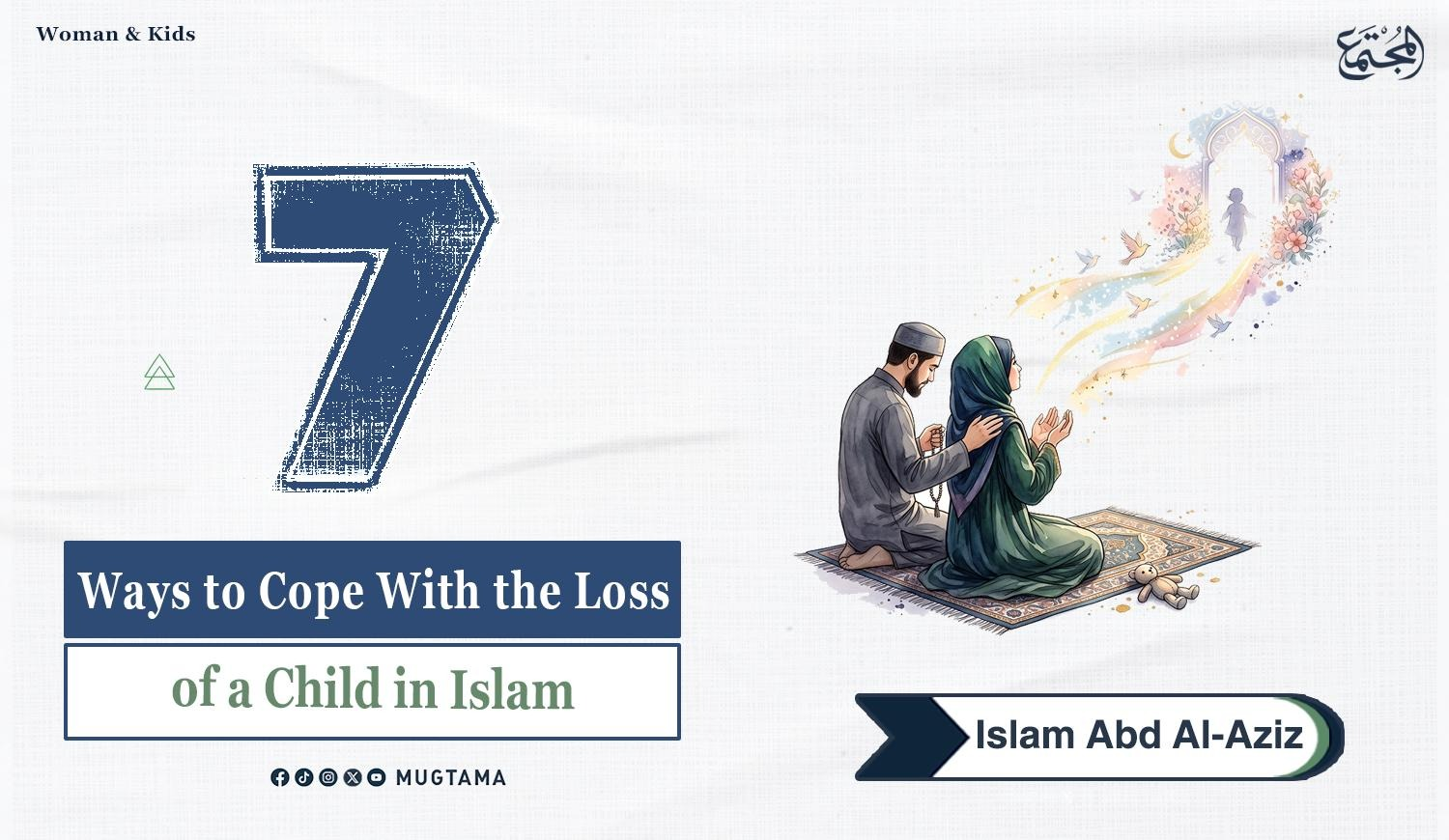
A person faces profound distress when
confronted with death or the loss of a child. A family may experience a severe
crisis after losing one of its members, particularly a mother who has lost her
child after watching them play around her throughout the home.
There is no doubt that death is a
calamity, as Allah describes it in His Book: {If
you are afflicted with death while on a journey...} [Al-Ma’idah 5:106]
The psychological and physical effects
of loss may continue to affect every member of the family. The American Academy of Pediatrics emphasizes that the way people
express grief and the length of time it lasts vary from one person to another.
The circumstances surrounding the loss of a child—whether it was sudden, caused
by an accident, or followed an illness—may also influence how the family
responds to the loss.
So, what can be done?
Navigating Loss
Here is your guide to navigating this
difficult ordeal.
1. Practice Patience and Accept
Allah’s Decree
The Messenger of Allah, peace and
blessings be upon him, said: “How wonderful is
the case of a believer; there is good for him in everything and this applies
only to a believer. If prosperity attends him, he expresses gratitude to Allah
and that is good for him; and if adversity befalls him, he endures it patiently
and that is better for him.” (Sahih Muslim)
2. Remember the Reward Allah
Promises for Patience
When calamity strikes, the duty is to remain patient, just as
gratitude is due when blessings are received. This world is a place of trial
and testing.
Allah, Exalted is He, says, {Only those who endure patiently will be given their
reward without limit.} [Az-Zumar 39:10]
He also says, {Persevere!
Surely Allah is with those who persevere.} [Al-Anfal 8:46]
And He says to His Prophet, peace and
blessings be upon him: {Be patient ˹O Prophet˺, for your patience is only with Allah’s help.} [An-Nahl 16:127]
3. Seek Emotional Support From
Family and Trusted People
The American Academy of Pediatrics
recommends seeking support from religious leaders, relatives, neighbors, the
child’s school, and colleagues.
During such difficult times, it is
wise to rely on trusted people who can help answer phone calls, prepare meals,
care for children, and handle official paperwork.
4. Help Children Understand
Death and Cope With Grief
Some family members, particularly
young children, may repeatedly ask questions about death. They need clear
explanations appropriate to their age, without vague expressions suggesting
that their sibling is asleep or has “gone far away.”
Bereaved children should receive
support both at home and at school.
5. Protect Your Family’s
Physical and Mental Health
The US National Cancer Institute warns
that grief may lead to sleep disturbances, loss of appetite, and exhaustion.
It is therefore important for family
members to get adequate rest, eat nutritious food, and maintain regular
sleeping schedules.
6. Allow Yourself Time to
Grieve Without Rushing Decisions
Parents do not need to hide the impact
of losing their child in order to carry on with their lives, nor are they
required to keep every belonging. At the same time, they should avoid rushing
into immediate decisions about the deceased child’s bedroom or possessions.
It is important to recognize that
there is no fixed timetable for grief. Life will gradually regain its rhythm,
while still leaving room for the child’s memory in everyday life. Parents may continue
to experience feelings of longing for their child while praying for them and
asking Allah to have mercy on them.
7. Honor Your Child’s Memory
Through Meaningful Acts
Families can honor and remember their
deceased loved ones through simple gestures and commemorations that reflect
their customs, traditions, and religious and moral values.
These acts may include making
supplications, giving charity, creating a memory album, or sharing a story
about the deceased and recalling their good qualities and admirable deeds.
-------------------------------------------------------------
