








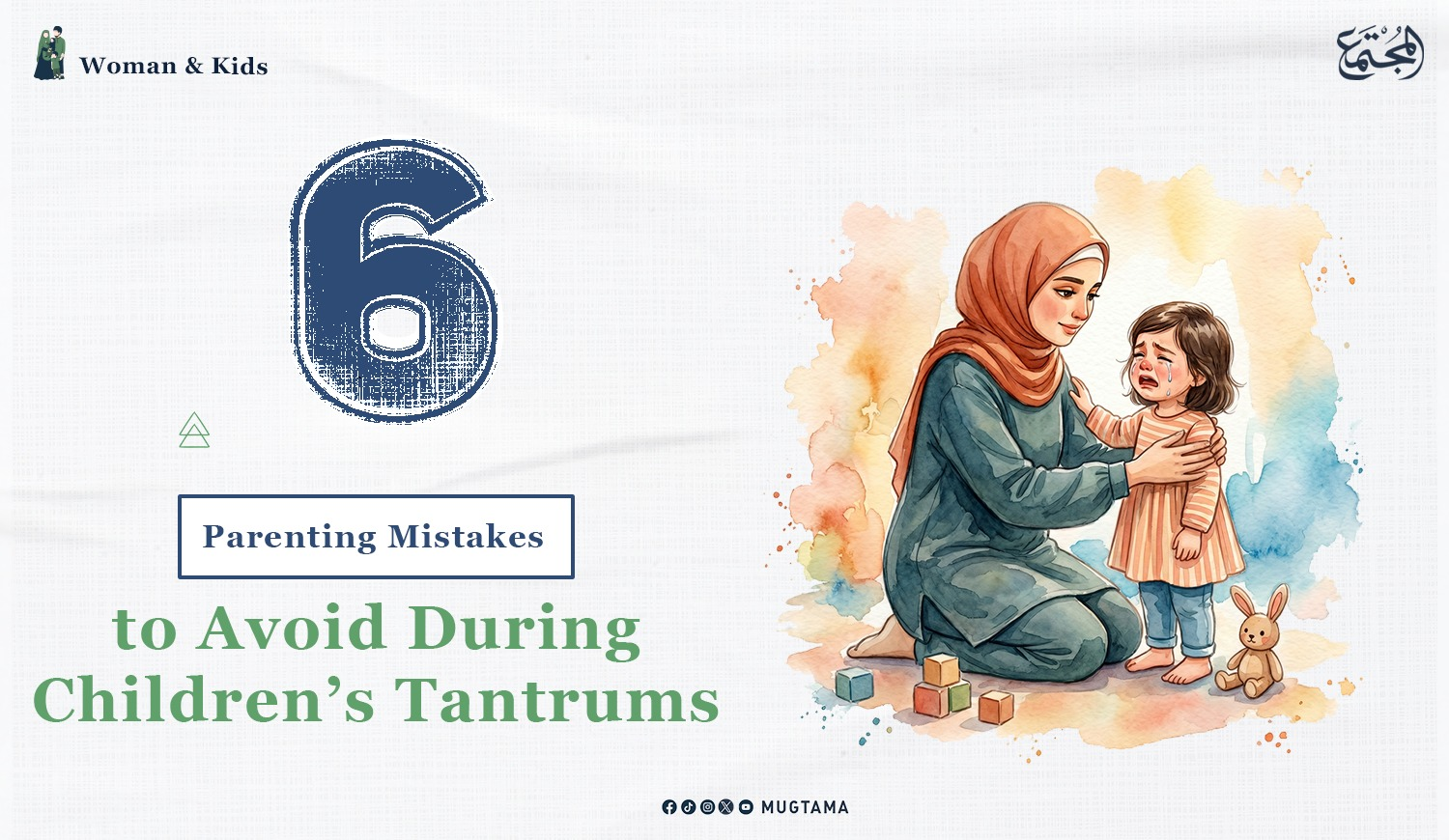
6 Parenting Mistakes to Avoid During Children’s Anger
Many
mothers and fathers fall into common mistakes when
dealing with a child while they are crying, screaming, or showing anger
outbursts. These mistakes can lead to negative consequences in the future.
Common Parenting Mistakes When Dealing
with Crying and Angry Children
Psychology
experts confirm that some widespread practices used when handling children’s
crying and anger episodes can produce the opposite result, increasing the
child’s stress and causing greater behavioral disturbance.
Among
these mistakes are the following:
1. Trying to Stop the
Child’s Crying Immediately
Reacting
quickly just to stop a child from crying is not the correct solution. Parents
should understand that crying is not a problem in itself. Rather, it is part of
the child’s learning process regarding how to deal with emotions, manage feelings,
and understand whether a situation truly deserves crying or not.
In this
regard, an American study issued by New York University confirms that
immediately calming a child may deprive them of going through the full
emotional experience, which is necessary for developing emotional regulation
skills.
2. Taking Full
Responsibility for Calming the Child
It is
also a mistake for parents to carry the full responsibility of calming the
child and stopping the crying. Instead, it is important to give the child the
opportunity to calm themselves.
Children
are not born with the ability to self-soothe. Rather, they gradually develop
this ability over time.
3. Giving the Child a
Mobile Phone to Stop Crying
One of
the most common mistakes with a crying child is giving them a mobile phone or showing videos in an attempt to stop the crying quickly.
However,
this behavior does not help the child understand their emotions and may even
worsen the problem. According to a recent 2025 study from Halu Oleo University
in Indonesia, children who are distracted this way may later struggle more with
controlling their emotional reactions.
4. Rewarding Anger and
Tantrums with Money or Sweets
Another
serious mistake is giving the child money, candy, rewards, or gifts while they
are angry or screaming in order to calm them down.
This
behavior develops a sense of manipulation and emotional blackmail within the
child. The child begins to realize that crying and anger help them get what
they want, and that the more they scream and become upset, the more likely they
are to achieve their demands.
5. Ignoring the Child’s
Feelings Completely
On the
other hand, it is also incorrect to completely ignore a child’s emotions while
they are crying, believing that this will make them psychologically stronger or
that they will eventually stop on their own.
Such
behavior may increase the child’s anxiety and stress levels. The child may also
learn emotional indifference toward others after personally experiencing
neglect of their own feelings. Over time, they may become convinced that their
emotions are unimportant to their parents.
6. Excessive Pampering and
Immediate Responses to Tantrums
Excessive
pampering in general, and immediately responding to every anger episode, are
among the common mistakes that do not help the child develop properly.
Instead,
this may produce a weak personality that cannot be relied upon and struggles to
carry responsibility.
Healthy Ways to Respond to a Child’s
Crying and Anger
After
avoiding these mistakes, parents should focus on emotionally containing the
child rather than spoiling them. They should acknowledge the child’s feelings,
interact calmly without tension or surrendering to unreasonable demands, remain
physically close to provide a sense of safety, and give the child time to calm
down.
Explanations
or punishment should be delayed until after the crying and screaming stop.
Parents should also help the child understand what they are feeling and provide
healthier tools for expressing emotions in order to improve behavior,
strengthen personality, and support emotional growth.
For Further Reading:
- 5 Ways to Raise Children to Support the Weak
- 6 Practical Tips to Raise a Stubborn Child
- Book Review: “How to Make Your Child Happy?” By Wafaa Saadawi
-------------------------------------------------------------
