







5 Flashpoints: The Assault on Al-Aqsa Since 2026
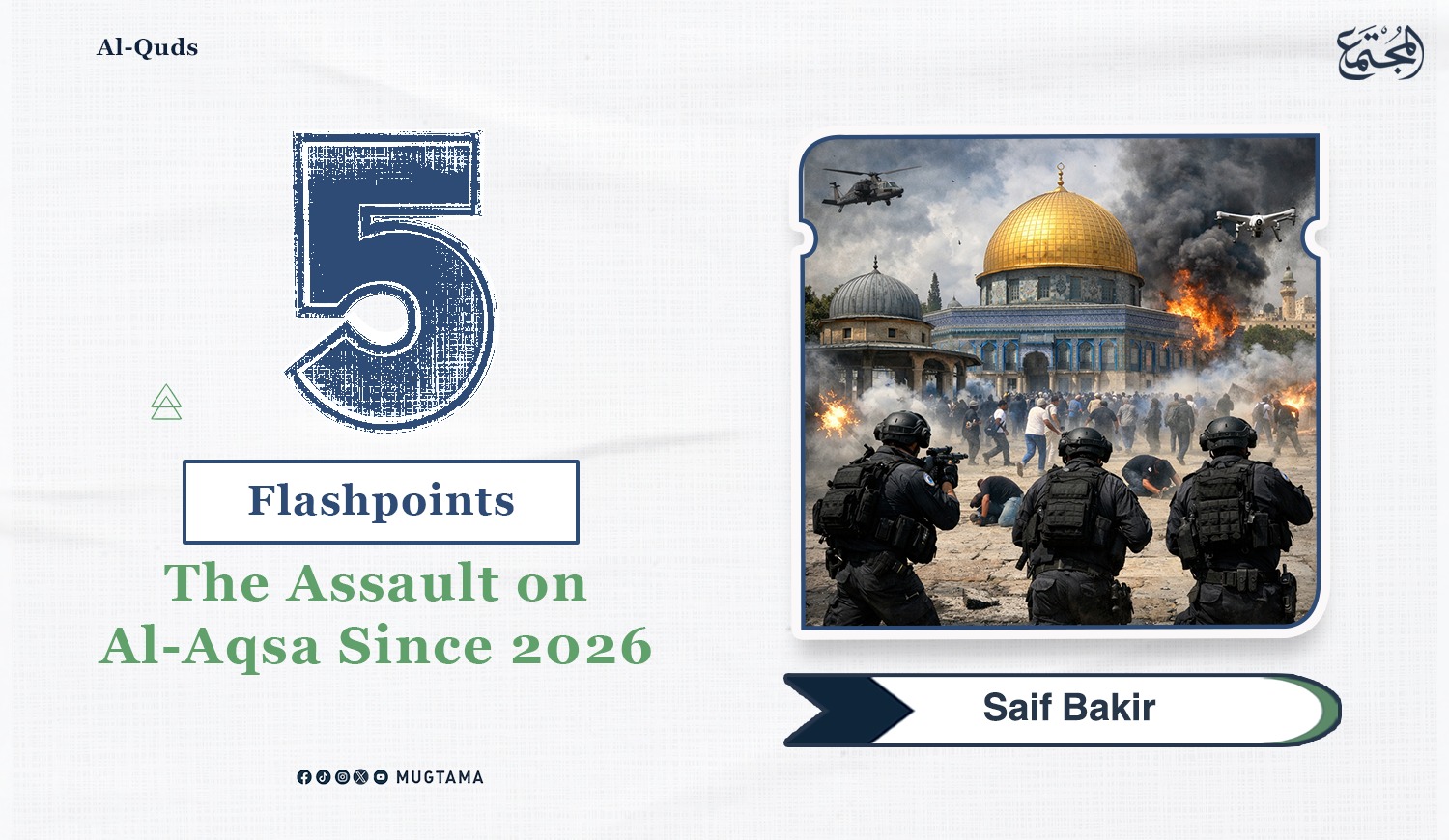
Since the
start of 2026, Al-Aqsa Mosque has been witnessing a rapidly escalating pattern
of Israeli violations — a calculated, step-by-step campaign combining
heavy-handed security measures with politically and religiously charged raids.
These
developments are anything but isolated or spontaneous. They reflect a
systematic agenda to reshape the status quo at the holy compound, pushing
beyond security control toward entrenching a permanent Israeli presence — all
against the backdrop of growing influence held by far-right and religious
extremist currents within Israel's decision-making institutions.
Against
this backdrop, five key flashpoints have defined the contours of this
escalating campaign, revealing a clear shift from a policy of restriction to
the imposition of new facts on the ground inside Al-Aqsa —
through closures, repeated raids led by officials and extremist religious
groups, as follows:
1. The Total Lockdown
On
February 28, Israeli occupation authorities imposed a complete lockdown on
Al-Aqsa Mosque, barring worshippers from entering — a move widely condemned as
a dangerous escalation aimed at reducing the Islamic presence within the holy
compound and establishing total security control as a prelude to even harsher
measures to come.
2. Ben Gvir's First Raid
On April
6, Israel's so-called National Security Minister Ben Gvir stormed
the courtyards of Al-Aqsa Mosque under heavy occupation forces escort — a
pointed political message signaling the government's open endorsement of
official-led raids and its push to entrench what it calls "Israeli
sovereignty" over the mosque.
3. Mass Public Raids
On April
9, the courtyards of Al-Aqsa Mosque witnessed organized mass raids by dozens of
settlers, carried out openly and accompanied by religious rituals performed
under full police protection — marking a notable shift in the nature of such
incursions, from covert or limited operations to brazen public displays aimed
at imposing a gradual fait accompli.
4. Ben Gvir's Second Raid
On April
12, Ben Gvir raided Al-Aqsa Mosque again just days after his first incursion —
a sign of the accelerating pace of official escalation and the entrenchment of
raids as a domestic political tool, particularly amid a surging far-right
discourse calling for an overhaul of the existing status quo at the holy
compound.
5. Rabbi Eyal Tsinov's Raid
Just one
day after Ben Gvir's raid, Rabbi Eyal Tsinov stormed Al-Aqsa Mosque accompanied
by settlers — a move carrying grave religious implications, particularly as
extremist religious groups play an increasingly prominent role in such
incursions and push to impose Jewish rituals inside the compound, posing a
direct threat to its established historical and legal status.
You may
also like:
Reopening Al-Aqsa: Between the Joy of Worship and the Escalation of Incursions
Resilience Under Fire: 5 Tools of Jerusalemite Resistance Against the Occupation