







Toward a New Beginning for Development in Afghanistan
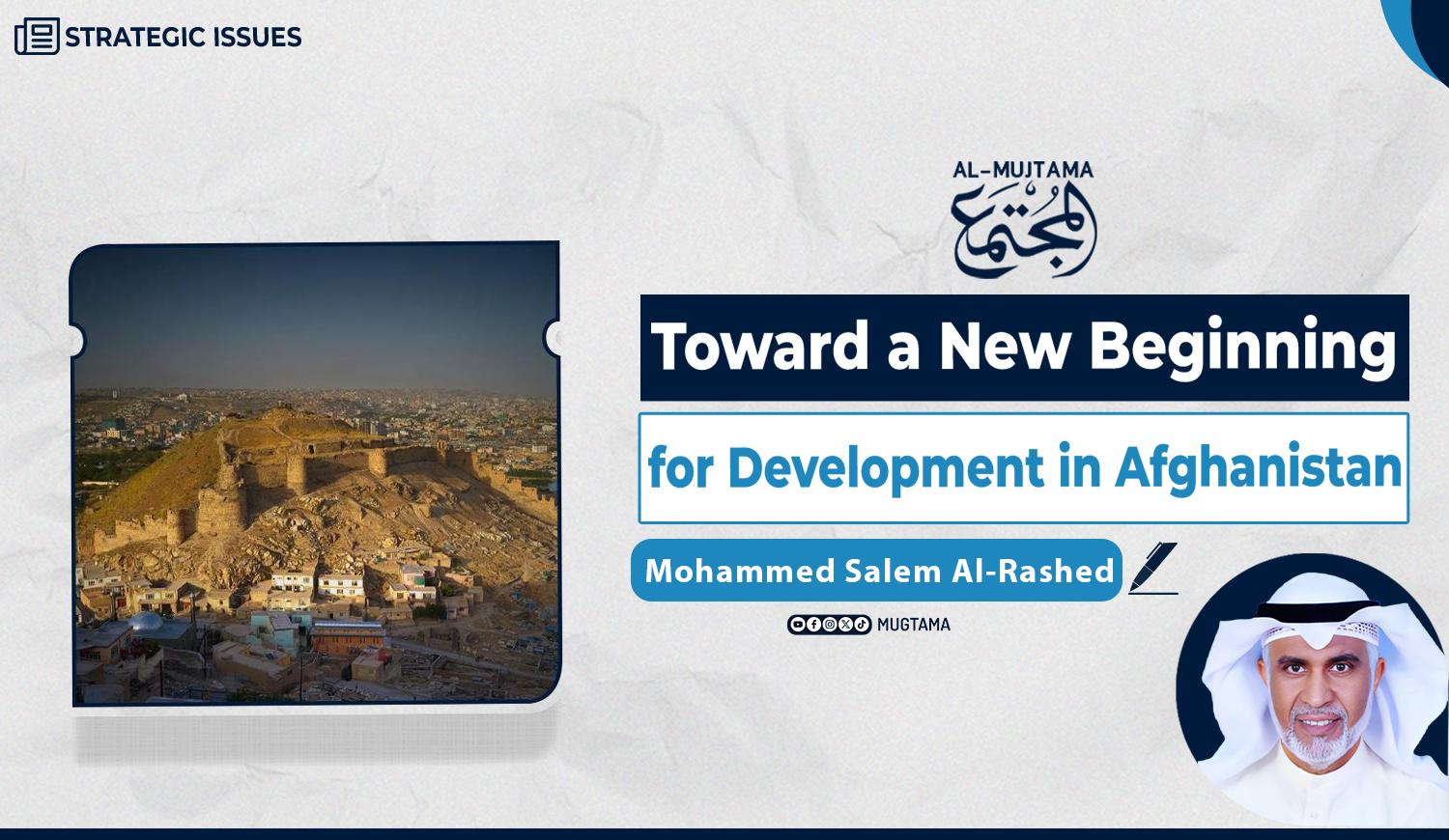
The departure of U.S. forces from Afghanistan in 2021 was not merely the end of the war; rather, it opened an extremely difficult chapter for a country exhausted by decades of conflict, where economic institutions and public services had deteriorated.
Today, the Afghan government is trying to build a development path by increasing domestic revenues,
investing in natural resources, expanding agriculture and infrastructure, and
attracting foreign companies. These beginnings warrant monitoring—not as a
completed renaissance, but as an attempt to move away from dependence on
foreign aid and an unproductive economy.
Revenue Mobilization and Building State Capacity
Key government measures include tightening tax and customs collection and broadening the
domestic revenue base. According to World Bank data, domestic revenues
in the 2025 fiscal year reached approximately 272.4 billion afghani,
equivalent to 19.8% of GDP—a 12.7% increase over the previous year. The Bank
links this improvement to expanded economic activity, improved collection
efficiency, and broader enforcement of tax obligations. While revenue growth
enables the state to finance some services and projects domestically, it is not
enough on its own to offset the decline in foreign aid or end poverty.
Resource Investment: From Contracts to Production
Authorities are working to open the
mining, energy, and transport sectors to domestic and foreign investors,
offering opportunities in copper, iron, gold, and other minerals. The Ministry
of Mines has also launched a portal to display data on active contracts and
projects—a step that could support disclosure and accountability if information
is published regularly and contracts are subjected to auditing and oversight.
However, the real test lies not in the
number of contracts or the value of announced investments, but in commencing
production, creating jobs, and retaining a fair share of revenues inside the
country. The Mes Aynak copper project, awarded to Chinese companies under a
long-term contract, still faces delays as well as archaeological and technical
obstacles before reaching commercial extraction. Therefore, investments require
electricity, roads, and transport railways, alongside clear contractual rules
that guarantee the fulfillment of obligations.
Qosh Tepa: Agriculture as the Foundation of Economic Security
In a country where millions rely on
farming, development cannot be separated from water. In this context, the Qosh
Tepa Canal stands out, stretching roughly 285 kilometers to divert water from
the Amu Darya River to agricultural lands in Balkh, Jowzjan, and Faryab
provinces. Upon completion, it is expected to irrigate vast areas and pave the
way for agricultural and industrial clusters along its route. It is an effort
to link water management with food production and employment, though it
requires long-term technical planning and responsible dialogue with Central
Asian nations that share the river's waters.
Counternarcotics Requires an Alternative Economy
The ban on opium poppy cultivation led
to a sharp drop in cultivated areas: from about 233,000 hectares in 2022 to
10,800 hectares in 2023, then 12,800 hectares in 2024, and around 10,200
hectares in 2025, according to United Nations estimates.
However, more recent reports indicate
a strong resurgence in cultivation in 2026, with the cultivated area estimated
at approximately 43,300 hectares amid farmers' complaints over weak
alternatives and low income. This resurgence reveals that a ban alone does not
build a legitimate economy; support in seeds, irrigation, marketing, and
financing is essential so that farmers can earn an income that sustains their
families.
Economic Growth Alone Is Not Enough to Reduce Poverty
The World Bank projected Afghanistan's
economy to grow by around 3% in 2026, driven primarily by a strong agricultural
harvest. At the same time, however, it projected a decline in per capita GDP of
roughly 3.3% due to accelerating population growth. This gap serves as a
reminder that higher overall output does not automatically translate into
improved household conditions unless it leads to jobs, wages, services, and
accessible opportunities for the people.
A Beginning That Requires Partnership and Trust
Today, Afghanistan is attempting to
transition from an economy of war and aid to one of production, revenues, and
investment, having initiated steps in fiscal collection, infrastructure
development, mining investment, and agricultural expansion.
Yet the durability of this beginning depends on turning contracts and projects into actual production, ensuring transparent resource management, providing viable livelihood alternatives for farmers, and expanding job opportunities. Only then will the promise of "a new beginning for development" become a reality that Afghans experience in their incomes, their food security, and their children's future.