









The Healing Power of the Quran
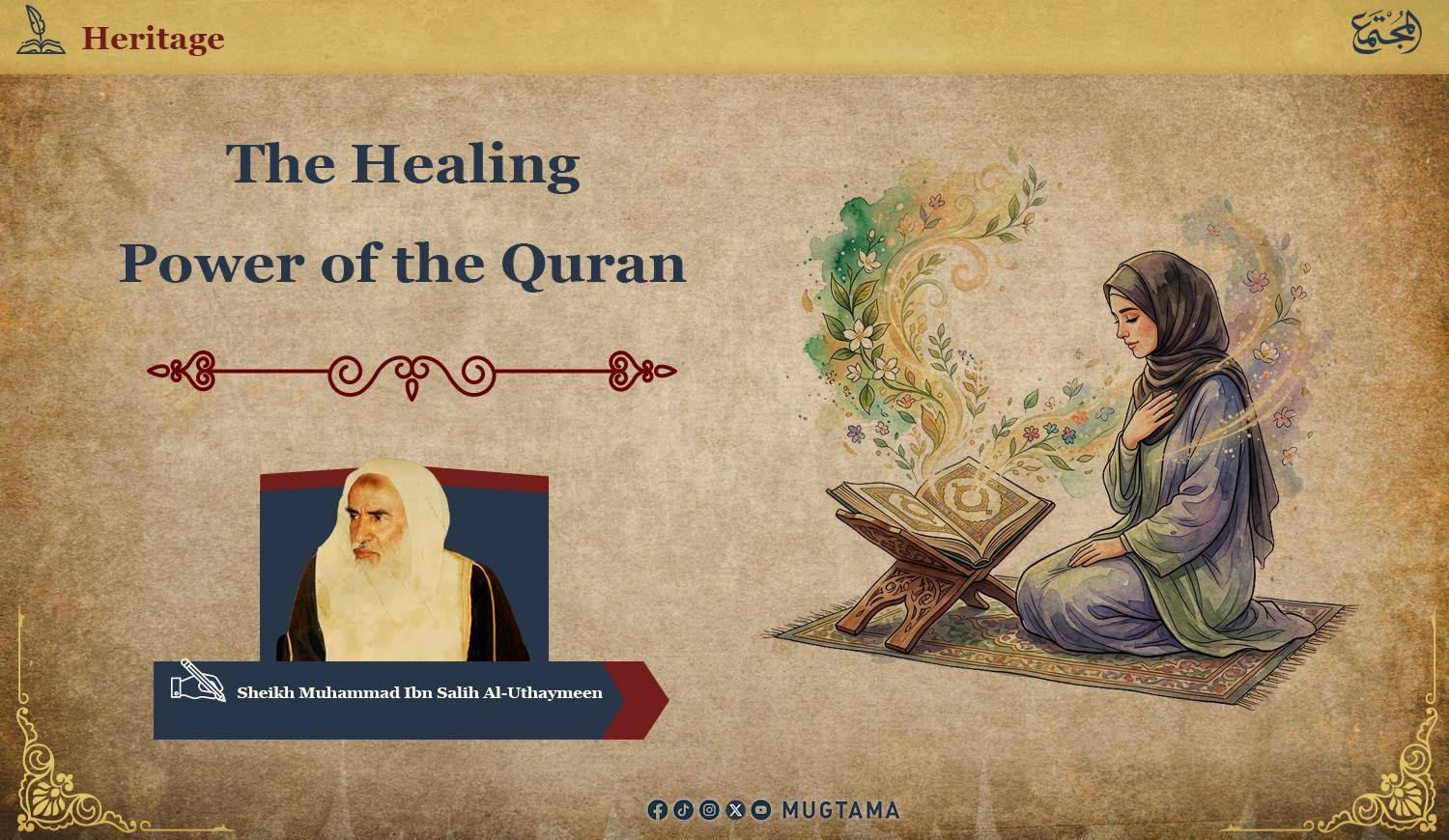
There is no doubt that Allah, Exalted
be He, has made the Quran a healing for what lies within the hearts and a
healing for physical ailments as well. Allah says: {We
send down the Quran as a healing and mercy for the believers} [Al-Isra’ 17:82]
He also says: {O
humanity! Indeed, there has come to you a warning from your Lord, a cure for
what is in the hearts, a guide, and a mercy for the believers.} [Yunus 10:57]
Prophetic Guidance on Healing Through
Quranic Recitation
As narrated in a hadith reported by
Ibn Sa`eed, the Companions recited Surah Al-Fatihah
seven times over a man who had been bitten or stung by a poisonous creature.
The man then recovered and stood up as though he had been released from
shackles. When they returned to the Prophet (peace and blessings be upon him)
and informed him of what had happened, he said, “How
do you know that Surat Al-Fatiha is a Ruqya? You have done the right thing.”
Thus, the Prophet (peace and blessings
be upon him) affirmed that Surah Al-Fatihah can be used as a healing
recitation, meaning that it is recited over a sick person as a form of
spiritual remedy.
Three Conditions for Healing Through the
Quran
The entire Quran is goodness and
blessing, and there is no doubt that it has an effect. However, we must
understand that three conditions must be met for Quranic recitation to have its
intended effect.
First, the person reciting the Quran
must believe in its healing power. Second, the person over whom it is recited
must also believe in its healing power. Third, the verses or chapters being
recited must be supported by evidence establishing their effectiveness for this
purpose.
When these three conditions are
fulfilled, the recitation can have an effect by Allah’s permission.
However, if one of these conditions is
missing, the intended effect may not be achieved. For example, if someone
recites the Quran merely as an experiment, saying, “I will try it and see
whether it works or not,” the recitation may not benefit them as intended,
because a believer is required to have faith in its healing power.
Similarly, if the sick person doubts
the Quran’s healing power and does not believe in its effectiveness, the
recitation may not benefit them either, because the person receiving it is not
receptive to it.
Likewise, if someone recites verses whose effectiveness for this purpose is not established by the relevant evidence, the recitation may also fail to produce the intended effect. This does not mean that there is any deficiency in the Noble Quran. Rather, the mistake lies in choosing verses or chapters that are not established as appropriate for the intended purpose.
-------------------------------------------------------------