


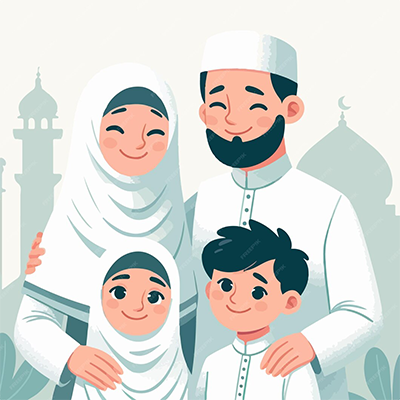
Motherhood and Fatherhood in Islam
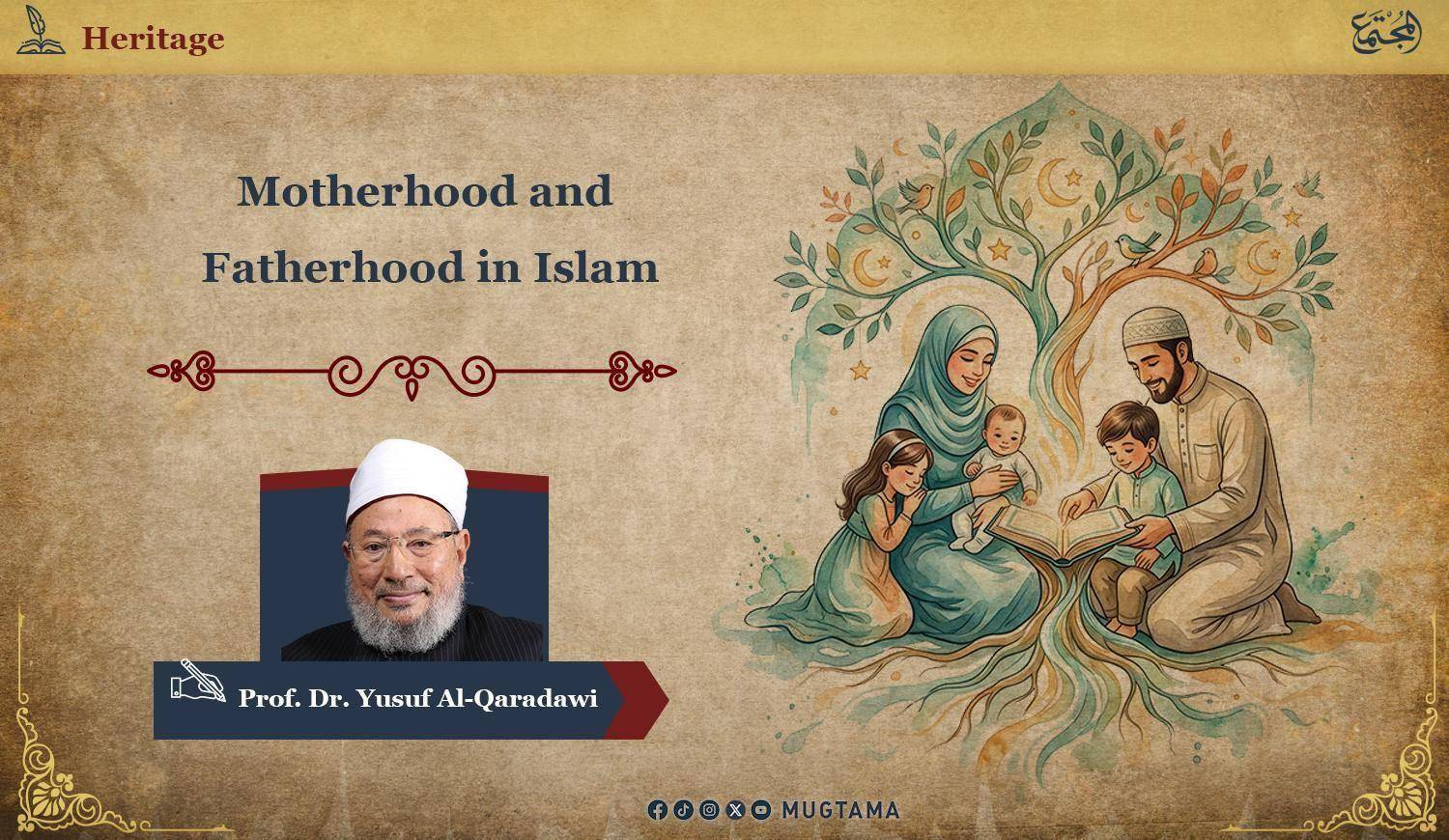
A family begins with two people: a man and a woman joined
together by the sacred bond of lawful and publicly announced marriage, blessed
by Allah and respected by people.
Upon this foundation, rights and responsibilities are
established. Allah SWT grants some of them daughters and others sons as He
wills. Thus, motherhood, fatherhood, and parenthood come into existence.
The small family then gradually begins to expand. Children are
one of the fundamental objectives of the family and of marriage, in accordance
with the saying of Allah, the Most High: {And Allah
has made for you spouses of your own kind, and given you through your spouses
children and grandchildren.} [An-Nahl 16:72]
Rights and Responsibilities of Parents and Children
As soon as children are born into a family, motherhood and
fatherhood emerge. They are two great meanings, or two warm springs overflowing
with love, tenderness, and selflessness. Both motherhood and fatherhood have
rights, and both carry responsibilities.
As for the rights of motherhood and fatherhood, the first
right that parents have over their children—whether sons or daughters—is the
right to dutifulness and kindness. This is a right emphasized by all the
revealed religions. Islam places particular emphasis on honoring parents and treating them with kindness.
Allah, the Most High, says, {For
your Lord has decreed that you worship none but Him. And honour your parents.
If one or both of them reach old age in your care, never say to them ˹even˺ ‘ugh,’ nor yell at them. Rather, address them respectfully. And be
humble with them out of mercy, and pray, “My Lord! Be merciful to them as they
raised me when I was young.”} [Al-Isra’ 17:23–24]
Why Islam Gives Special Importance to Mothers
Although Islam commands kindness toward parents in general, it
points to the greater hardship endured by the mother compared to the father. Thus,
the Prophet, peace and blessings be upon him, recommended kindness to the
mother three times and to the father once.
The care and protection of motherhood and fatherhood, however,
is not the responsibility of children alone. Society as a whole must support a
woman’s motherhood until
she gives birth. If she is employed, her workload should be reduced. After
giving birth, she must be granted appropriate maternity and breastfeeding
leave, with full pay, because she is performing a task for society that has its
own value and importance.
Professor Gary Becker, a Nobel Prize-winning economist, stated
that a woman who stays at home to care for her children and raise them properly
contributes to the development of the national economy by 25% to 50%.
This is something many people fail to understand, as they
consider a woman who performs the role of a mother at home to be unemployed and
may even regard her as a burden on national production.
Although all religions have given attention to motherhood and
its rights, there are developments that threaten to undermine it. The issue of
dividing motherhood between two women—the genetic mother and the woman who
carries and gives birth to the child—undermines the meaning of motherhood to
which religions have devoted attention and upon which they have established
rights and responsibilities. Thus, the meaning of motherhood becomes lost, and
its reality becomes divided between the two women mentioned above.
Even if the woman who provides the egg is the one who
transfers to the child everything that he or she may inherit from her, from the
father, and from both families, the woman who carries the child in her womb is the one who endures the
hardship of pregnancy and childbirth and nourishes the child throughout the
pregnancy from her own blood.
This suffering has its own importance and role in highlighting
the meaning of motherhood and establishing the mother’s entitlement to
dutifulness and kindness because of it.
An Orphan With Both Parents Still Alive
Depriving a child of either parent—such as depriving a child
of a father whom he or she can be related to and feel his care and
protection—is a grave crime and a great sin.
We see this in the case of children born outside lawful
marriage, whose mothers carry them as a result of an unlawful relationship.
The wave of sexual permissiveness brought about by modern
civilization has led to the emergence of unmarried mothers, as a result of the
spread of adultery and women becoming pregnant through unlawful relationships.
This has deprived sons and daughters of their biological
fathers. Even more tragic is the ordeal of abandoned children who have committed no sin other
than being the result of their parents’ desires. Thus, a child lives as an
orphan despite having both parents present; indeed, beyond that, the child may
live without knowing either parent.
The Comprehensive Upbringing of Children
Raising children requires more than mere effort. Human childhood is the
longest and most difficult childhood compared with that of all animals. Some
animals and birds become capable of moving and setting out independently
immediately after birth. But Allah, the Most High, has created the human being
in such a way that a long period of care, training, education, and discipline
is necessary.
From here comes the responsibility of the two parents who
brought the child into the world and were the means through which the child
emerged from the darkness of nonexistence into the light of existence.
Their responsibility includes caring for the material aspects
of the child’s life as well as caring for the child’s moral and spiritual
development. The first thing the parents must provide for the child is
breastfeeding.
However, modern civilization has encouraged women to withhold
their own milk from their children and rely instead on artificial feeding in
order to preserve their physical figure.
The reality of breastfeeding is not merely about milk reaching
the child’s stomach. It is something greater and deeper. It is the child’s
closeness to the mother’s breast and the feeling of the warmth of her
tenderness as she holds the child close to her. The child receives physical
nourishment from her breast and emotional nourishment from the warmth of her
heart and feelings. No artificial milk can equal a mother’s milk.
The Islamic Responsibility Toward Orphans
As for the right of caring for orphans, Islam considers
sponsoring an orphan to be among the greatest righteous deeds that bring a
person closer to Allah, the Almighty.
Islam has instructed the Muslim community regarding two
matters concerning orphans.
The first is to protect their wealth, if they possess any.
Allah, the Most High, says, {And do not come near
the wealth of the orphan—unless intending to enhance it—until they attain
maturity.} [Al-An`am 6:152]
The second is to preserve the orphan’s dignity and
personality. The orphan must not be oppressed, abandoned, or humiliated, as
Allah, the Most High, says, {So do not oppress the
orphan.} [Ad-Duha 93:9]
Even worse is for a child to be afflicted with parents who are
too preoccupied to care about the child or think about the child at all.
A true orphan is described by the Prince of Poets, Ahmed
Shawqi:
An orphan is not one whose parents have passed away
And left him humiliated by the hardships of life,
For he gains wisdom from the world
And lives learning from time as his substitute.
The orphan is one who finds himself with
A mother who has abandoned him or a father who is preoccupied.
Building a Balanced and Complete Upbringing
An essential part of fulfilling the responsibilities of
parenthood is for the parents to understand one another and cooperate in
raising their children properly and comprehensively.
This upbringing should be spiritual, by instilling faith and
worship; intellectual, through sound understanding and education; moral,
through good manners and virtue; physical, through cleanliness and exercise;
and social, by teaching children to love goodness and serve their community.
It should also be civic and communal, by teaching children
loyalty to their nation and their faith, and artistic, by cultivating within
them an appreciation for the beauty of the world around them.
This is a difficult responsibility for which both parents will
be held accountable. As the noble Prophet, peace and blessings be upon him,
said: “All of you are shepherds, and all of you
are responsible for your flock.”
Parents cannot simply limit their responsibility to providing
for their children’s material needs.
Part of the harmony between motherhood and fatherhood is for
parents to agree upon one consistent approach to raising their children.
It is not appropriate for the father to adopt an approach of
harshness and severity toward the children while the mother adopts an approach
of excessive leniency and indulgence.
Rather, they should follow a balanced approach that neither
goes to extremes in severity nor becomes excessive in pampering.
Therefore, the Prophet, peace and blessings be upon him,
rebuked one of the Bedouin leaders who was surprised when the Prophet, peace
and blessings be upon him, kissed his grandsons.
The man said to the Prophet: “I
have ten children, but I have never kissed any one of them.” The Prophet, peace
and blessings be upon him, looked at him and then said: “He who does not show
mercy (towards his children), no mercy would be shown to him.”
-------------------------------------------------------------
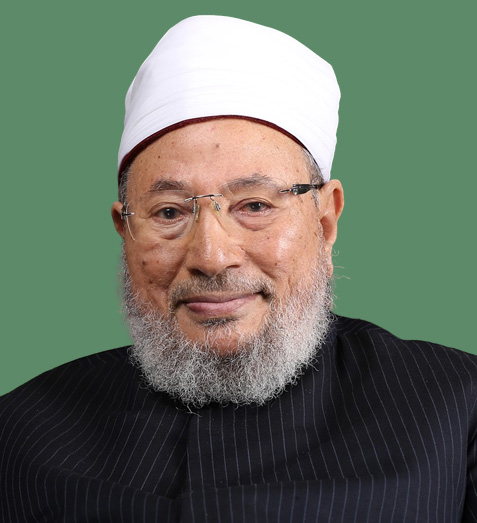
Taken from Dr. Yusuf Al-Qaradawi’s Website.