







Laylat Al-Qadr... The Greatest Night in Islam

Laylat Al-Qadr (the
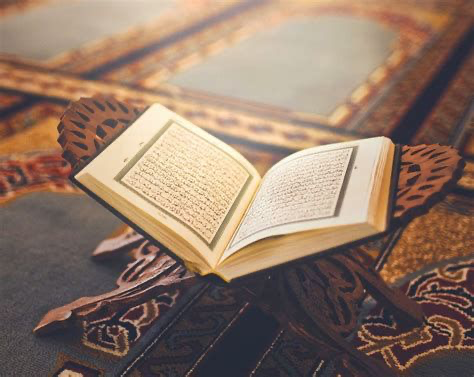
Night of Decree) is the greatest of all nights. On this night, Allah revealed
the Quran, and He informed us that it is better than a thousand months, that it
is blessed, and that every wise decree is determined during it.
Allah the Exalted says at the
beginning of Surah Ad-Dukhan: {Ḥâ-Mĩm. By
the clear Book! Indeed, We sent it down on a blessed night, for We always warn ˹against evil˺. On that night every matter of
wisdom is ordained by a
command from Us, for We have always sent ˹messengers˺ as a mercy from your Lord. He ˹alone˺ is truly the All-Hearing, All-Knowing—} [Ad-Dukhan 44:1-6]
And Allah says, {Indeed, ˹it is˺ We ˹Who˺ sent this ˹Quran˺ down on the Night of Glory. And what will make you realize what the
Night of Glory is? The Night of Glory is better than a thousand months. That
night the angels and the ˹holy˺ spirit descend, by the permission of their Lord, for every ˹decreed˺ matter. It is all peace until the break of
dawn.} [Al-Qadr 97:1-5]
The Reward of Worship on Laylat Al-Qadr
It is reported that the Messenger
of Allah (peace be upon him) said: “He who
passes Laylat Al-Qadr [Night of Decree] in prayer with faith and seeking his
reward from God will have his past sins forgiven.” (Narrated by Sahih
Al-Bukhari and Muslim)
Standing in prayer during this
night includes prayer, remembrance of Allah, supplication, recitation of the Quran,
and other acts of righteousness.
This great surah clearly shows
that deeds performed on this night are better than deeds performed during a
thousand months outside it. This is an immense virtue and a great mercy from
Allah toward His servants. Therefore, Muslims should honor this night and
revive it with acts of worship.
When Does Laylat Al-Qadr Occur?
The Prophet (peace be upon him)
informed us that Laylat Al-Qadr occurs
during the last ten nights of Ramadan, and that the odd nights among them are more
likely than others. He (peace be upon him) said: “Look
for the Night of Qadr in the last ten nights of Ramadan, look for it in every
odd night.”
Authentic narrations from the
Messenger of Allah (peace be upon him) indicate that this night moves within
the last ten nights and does not occur on a specific fixed night every year.
It may occur on the night of the
twenty-first, the twenty-third, the twenty-fifth, the twenty-seventh—which is
considered the most likely—or the twenty-ninth, and it may also occur on even
nights.
Thus, whoever strives in worship
throughout all the nights of the last ten days with faith and hope for reward
will undoubtedly encounter this blessed night and attain what Allah has
promised its people.
How the Prophet Worshiped During the
Last Ten Nights
The Prophet (peace be upon him)
used to dedicate these nights to a level of devotion greater than that of the
first twenty days of Ramadan.
`A’ishah (may Allah be pleased
with her) reported that when the last ten nights
began Allah's Messenger (peace be upon him) kept awake at night (for prayer and
devotion), wakened his family, and prepared himself to observe prayer (with
more vigour).”
He (peace be upon him) would also
frequently perform i`tikaf
(spiritual retreat) during these nights.
Allah says, {Indeed, in the Messenger of Allah you have an excellent
example.} [Al-Ahzab 33:21]
The Best Supplication on Laylat Al-Qadr
`A’ishah (may Allah be pleased
with her) once asked the Prophet (peace be upon him): “O Messenger of Allah, what do you think I should say in
my supplication, if I come upon Laylat Al-Qadr?” He said: “Say: 'Allahumma
innaka 'afuwwun tuhibbul-'afwa, fa'fu 'anni (O Allah, You are Forgiving and
love forgiveness, so forgive me).'”
The Practice of the Companions and the
Early Muslims
The companions of the Prophet (peace
be upon him) and the righteous predecessors after them greatly honored the last
ten nights of Ramadan. They exerted themselves in various acts of goodness and
worship during these nights.
Thus, Muslims everywhere are
encouraged to follow the example of the Prophet (peace be upon him), his noble
companions, and the righteous predecessors.
They should revive these nights
with prayer, Quran recitation, remembrance of Allah, and various forms of
worship—doing so with faith and hope for reward—so that they may attain
forgiveness of sins, removal of burdens, and freedom from the Fire, out of the
generosity and grace of Allah.
The Quran and Sunnah indicate
that this great promise of forgiveness is achieved when major sins are avoided.
Allah says, {If you avoid the major sins forbidden to you, We will
absolve you of your ˹lesser˺ misdeeds and admit you into a place of honour.} [An-Nisa 4:31]
The Prophet (peace be upon him)
also said: “The five [daily] prayers, Friday to
Friday and Ramadan to Ramadan make atonement for what has happened since the
previous one when major sins have been avoided.” (Narrated by
Muslim)
The Danger of Returning to Sin After
Ramadan
It is important to note that some
Muslims strive in Ramadan and repent sincerely from their past sins, but once
Ramadan ends they return to their previous wrongdoing. This is a serious danger.
A Muslim must beware of this and
make a sincere determination to remain steadfast in obedience to Allah and to
abandon sin.
Allah says to His Prophet (peace
be upon him): {And worship your Lord until the
inevitable comes your way.} [Al-Hijr 15:99]
And He says, {O believers! Be mindful of Allah in the way He deserves,
and do not die except in ˹a state of full˺ submission ˹to Him˺.} [Ali `Imran 3:102]
The Reward of Steadfastness After
Ramadan
Allah also says, {Surely those who say, “Our Lord is Allah,” and then remain steadfast, the
angels descend upon them, ˹saying,˺ “Do not fear, nor grieve.
Rather, rejoice in the good news of Paradise, which you have been promised. We
are your supporters in this worldly life and in the Hereafter. There you will
have whatever your souls desire, and there you will have whatever you ask for: an
accommodation from the All-Forgiving, Most Merciful ˹Lord˺.”} [Fussilat 41:30-32]
The meaning of this verse is that
those who acknowledge Allah as their Lord, believe in Him, sincerely worship
Him, and remain steadfast in obedience are given glad tidings by the angels at
the time of death.
They are told that they have
nothing to fear and nothing to grieve about, and that their destination is
Paradise because of their faith, steadfastness in obedience, avoidance of sin,
and sincerity in worship.
Many verses convey this same
meaning, all emphasizing the obligation of steadfastness upon the truth,
perseverance in obedience, and caution against persisting in sin.
Among these verses is the
statement of Allah: {And hasten towards forgiveness
from your Lord and a Paradise as vast as the heavens and the earth, prepared
for those mindful ˹of Allah˺. ˹They are˺ those who donate in prosperity and adversity, control their anger, and
pardon others. And Allah loves the good-doers. ˹They are˺ those who, upon committing an evil deed or
wronging themselves, remember Allah and seek forgiveness for their sins—and who forgives sins except Allah?—and they do not knowingly persist in
wrongdoing? Their reward is forgiveness from their Lord and Gardens under which
rivers flow, staying there forever. How excellent is the reward for those who
work ˹righteousness˺!} [Ali `Imran 133-136]
We ask Allah to grant success to
us and to all Muslims during these blessed nights and at all other times in
doing what He loves and is pleased with.
We ask Him to protect us from the
evil within ourselves and from the consequences of our deeds. Indeed, He is
Most Generous and Most Noble.
For Further Reading:
- Self-Purification: A Path to Fruitful Ramadan
- Ramadan for the Newlyweds
- Western Testimonies on Ramadan and Fasting
-------------------------------------------------------------
Taken from Shaykh
Abd al-Aziz Ibn Baz Official Website.