





Exploiting Closure: Extremist Agendas of Judaizing Al-Aqsa
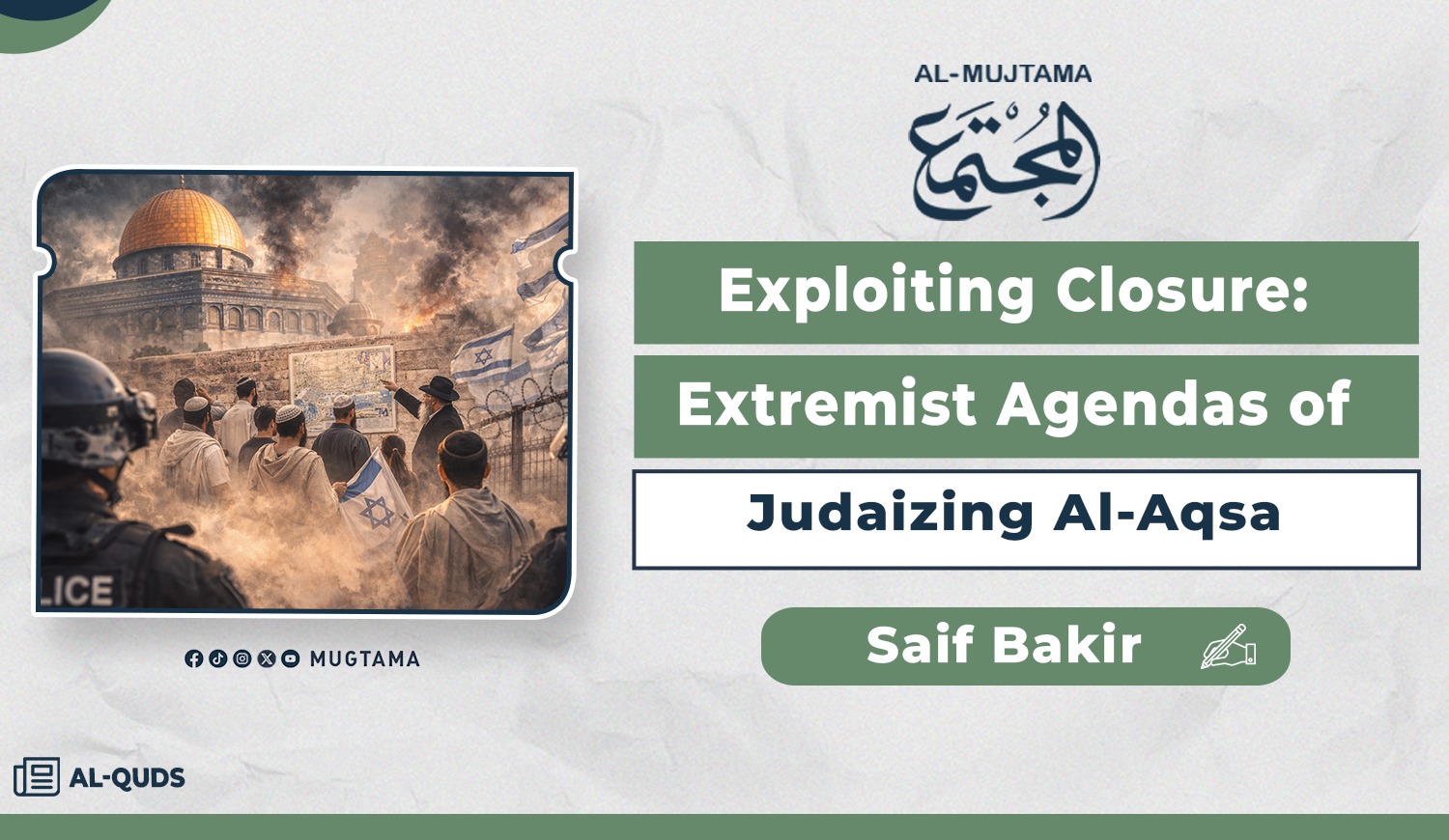
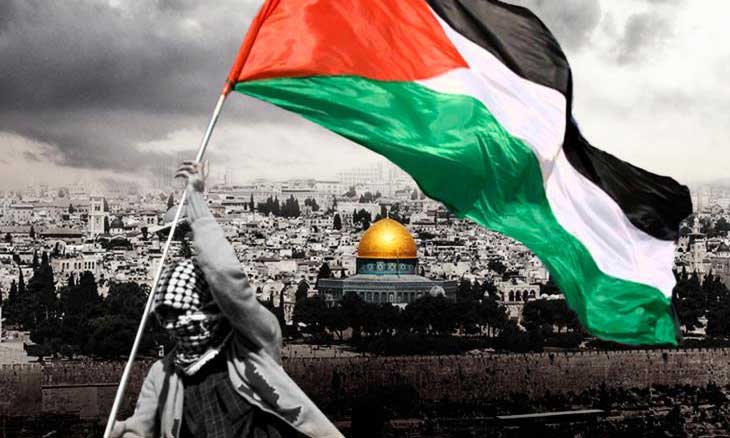
Recent developments in Jerusalem reveal a
sharp rise in the activities of extremist 'Temple Organizations,' which have
intensified their propaganda and political campaigns to impose what they call
the 'Passover sacrifice' inside Al-Aqsa Mosque during the Jewish Passover, scheduled for April 1–8, 2026. Observers see this
as part of a gradual trajectory aimed at altering the religious, historical,
and legal status quo of the sacred compound.
Closing Al-Aqsa: A Systematic Policy to
Reshape the Status Quo
The Jerusalem Governorate has affirmed
that the closure of Al-Aqsa Mosque at this critical juncture cannot be regarded
as a temporary security measure, as claimed by the occupying authorities.
Instead, it represents a systematic policy designed to reshape the status quo
of the holy site, serving the projects of settler groups advocating for the
construction of the so‑called Temple in its place.
The Jerusalem Governorate noted that
the so‑called 'Temple Institute' is spearheading a public campaign to prolong
the closure of Al-Aqsa Mosque, justifying it under the pretext of lacking safe
shelters amid regional escalation.
However, the discourse of these
organizations promotes the idea of keeping Al-Aqsa Mosque closed for an
extended period until the end of the war—ensuring, in their vision, that
Muslims are denied access during the last ten days of Ramadan and Eid al‑Fitr.
Strategic Gains and Blatant Double
Standards
The Jerusalem Governorate affirmed
that, in the eyes of extremist 'Temple' organizations, the closure of Al-Aqsa
Mosque has turned into a strategic gain—one they seek to sustain and exploit as
part of their projects aimed at altering the status quo of the Haram al‑Sharif.
The Governorate explained that these
groups publicly promote the closure as a measure applying to visitors of all
faiths—an attempt to create a misleading image of equality between Muslim
worshippers, the rightful custodians of Al-Aqsa, and settlers who storm the
site under the protection of occupation forces.
The Governorate emphasized that the
reality on the ground tells a very different story: Palestinian worshippers are
barred from reaching Al-Aqsa Mosque under the pretext of safety measures, while
the occupying authorities permit extensive settler activities across the city.
The Governorate cited as evidence the
scenes witnessed in Jerusalem’s streets last Wednesday, where thousands of
settlers celebrated the Purim holiday—a clear reflection of the blatant double
standards adopted by the occupying authorities in managing the holy city.
Psychological Battles and Propaganda
Drives to Enforce Altar Rites
Dr. Abdullah Ma’ruf, Professor
of Jerusalem Studies, explained that extremist Temple organizations are
exploiting the closure of Al-Aqsa Mosque during Ramadan to launch an escalating
campaign. Their aim is to impose animal sacrifice inside the mosque during the
upcoming Jewish Passover, which this year falls about twelve days after Eid al‑Fitr.
Ma’ruf noted that these groups have already begun an
intensive propaganda drive to promote the idea. Elkana Wolfson, affiliated with
the Temple Mount religious school and son of its rabbi Elisha Wolfson,
published an AI‑generated advertisement. The image depicted a fictional banquet
of the sacrifice after slaughter, with the so‑called Temple imagined as
standing in place of Al‑Aqsa Mosque.
In addition, the so‑called Temple
Institute released another image showing a sacrificial feast staged in front of
the Dome of the Rock. A religious altar was placed in the foreground,
accompanied by a caption declaring: “Establishing the Temple within a month may
be difficult, but building the altar and renewing the sacrifice is certainly
possible.”
This message, according to observers,
reflects the determination of these groups to impose the ritual inside Al‑Aqsa
during the current year. It underscores how propaganda and psychological
imagery are being used to normalize the idea of Judaizing the sacred site.
Alarming Precedents: Religious Zionism’s
Deep Infiltration of the Occupation Police
Dr. Abdullah Ma’ruf highlighted
that the year 2025 witnessed alarming developments in this context. He noted
three separate attempts in which settler groups succeeded in either bringing a
small animal into Al-Aqsa Mosque or smuggling parts of its meat inside. Such
incidents are unprecedented in the entire period of occupation, signaling a
shift in the stance of the occupation police toward these attempts.
Ma’ruf argued that this transformation is also linked to the
growing ideological composition within the Jerusalem police force. A
significant number of its officers and personnel belong to the Religious
Zionist movement, which has increasingly shaped the institution’s outlook.
This trend was further reinforced by
the recent appointment of extremist Avshalom Peled as the new commander of
Jerusalem’s police, just before Ramadan. Peled is known for openly embracing
the idea of establishing the so‑called Temple in place of Al-Aqsa Mosque, a
stance that raises serious concerns about the direction of law enforcement in
the city.
Gradual Efforts to Exploit Islamic
Seasons and Impose a New Reality
Dr. Abdullah Ma’ruf explained that the attempt by Temple organizations to
impose animal sacrifice inside Al-Aqsa Mosque is not a recent phenomenon. It
dates back to 2014, when these groups began organizing annual events simulating
the act of slaughter around different sides of the mosque. This was part of a
gradual effort to normalize the idea and promote it among their followers.
He noted that such activities have
continued for more than twelve years, accompanied by ongoing campaigns of
mobilization and incitement. The aim has been to entrench the notion of animal
sacrifice as a preparatory step within the broader Temple project.
Ma’ruf added that these organizations have repeatedly tried
to exploit the timing of Ramadan. Similar campaigns were launched in 2022 and
2023, when the Jewish Passover coincided with the third week of Ramadan. Their
goal was to impose new realities inside Al-Aqsa by capitalizing on the
sensitivity of the religious calendar.
He further pointed out that the latest
rhetoric from these groups clearly reveals their intention to use the current
closure of Al-Aqsa as a preparatory opportunity. They view the closure as a
chance to pave the way for imposing animal sacrifice within the mosque. Some of
their publications even explicitly call for the closure to continue beyond
Ramadan, allowing them to advance their schemes tied to the establishment of
the so‑called Temple.
You may also like:
The Final Struggle for Al-Aqsa: Has It Begun?
Resilience Under Fire: 5 Tools of Jerusalemite Resistance Against the Occupation
___________________________________