

European Freedom: Why Is Europe So Afraid of the Hijab?
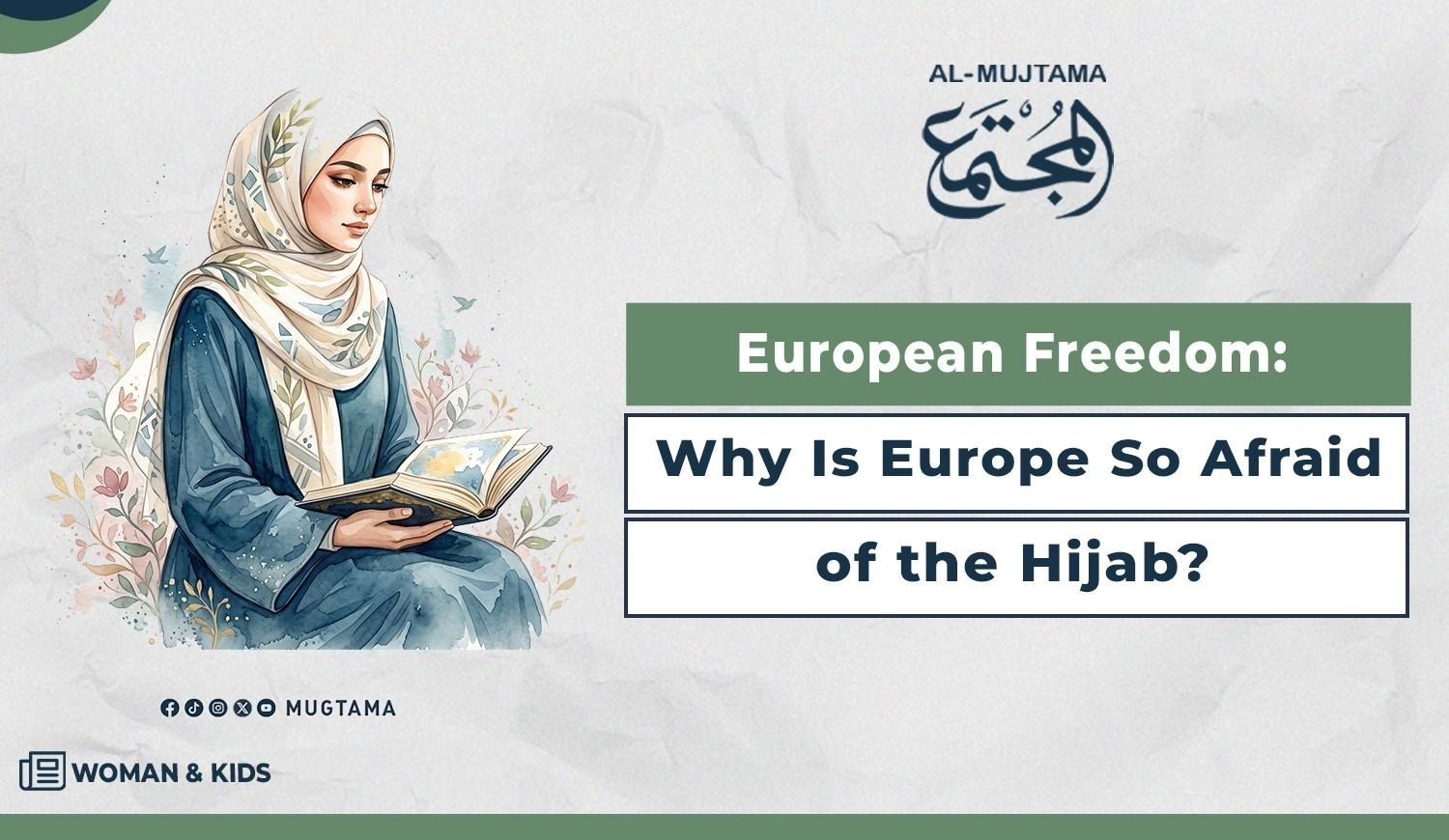
In the name of “liberating” Muslim women, Austria has taken
away one of their most basic freedoms: the freedom to decide what they wear.
As the new school year begins, girls under 14 are now
prohibited from wearing the Islamic hijab in Austrian schools. It is the latest chapter in Europe’s
long-running struggle over the Muslim woman’s body—and over who gets to decide
what she may reveal, what she may cover, and what choices should be considered
“freedom.”
But the law does more than prohibit the hijab. Violations can
trigger mandatory discussions with the family and fines of up to €800. As the
ban faces its first real test with the reopening of schools, Muslim
organizations have spoken out against it, while Austria’s official Islamic
Religious Community has pledged to challenge the law before the Constitutional
Court.
But Austria is not alone!
In France,
Marine Le Pen is preparing to revive a proposal to ban the hijab in public
spaces, while other European countries impose varying restrictions on head and
face coverings. The laws differ from one country to another, but the
justifications often sound remarkably familiar: protecting women, promoting
integration, secularism, and advancing gender equality.
But does banning the hijab actually liberate women—or is
Europe gradually entering a space where a woman’s freedom to choose is itself
subject to the approval of the state?
Austria: A New Hijab Ban—and New Penalties
Austria’s new law is not the country’s first attempt to
restrict the hijab in schools.
In 2019, Austria introduced a ban on religious head coverings
in primary schools that, in practice, targeted the Islamic hijab. In December
2020, however, the Constitutional Court struck the law down, ruling that it
discriminated against a particular group of students and conflicted with
equality and freedom of religion.
The court also found that selectively targeting a particular
form of religious clothing could not logically achieve the stated goals of
religious neutrality or gender equality.
Yet the Austrian government has returned to the issue—this
time raising the age limit to 14!
The government’s justification is straightforward. Austria’s
Minister for Europe, Integration and Family argued that children’s headscarves
limit girls’ visibility and freedom, and that schools should be spaces of
equality, individual freedom, and integration. Under the new law, a girl is
expected to be capable of making her own decision about wearing the hijab once
she turns 14.
But that justification raises an unavoidable question: If a
14-year-old is capable of choosing to wear the hijab, why does the state assume
that a 13-year-old is incapable of making the same choice?
And if the real concern is family coercion, why punish the wearing of the hijab itself rather than the coercion?
A Child in Need of Protection—or a Muslim with an Identity?
The issue becomes even more significant when we consider the
size of Austria’s Muslim population.
According to Statistics Austria, around 746,000 people in
Austria identified as Muslim in 2021—about 8.3% of the country’s population.
Islam is therefore the country’s second-largest religious affiliation after
Christianity.
This is not a law aimed at a marginal phenomenon. It affects a
substantial religious community for whom Islam forms part of their social and
religious identity.
And the most significant point is what the law actually tells
families and schools.
It does not merely tell parents: Do not force your daughters
to wear the hijab. But tells schools and the state something broader: If a girl
under 14 chooses to wear the hijab, she cannot do so at school.
From Austria to France: The Hijab as a European Political Issue
Austria’s move is not an isolated one.
In France, the hijab has returned to the center of the
political debate ahead of the 2027 presidential election. Jean-Philippe Tanguy,
a senior figure in Marine Le Pen’s National Rally, has said that the party
would impose financial penalties on women who wear the hijab in public spaces
if it comes to power.
A ban on the hijab has already featured in Le Pen’s previous
presidential platforms, and it has now been reaffirmed in her current program,
alongside the possibility of putting the issue to a national referendum.
The numbers show why the issue matters politically. According
to a January 2026 Verian poll for Le Monde, 66% of respondents supported
banning the hijab in public spaces. Among National Rally supporters, support
reached 94%—an increase of 10 percentage points among the public and 11 points
among National Rally supporters compared with the previous year.
Restrictions’ Different Forms Across Europe
European countries do not all impose the same restrictions,
but the broader pattern is difficult to ignore.
France, Belgium, Denmark, and Austria have restrictions on
full-face coverings in public spaces, while the Netherlands imposes partial
restrictions in places such as schools, hospitals, and public transportation.
Germany’s restrictions vary between states, professions, and institutions,
while Norway restricts face coverings in educational settings.
Austria itself had already banned the niqab and burqa` in
public spaces in 2017. The new law takes the issue further by targeting the
hijab itself—at least for girls under 14 in schools.
The laws may differ, and so do their stated justifications:
security in one case, integration in another, and the protection of women or
children elsewhere.
But for Muslim women who choose to wear the hijab, the result
is strikingly similar: the state intervenes in what they wear, determines what
they are permitted to wear, and then gives that intervention one of the most
ironic names imaginable—freedom!
The Muslim woman, under this logic, may need to be “protected”
from her religion even when she says she does not want that protection. She may
need to be “saved” from her hijab even when she insists that it is her choice.
The problem, then, is no longer necessarily that a woman has
been forced to do something she does not want.
It is that she has chosen something that does not fit the
image of the “liberated” woman that some European institutions have decided she
should embody.
A 2012–2013 study by the Pew Research Center found that 18 out
of 45 European countries had legal or policy restrictions affecting women’s
religious attire. In other words, the issue is not new.
When “Liberating Women” Becomes a Punishment
Governments imposing these restrictions say they want to
protect women and girls from pressure, promote equality, and prevent families
or communities from imposing unwanted practices on them.
There is no question that forcing a woman to wear the hijab
against her will violates her freedom.
But is the answer to coercion another form of coercion?
If a woman is forced to wear the hijab, the problem is that
she cannot say “no.”
But if a woman freely chooses to wear it, and the state
prevents her from doing so, the problem becomes that she cannot say “yes.”
In both cases, the final decision does not belong to her.
That is the contradiction at the heart of the language of
“liberation.”
If freedom means that a woman has the right to choose, who
gave the state the right to choose for her?
Footnotes
- 1 French women launch headscarf solidarity campaign against RN ban plan
- 2 French women launch headscarf campaign against far-right ban proposal
- 3 France’s Marine Le Pen: The illusion of feminism
- 4 As her deputy questions promise to ban headscarves, Le Pen doubles down
- 5 Restrictions on Women’s Religious Attire
- 6 Austrian headscarf ban for under-14s faces first test as schools reopen
- 7 Full-face veil bans: How do rules compare across Europe?
